Does Progesterone Cause Weight Gain?
“I Started Progesterone and the Scale Went Up. Is the Medication Causing It?”
If you recently started progesterone as part of menopause hormone therapy and now feel bloated, hungrier, sleepier, or heavier, it is reasonable to wonder whether the medication is responsible. The timing can feel convincing: the prescription changed, then your body felt different. But timing alone cannot tell us whether the change represents water, constipation, appetite, body fat, the menopause transition itself, or another health factor.
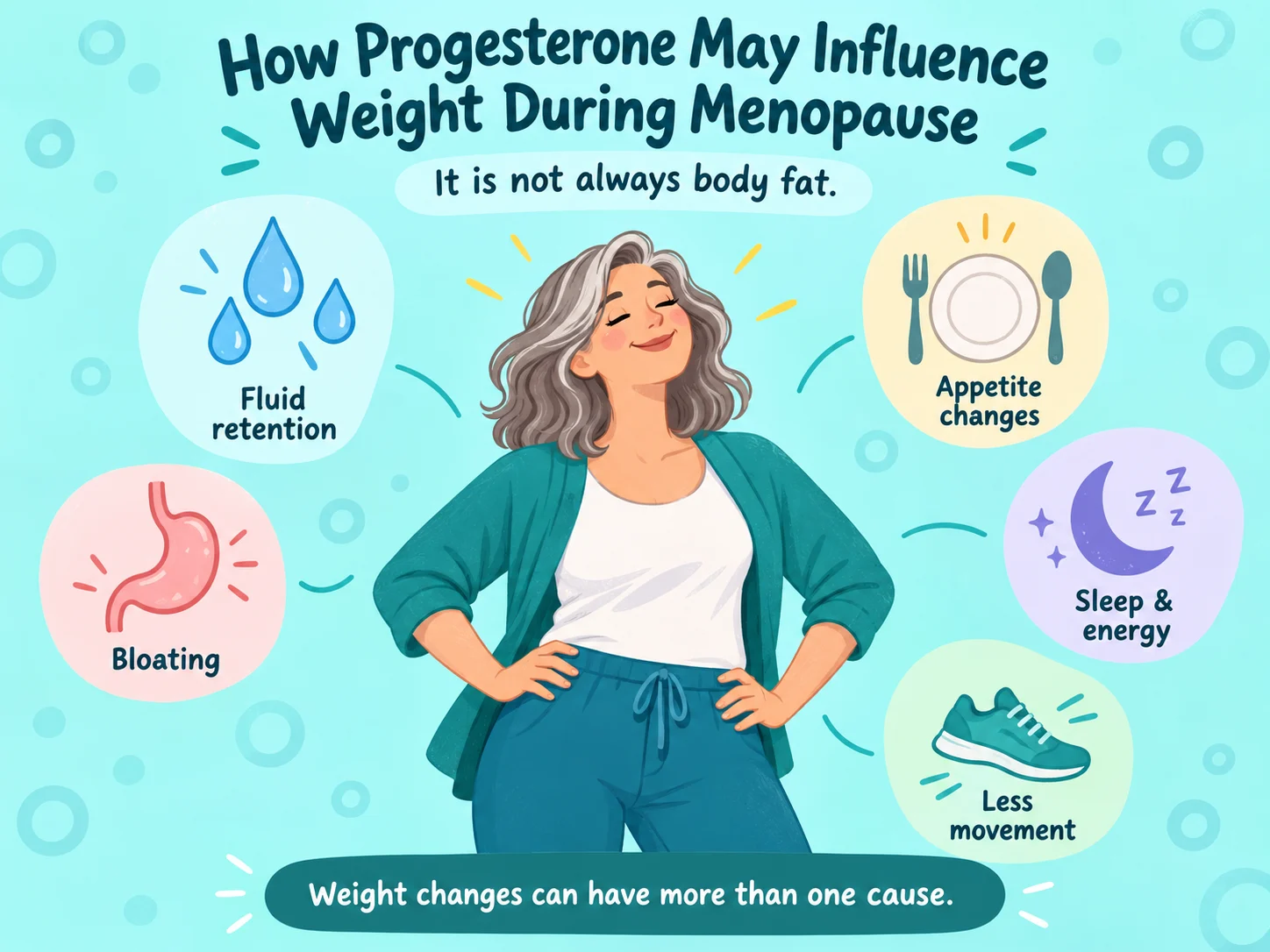
The short answer is that progesterone is not consistently shown to cause meaningful long-term fat gain. Some women do experience bloating, fluid retention, breast fullness, grogginess, or a change in appetite after beginning progesterone or a progestin. Those effects can make clothing feel tighter and move the scale without proving that body fat has increased.
The word progesterone also gets used loosely. Progesterone made by the ovaries, FDA-approved oral micronized progesterone, synthetic progestins used in menopause therapy, progesterone used for fertility, and progestin-only contraception are not interchangeable. The product, purpose, dose, schedule, route, and woman’s medical history all matter.
|
QUICK ANSWER
Progesterone does not usually cause significant fat gain by itself. It can cause bloating or fluid retention in some women, and it may affect sleepiness, mood, or activity. A persistent change deserves a medication and health review, not an automatic decision to stop treatment.
Want to better understand how progesterone fits into hormone therapy? Explore our complete menopause treatment guide.
|
First, What Does ‘Progesterone’ Mean?
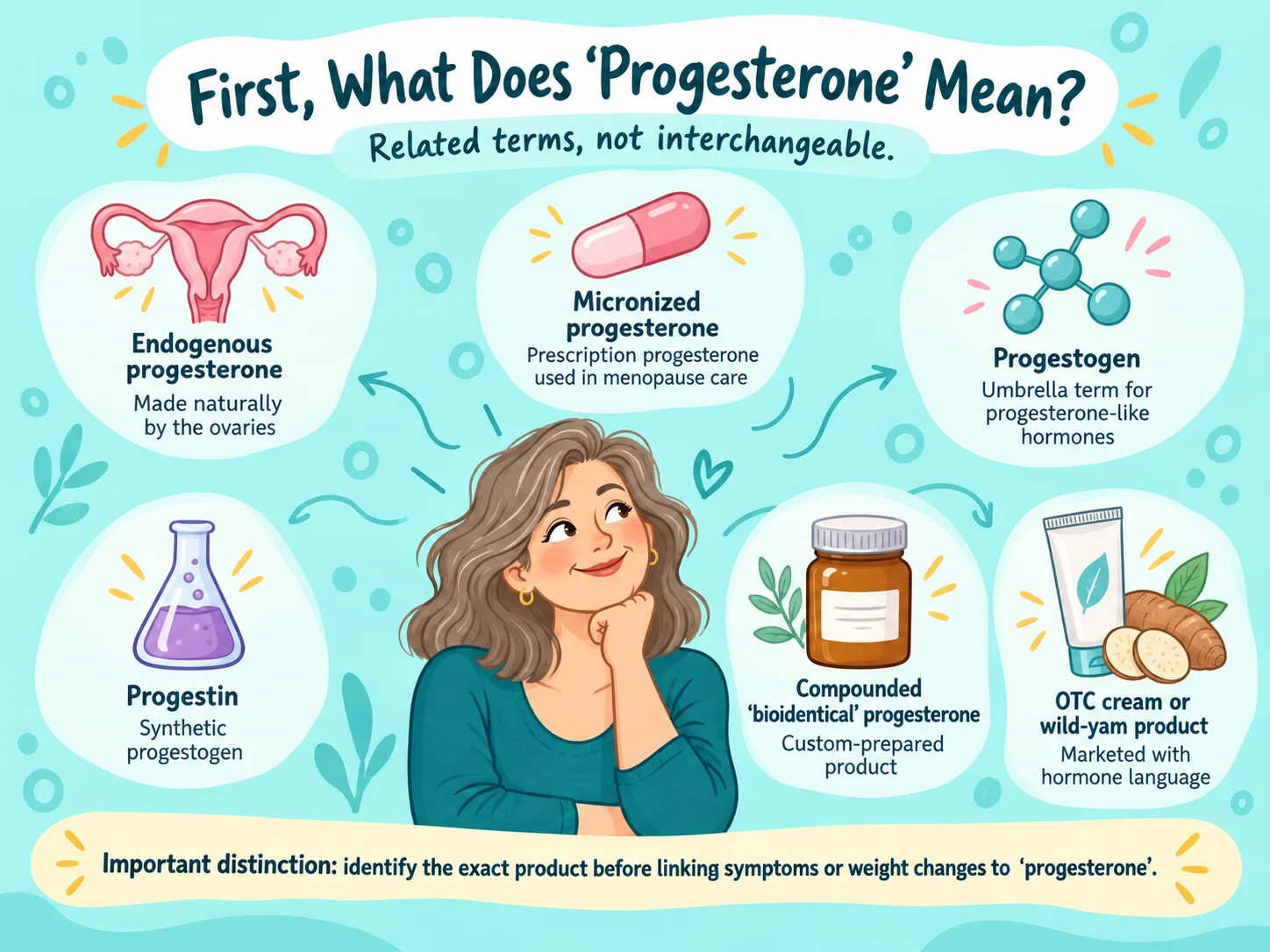
Progesterone is a hormone the ovaries produce after ovulation and during pregnancy. In menopause care, clinicians may prescribe progesterone or a progesterone-like medication for specific reasons. The terminology matters because side effects and evidence from one product should not automatically be applied to every other product.
| Term |
What it means |
Why the distinction matters |
| Endogenous progesterone |
Progesterone produced naturally by the ovaries and, during pregnancy, predominantly by the placenta. |
A blood level is not the same as taking a medication, and a single level can fluctuate. |
| Micronized progesterone |
Prescription progesterone processed so the body can absorb it; oral products are FDA approved for specific uses. |
Often used with systemic estrogen when uterine protection is needed; it can cause drowsiness, dizziness, bloating, or other individual effects. |
| Progestogen |
The umbrella term for substances that produce progesterone-like effects; includes progesterone and synthetic progestins. |
A progestin is a synthetic progestogen. Different molecules may have different side-effect profiles and are used in HRT and contraception. |
| Compounded ‘bioidentical’ progesterone |
A custom-prepared product not reviewed by the FDA in the same way as an approved medication. |
Potency and absorption may be less predictable; ‘bioidentical’ does not automatically mean safer. |
| Over-the-counter cream or wild-yam product |
A supplement or cosmetic product marketed with hormone language. |
It should not be assumed to provide adequate uterine protection when systemic estrogen is used. |
Important Distinction
In everyday conversation, women may say “progesterone” when they mean a progestin-containing pill, IUD, implant, injection, fertility treatment, or HRT product.
Before evaluating weight changes or other symptoms, identify the exact medication and why it was prescribed.
Why Is Progesterone Prescribed During Menopause?
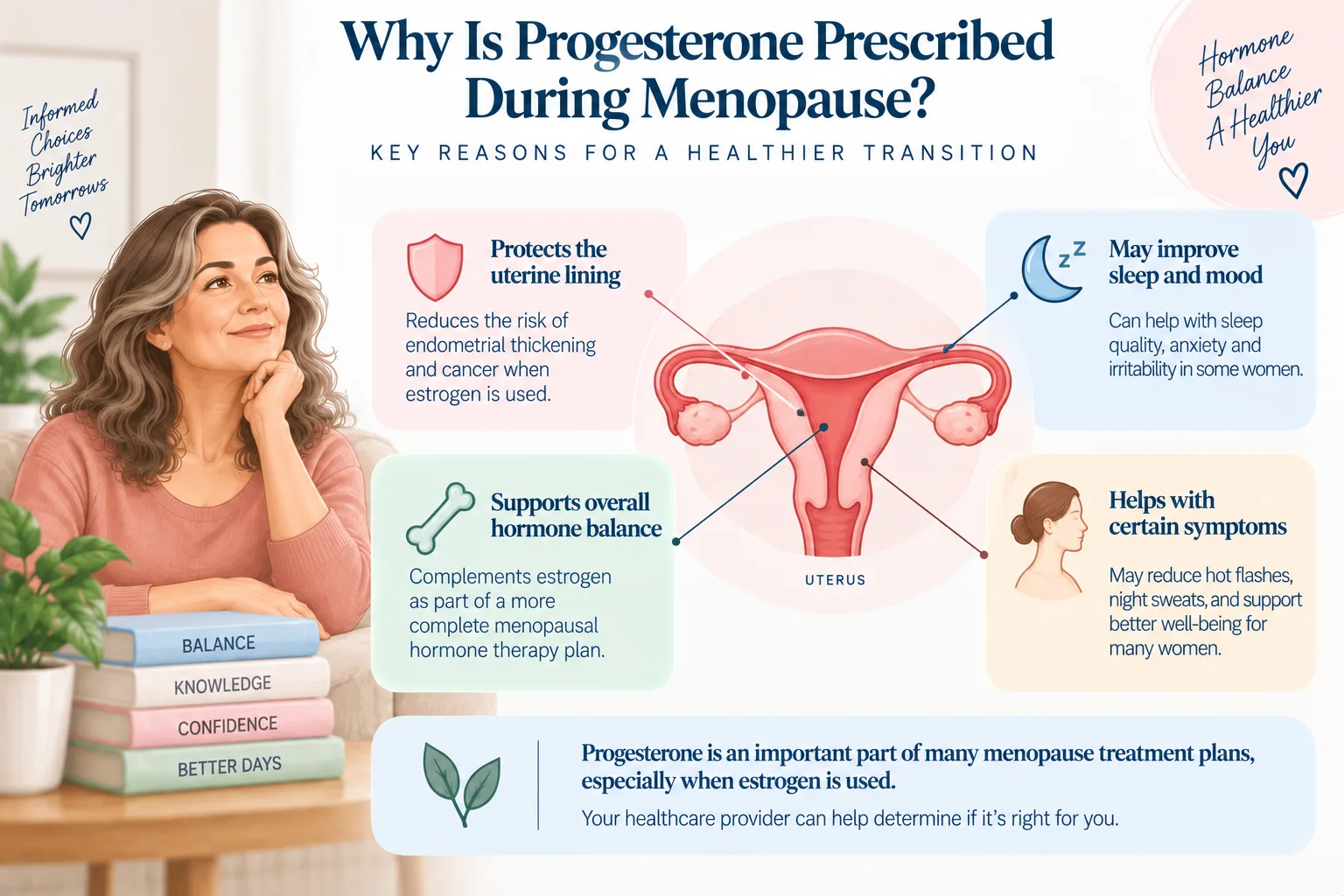
Its central role is often uterine protection
Systemic estrogen can stimulate the endometrium, the lining inside the uterus. In a woman who still has a uterus, using systemic estrogen without adequate endometrial protection can increase the risk of endometrial hyperplasia and cancer. Progesterone or a progestogen is therefore commonly added to oppose that effect.
This is not an optional ‘balancing’ supplement. It may be an essential safety component of the treatment plan. A woman who has had a hysterectomy often does not require progesterone for uterine protection, although individual clinical reasons can differ.
Continuous and cyclic schedules are different
Some women take estrogen and a progestogen every day. Others take estrogen continuously and add a progestogen for part of each month. Bleeding patterns, side effects, and how symptoms relate to the medication can differ between schedules. A symptom diary should record the actual progesterone days, not simply ‘on HRT.’
|
Schedule
|
Basic structure
|
What a patient may notice
|
|
Continuous combined
|
Estrogen and progestogen are taken every day
|
Side effects may feel steady; irregular spotting can occur early in therapy
|
|
Cyclic / sequential
|
Estrogen is taken regularly; progestogen is added for selected days each month
|
Bloating, mood, sleepiness, or bleeding may cluster during or after progestogen days
|
Can Progesterone Help Sleep?
Oral micronized progesterone is metabolized into neuroactive compounds with sedating effects. Randomized-trial data suggest that micronized progesterone may improve some sleep outcomes, particularly sleep-onset latency, although results are not uniform and some studies included concomitant estradiol. Other women experience excessive drowsiness, dizziness, or next-day grogginess, so benefit and tolerability should be assessed individually.
In my approach, that difference matters. ‘It helps me sleep’ and ‘I cannot function the next day’ are not the same therapeutic outcome.
|
FROM DR. DEEPALI’S APPROACH
When micronized progesterone is part of the plan, I ask about sleep quality, next-day alertness, dizziness, bloating, mood, and when the dose is taken. Dose and timing should be individualized; do not drive or perform hazardous activities if the medication makes you impaired.
Want to know more about sleep changes during menopause? Read our complete guide to menopause symptoms by age and stage.
|
Does Progesterone Cause Weight Gain?
Current evidence does not show that menopause therapy containing micronized progesterone consistently causes meaningful increases in body weight or BMI. A systematic review found that estrogen therapy combined with micronized progesterone generally did not increase weight or BMI in postmenopausal women. Because most studies evaluate combined therapy rather than progesterone in isolation, they cannot tell us that every woman will have no scale change — or that progesterone has no individual side effects.
ACOG lists bloating from fluid retention as a potential side effect of hormone therapy. That is clinically different from proving that the medication has created new fat tissue. The right question is therefore not only ‘Did the scale rise?’ but ‘What changed, how quickly, and what else happened at the same time?’
|
QUICK ANSWER
Progesterone may make some women feel heavier through bloating or fluid retention. Constipation or appetite changes may also contribute to scale or waist changes in an individual patient, but they should be evaluated as possible contributing factors rather than assumed to be direct progesterone effects. Long-term fat gain is not an expected automatic effect, and a scale increase should be investigated rather than assigned to progesterone without context.
|
Why the Scale May Change After Starting Progesterone
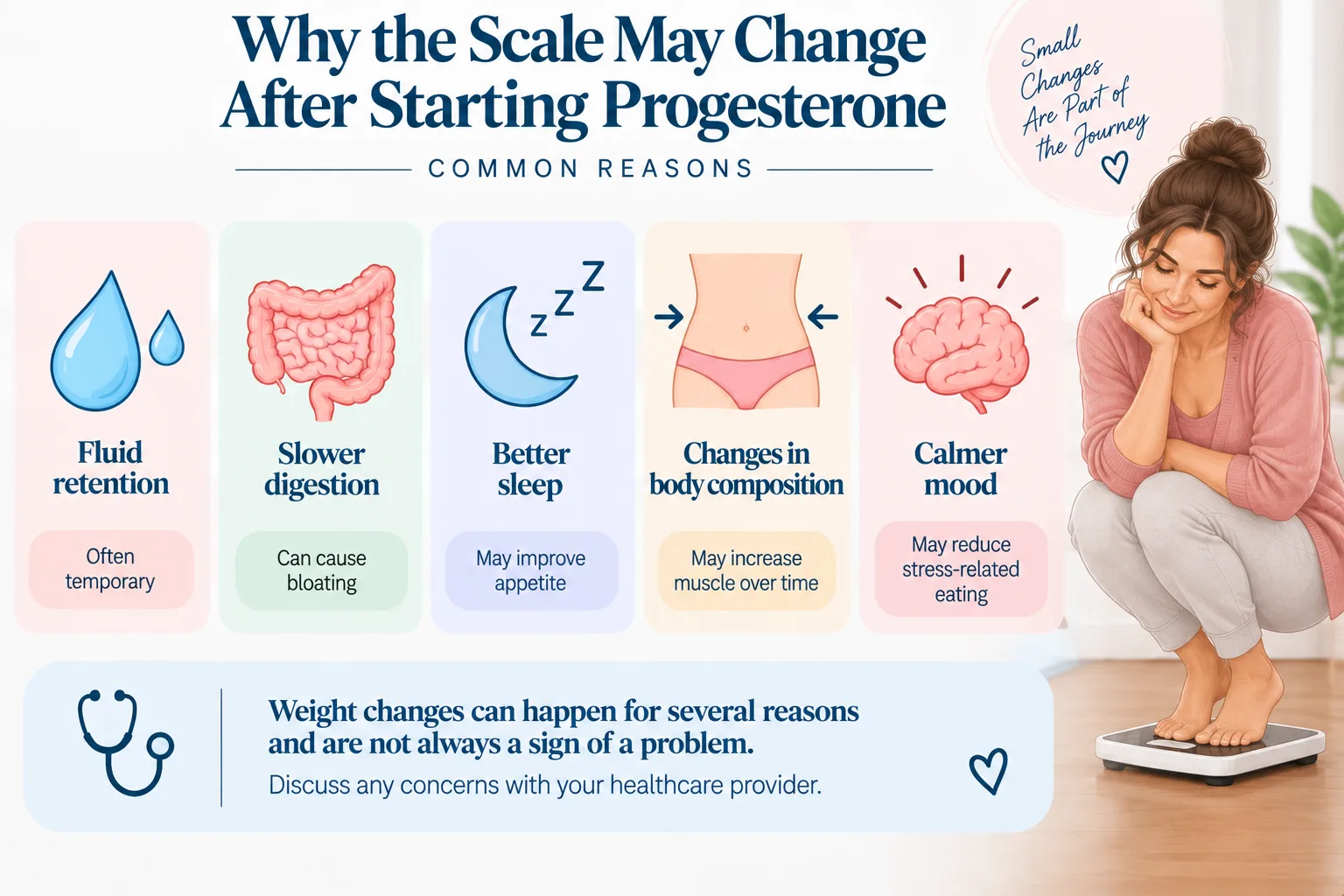
1. Bloating and fluid retention
Water can change body weight over days. Rings may feel tighter, breasts may feel fuller, socks may leave marks, or the abdomen may feel puffy. Sodium intake, travel, constipation, alcohol, hot weather, kidney or heart problems, and other medications can add to fluid changes. Mild early bloating may settle, but persistent or worsening swelling deserves review.
2. Constipation and digestive fullness
A slower bowel pattern can increase abdominal fullness and scale weight without representing fat. Ask whether bowel frequency, stool consistency, abdominal discomfort, fiber, fluid, activity, iron supplements, or other medications changed around the same time.
3. Appetite or cravings
Some women report a change in appetite or cravings after starting progesterone, but increased appetite is not a consistent or well-established effect of oral micronized progesterone. If a clear, persistent appetite change occurs and leads to greater intake over time, it could contribute indirectly to weight gain and should be reviewed in context. That does not mean progesterone has ‘shut down metabolism.’
4. Grogginess may reduce movement
If a medication improves sleep, activity may become easier. If it causes daytime sedation, dizziness, or low motivation, daily movement and training may fall. A woman can therefore experience opposite downstream effects depending on how she responds.
The years in which hormone therapy is started are also the years when aging, estrogen decline, a shift toward abdominal fat, declining lean mass, poor sleep, and changes in activity commonly occur. Starting progesterone during this transition can make the medication look responsible for a trend that began earlier or has several causes.
6. Another medication or medical condition may be involved
• Hypothyroidism or worsening glucose regulation
• Sleep apnea, especially with loud snoring or marked daytime sleepiness
• Depression, anxiety, binge eating, or stress-related changes in appetite
• Medications associated with weight or fluid changes
• Kidney, liver, or heart conditions that contribute to swelling
• Fibroids, an ovarian or abdominal condition, or gastrointestinal causes of persistent abdominal enlargement
Water Weight, Bloating, or Body Fat?
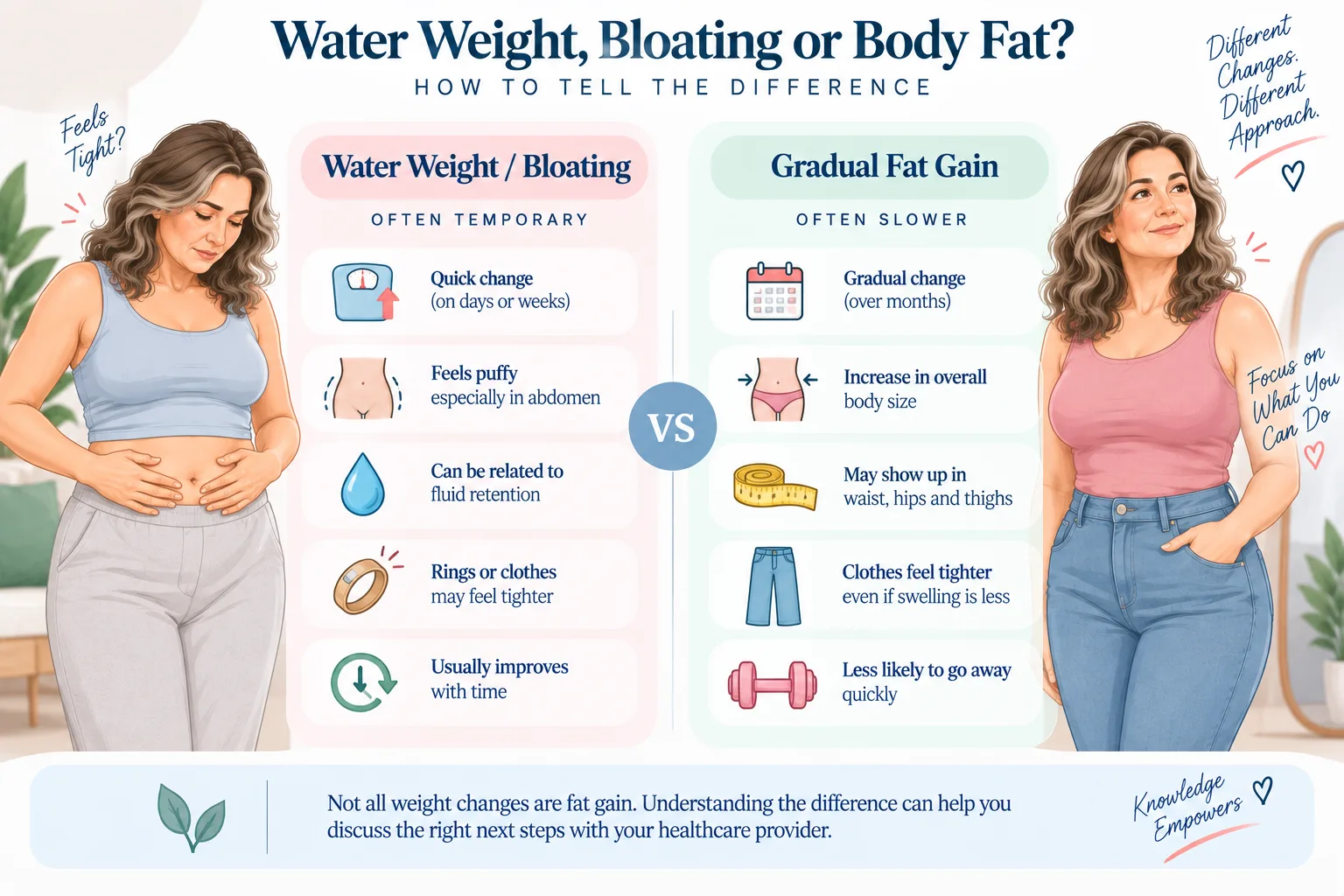
| Pattern |
More Consistent With Fluid or Bloating |
More Consistent With Gradual Fat Gain |
| Timing |
Appears over days or tracks closely with medication days |
Builds over several weeks or months |
| Daily variation |
Can change noticeably from morning to evening |
Usually changes more gradually |
| Symptoms |
Puffiness, tight rings, breast fullness, gas, or constipation |
Waist and overall body measurements trend upward without large day-to-day swings |
| Common triggers |
Sodium, travel, heat, alcohol, constipation, or cyclic dosing |
Sustained appetite or intake changes, reduced activity, muscle loss, or sleep disruption |
| What helps clarify |
Symptom and medication-day diary; clinical exam if symptoms persist |
Multiweek weight and waist trend, dietary/activity review, and body-composition context |
BRING THE BASICS
Take your medication bottles or a complete list, estrogen details, supplements, weight timeline, bleeding history, and the seven-day record. Do not rely on memory for a complicated cyclic regimen.
Micronized Progesterone vs. Synthetic Progestins
Micronized progesterone has the same molecular structure as the progesterone produced by the body. Progestins are progesterone-like medications with different chemical structures. This does not make all micronized progesterone side-effect-free or all progestins harmful. It means individual products should be evaluated on their own evidence, purpose, dose, route, and patient response.
A woman may tolerate one progestogen and not another. The clinically useful conversation is not ‘natural good, synthetic bad.’ It is: Which product provides the necessary endometrial protection, fits the estrogen regimen, is appropriate for this woman’s risks, and produces side effects she can tolerate?
|
FACT CHECK
FDA-approved micronized progesterone may be described as bioidentical because its molecular structure matches human progesterone. That is different from assuming a compounded ‘bioidentical’ product has proven dose consistency or adequate uterine protection.
|
Do Progesterone Creams Cause Weight Gain?
Creams create two separate questions: side effects and effectiveness. Absorption can vary, and an over-the-counter or compounded cream should not be assumed to deliver reliable systemic exposure or protect the uterine lining when systemic estrogen is used. A woman should not replace prescribed progesterone with a cream based on marketing claims or because the cream is called natural.
Menopause HRT Is Not the Same as Progestin-Only Birth Control
Search results often combine menopause HRT with contraceptive pills, implants, IUDs, and injections. Those products use different progestins, doses, routes, and treatment goals. Evidence about a contraceptive injection cannot be copied directly to oral micronized progesterone used with estradiol in menopause.
|
Context
|
Primary purpose
|
Why weight evidence cannot be pooled casually
|
|
Menopause HRT
|
Relieve appropriate menopause symptoms; progestogen often protects the uterus when systemic estrogen is used
|
Usually involves midlife women, estrogen exposure, and HRT-specific doses and schedules
|
|
Progestin-only contraception
|
Prevent pregnancy
|
Different molecules, routes, ages, doses, and baseline physiology
|
|
Fertility or pregnancy support
|
Support implantation or early pregnancy in selected situations
|
Treatment duration, hormonal environment, and simultaneous body changes are different
|
Natural Progesterone Fluctuations vs. Prescription Progesterone
During a natural menstrual cycle, progesterone rises after ovulation and falls before a period if pregnancy does not occur. In early perimenopause, ovulation may become less predictable. Some cycles may produce less progesterone because ovulation did not occur, while other hormone patterns fluctuate from month to month. Symptoms such as irregular periods, breast tenderness, bloating, mood change, poor sleep, and appetite change can occur during this same transition.
That does not mean every symptom can be diagnosed as ‘low progesterone’ or ‘estrogen dominance.’ Those labels are often used online as if one hormone ratio explains belly fat, anxiety, heavy periods, headaches, and insomnia simultaneously. In clinical care, those symptoms are clues. They can also reflect thyroid disease, anemia from heavy bleeding, depression or anxiety, sleep apnea, medication effects, insulin resistance, gastrointestinal conditions, or normal variability in the menopause transition.
Why a single progesterone level may not answer the question
A progesterone result depends on where a woman is in her cycle and whether she ovulated. During perimenopause, cycle timing becomes unpredictable, so one measurement can be difficult to interpret. ACOG does not recommend routine hormone testing before beginning hormone therapy for typical menopause symptoms because hormone levels fluctuate and often do not add useful information beyond symptoms, menstrual changes, history, and clinical evaluation.
|
A TEST SHOULD HAVE A JOB
Testing is useful when it answers a specific question. It should not be ordered simply to attach a hormone label to weight gain or to chase a target number from social media.
Want to understand how hormones change as menopause approaches? Read When Does Menopause Start? Age, Signs & Timing.
|
Does ‘Low Progesterone’ Cause Weight Gain?
There is no simple clinical rule that low progesterone directly causes fat gain or that raising progesterone makes weight fall. During perimenopause, changes in ovulation occur alongside aging, sleep disruption, estrogen fluctuation, activity changes, and a tendency to lose muscle. Treating a woman’s symptoms appropriately may improve quality of life, but progesterone should not be sold as a metabolic reset or weight-loss hormone.
The claim that progesterone ‘slows metabolism’ is too broad. Metabolism is not one switch controlled by one reproductive hormone. Resting energy needs are influenced by body size, lean mass, age, genetics, thyroid function, health status, and other factors. Daily energy use also depends on exercise and the movement that happens outside planned workouts.
Research on menopausal hormone therapy containing micronized progesterone has not shown a consistent rise in body weight or BMI. That finding does not prove every regimen is metabolically identical or that no individual will gain weight. It does argue against the idea that prescribed micronized progesterone automatically causes metabolic shutdown.
How progesterone could affect weight indirectly
|
Possible pathway
|
What it may look like
|
How to evaluate it
|
|
Appetite
|
More hunger, larger portions, stronger cravings, or more evening eating
|
Track hunger before meals, food pattern, sleep, and whether the change clusters after a dose
|
|
Sedation
|
Less walking, skipped exercise, daytime naps, or reduced work activity
|
Compare alertness and movement before and after treatment; review other sedating medicines
|
|
Sleep improvement
|
Better recovery, steadier appetite, and more capacity to exercise
|
Track sleep quality and next-day function — not only hours in bed
|
|
Mood
|
Comfort eating, lower motivation, irritability, or improvement in anxiety
|
Record timing and severity; promptly evaluate persistent depression or safety concerns
|
|
Fluid and digestion
|
Puffiness, abdominal fullness, breast tenderness, or constipation
|
Review daily variation, bowel pattern, swelling, sodium, travel, and medical symptoms
|
These pathways explain why two women on the same medication may report opposite experiences. One may sleep better and become more active. Another may feel groggy and move less. Average study results are essential, but they do not replace listening to the individual response.
Progesterone Sensitivity: When the Medication Feels Hard to Tolerate
Some women appear more sensitive to progesterone or certain progestins. They may report pronounced sedation, dizziness, low mood, irritability, breast tenderness, bloating, headache, or a premenstrual-like feeling. The term sensitivity describes the clinical experience; it does not automatically identify the mechanism or prove that the dose is excessive.
The pattern can be particularly informative in cyclic therapy. If symptoms repeatedly begin during progestogen days and improve after those days end, bring that calendar to the appointment. A repeated pattern is more useful than a general statement that HRT ‘does not agree with me.’
|
Symptom pattern
|
Useful detail to record
|
Why it matters
|
|
Grogginess
|
Dose time, bedtime, wake time, falls, driving difficulty, alcohol and other sedatives
|
Helps distinguish a tolerable nighttime effect from unsafe next-day impairment
|
|
Mood change
|
Start and end dates, intensity, function, relationship to cyclic dose days, safety thoughts
|
Supports timely evaluation and avoids dismissing significant mood symptoms
|
|
Bloating
|
Morning vs. evening, constipation, swelling in hands/legs, sodium, travel, weight variation
|
Helps separate digestive or fluid change from gradual fat gain
|
|
Bleeding
|
Amount, duration, clots, missed doses, months since starting therapy
|
Bleeding may be expected in some schedules but still needs regimen-specific review
|
|
Headache
|
New vs. previous, severity, migraine features, neurologic symptoms, blood pressure
|
A new or severe pattern may require evaluation beyond a routine side-effect discussion
|
How Long Should Bloating or Other Side Effects Last?
There is no single deadline that applies to every woman and every regimen. Mild bloating, breast tenderness, spotting, or headache may improve as the body adjusts. The decision to wait depends on severity, safety, why the medication is being used, and whether symptoms are improving, stable, or worsening.
Do not accept a severe symptom for months simply because someone said HRT needs time. Contact the prescriber earlier when side effects interfere with driving, work, sleep, eating, exercise, or mental health. A clinician may determine that the symptom is unrelated, that another condition needs evaluation, or that the hormone plan should be changed.
|
A PRACTICAL REVIEW POINT
At follow-up, be ready to answer: Is the symptom improving? Is the treatment helping the problem it was prescribed for? Are side effects tolerable? Is the regimen providing the necessary uterine protection? Those four questions matter more than an arbitrary adjustment deadline.
|
Does Every Woman Using Estrogen Need Progesterone?
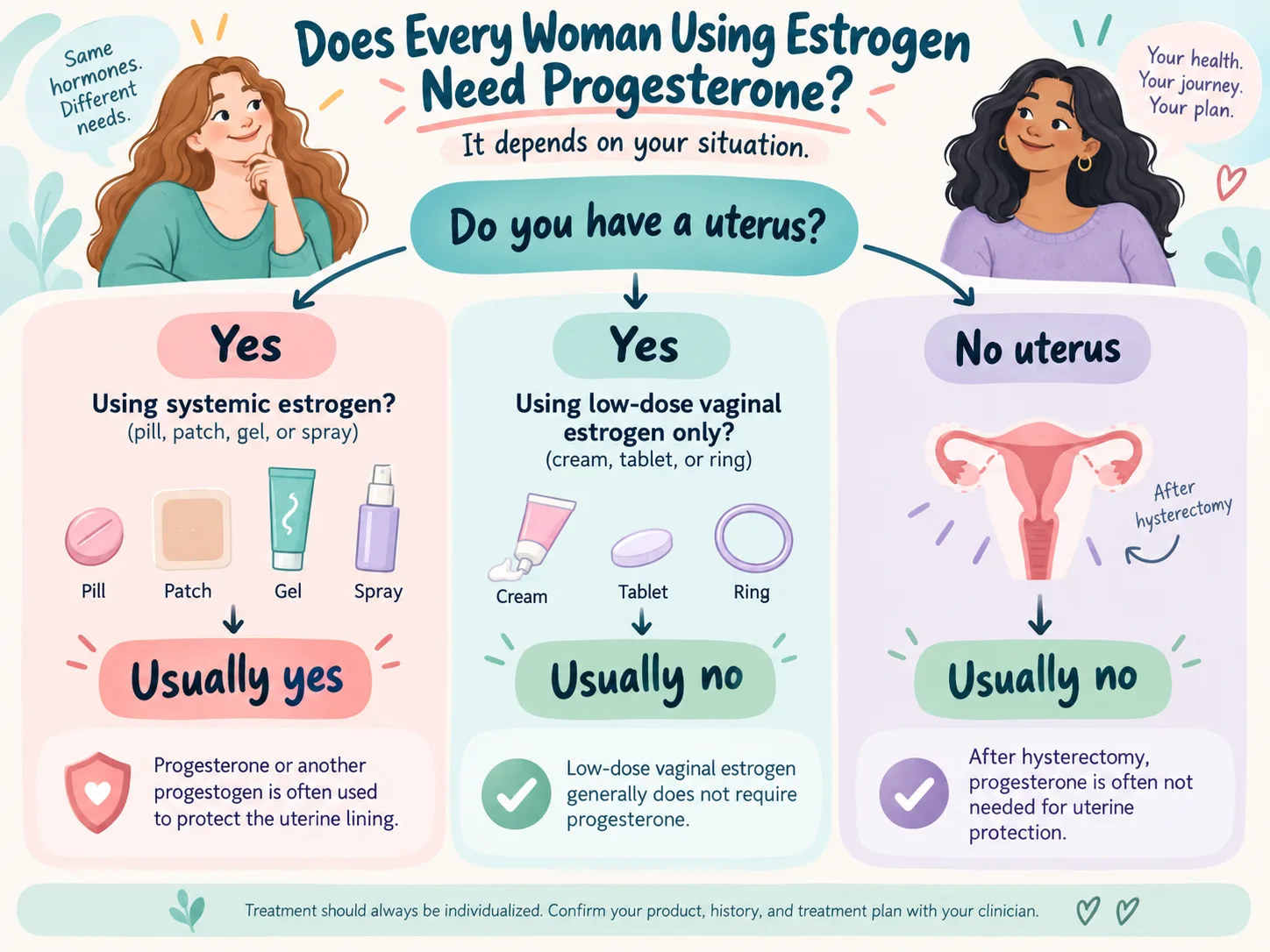
No. The answer depends mainly on whether the uterus is present and whether estrogen is systemic or low-dose local treatment. A woman with an intact uterus generally needs adequate endometrial protection when using systemic estrogen. A woman who has had a hysterectomy often does not need progesterone for that purpose. Surgical details and individual conditions can create exceptions, so confirm rather than assume.
Systemic estrogen and low-dose vaginal estrogen are not the same
Systemic estrogen circulates through the body and is used for symptoms such as hot flashes and night sweats. Low-dose local vaginal estrogen used for genitourinary syndrome of menopause generally does not require a progestogen for endometrial protection, even when the uterus is present. This is different from systemic estrogen. Any postmenopausal bleeding still requires evaluation, and products that deliver systemic estrogen should not be treated as low-dose local therapy.
|
Treatment situation
|
Typical progesterone question
|
Patient action
|
|
Systemic estrogen + uterus present
|
How is the uterine lining being protected?
|
Know the progestogen product, schedule, and what to do after a missed dose
|
|
Systemic estrogen after hysterectomy
|
Is there another reason progesterone is being used?
|
Confirm the surgical history and treatment goal with the prescriber
|
|
Low-dose vaginal estrogen
|
Generally no progestogen needed for endometrial protection — confirm the specific product is truly low-dose local
|
Use product-specific guidance; do not apply systemic-HRT rules automatically
|
|
No estrogen; progesterone prescribed alone
|
What symptom or condition is being treated, and what evidence supports it?
|
Ask how benefit and side effects will be monitored
|
What Should You Do If Your Weight Increased After Starting Progesterone?
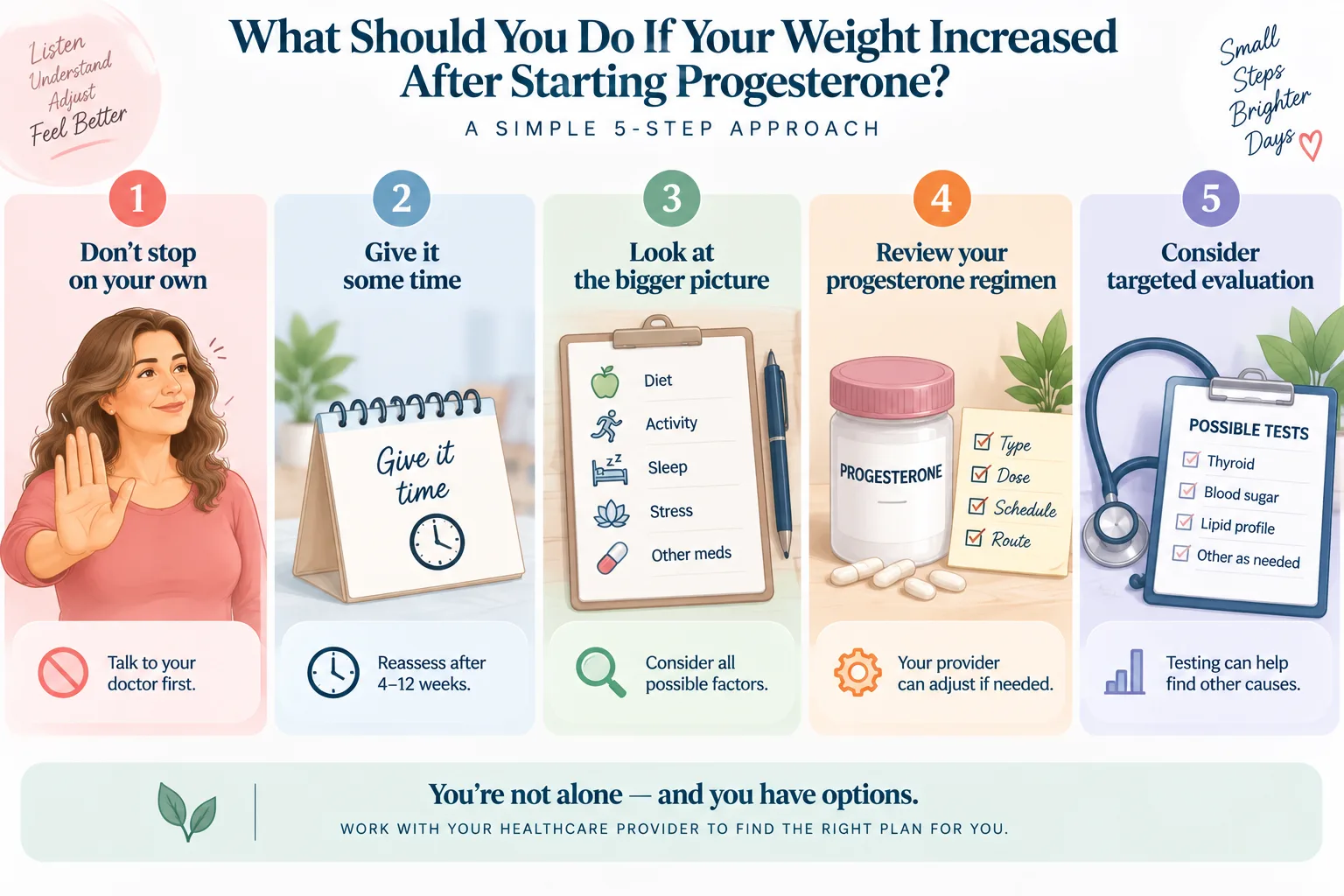
Step 1: Do not stop it without understanding why you take it
If you have a uterus and are using systemic estrogen, progesterone or a progestogen may be protecting the endometrium. Stopping it while continuing estrogen can create a safety problem. Contact the prescriber before changing the dose, schedule, or route.
Step 2: Establish the timeline
• Record the exact product, dose, route, schedule, and start date.
• Note whether the change began before treatment or only after it.
• For cyclic therapy, mark progesterone days and bleeding days.
• Track bloating, bowel pattern, appetite, sleep, mood, dizziness, swelling, and activity.
• Review a two- to four-week trend rather than reacting to one reading, unless the change is rapid or symptoms are concerning.
Step 3: Look for the type of change
A rapidly fluctuating number with puffiness suggests a different problem from a steadily increasing waist and appetite over months. A symptom diary should help the clinician decide whether to watch, evaluate another cause, or adjust treatment.
Step 4: Review the whole regimen
The estrogen type and route, progesterone or progestin, continuous versus cyclic schedule, other medications, alcohol, sodium, constipation, sleep, and activity can all affect how a woman feels. Adjusting one component at a time makes the result easier to interpret.
Step 5: Ask whether testing would answer a real question
Routine hormone testing is generally not required before or during standard menopause hormone therapy because levels fluctuate and treatment is guided mainly by symptoms, bleeding, history, and response. Thyroid, glucose/A1C, kidney or liver tests, or other evaluation may be appropriate when the history points to those conditions. Testing should be targeted , not a broad fishing expedition for a ‘hormone imbalance.’
What Might a Clinician Adjust?
The correct adjustment depends on why progesterone is required and which symptom is occurring. Possible clinical options may include reviewing timing, dose, continuous versus cyclic scheduling, the specific progestogen, or another endometrial-protection strategy. These are prescribing decisions, not do-it-yourself experiments.
|
Problem reported
|
What the clinician may review
|
What not to do on your own
|
|
Morning grogginess
|
Dose timing, sedating effects, other sleep medicines, alcohol, sleep apnea, and whether the product fits the patient
|
Drive while impaired or take an extra dose after forgetting one without instructions
|
|
Bloating or swelling
|
Timeline, sodium, constipation, other medicines, blood pressure, heart/kidney/liver symptoms, product and schedule
|
Use over-the-counter diuretics or stop uterine protection without advice
|
|
Mood change
|
Prior mood history, timing relative to progestogen days, sleep, dose/product, safety symptoms
|
Dismiss severe depression or thoughts of self-harm as ‘just hormones’
|
|
Unexpected bleeding
|
Time on therapy, adherence, regimen, uterine history, and whether investigation is needed
|
Increase, skip, or double hormones to control bleeding
|
|
Increasing appetite
|
Meal pattern, sleep, stress, medication timing, glucose risk, and whether the change is sustained
|
Crash diet or compensate with excessive exercise
|
When Symptoms During Hormone Therapy Need Prompt Medical Attention
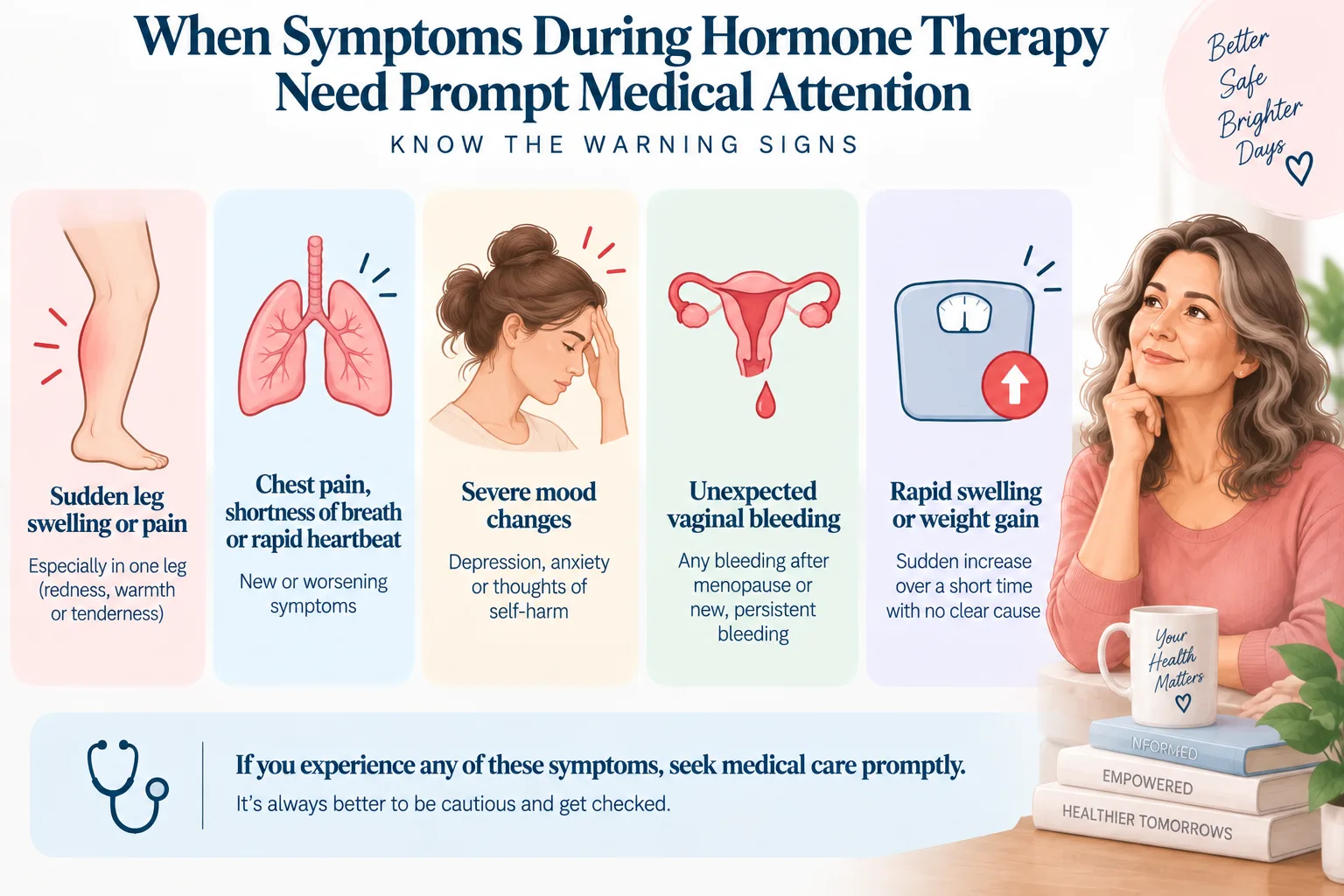
The following symptoms require prompt evaluation, but they should not be interpreted as progesterone-specific adverse effects; risk depends on the complete hormone regimen and the woman’s individual risk factors.
Most mild side effects are not emergencies, but some symptoms should not be watched indefinitely or attributed to progesterone without evaluation.
• One-sided leg swelling, warmth, or pain
• Chest pain, sudden shortness of breath, fainting, or coughing blood
• Severe allergic symptoms, facial swelling, or trouble breathing
• Severe or worsening depression, confusion, or thoughts of self-harm
• Postmenopausal bleeding or bleeding that is heavy, persistent, or outside the expected treatment pattern
• Rapid unexplained weight gain with significant swelling or breathing symptoms
• Severe abdominal or pelvic pain, persistent abdominal enlargement, or feeling full unusually quickly
|
URGENT CARE
Call emergency services for chest pain, severe breathing difficulty, fainting, signs of a serious allergic reaction, or inability to stay safe. In the United States, call or text 988 for a mental-health crisis.
|
Can You Lose Weight While Taking Progesterone?
Yes. Taking progesterone does not make fat loss impossible. If appetite, bloating, or grogginess changed, address those specific barriers instead of assuming the medication has permanently damaged metabolism.
• Keep main meals anchored with protein and fiber so hunger is easier to interpret.
• Strength train appropriately to preserve muscle during midlife and weight loss.
• Use walking and cardiovascular activity for health and daily energy expenditure.
• Treat night sweats, insomnia, sleep apnea, depression, or pain that undermines consistency.
• Review alcohol, liquid calories, sodium, constipation, and medications before adding a supplement marketed as a hormone fix.
|
CLINICAL PERSPECTIVE
If the scale changed immediately after progesterone but your waist, appetite, and routine did not, first look for fluid, bowel, and timing patterns. If weight and waist continue rising over several weeks, broaden the review rather than repeatedly cutting food. (Label changed from “Personal Suggestion” to “Clinical Perspective” per review.)
Looking for practical ways to support weight, energy, sleep, and metabolic health during menopause? Explore our doctor’s guide to natural menopause support
|
A Seven-Day Clarity Check Before Your Appointment
This short record is not intended to prove causation or replace medical care. Its purpose is to turn a vague concern — ‘progesterone made me gain weight’ — into information the prescriber can use.
| What to Track |
What to Record |
Keep It Simple |
| Medication |
Exact progesterone/progestin, dose, route, and time taken |
Photograph the pharmacy label if the product name is confusing |
| Weight, if appropriate |
Use the same scale under similar morning conditions |
Do not weigh repeatedly through the day |
| Bloating or swelling |
Record severity — none, mild, moderate, or severe — plus location and morning/evening pattern |
Note tight rings, sock marks, one-sided swelling, or breathing symptoms |
| Appetite |
Usual, lower, or higher; major cravings; evening hunger |
Record the pattern rather than every calorie unless tracking was already advised |
| Sleep and alertness |
Bedtime, awakenings, sleep quality, morning grogginess, and naps |
Note whether you felt safe to drive and work |
| Digestion |
Bowel movement, constipation, and abdominal discomfort |
Note symptoms that are new or severe |
| Mood and bleeding |
Mood changes, irritability, low mood, spotting, or bleeding |
Record severity and seek prompt help for safety concerns |
Questions to Ask the Prescriber
• Why am I taking progesterone or this particular progestin?
• Is it providing uterine protection with my estrogen regimen?
• Am I on continuous or cyclic treatment, and what bleeding should I expect?
• Could my bloating, mood, or grogginess be related to this product or schedule?
• What other causes of my weight or swelling pattern should we evaluate?
• Would changing timing, product, route, dose, or schedule preserve the benefit while improving tolerability?
• What symptoms should prompt an urgent call, and when should we reassess?
• If I miss a dose, what should I do?
Concerned About Weight Changes on Progesterone?
Bloating, fluid retention, appetite, sleep, and other midlife changes can all affect the scale. If you’re unsure what may be contributing, get personalized care at Galleria Women’s Health to review your symptoms and hormone therapy plan.
|
Common Mistakes That Make the Problem Harder to Solve
• Stopping progesterone while continuing systemic estrogen without confirming uterine protection.
• Changing estrogen, progesterone, diet, supplements, and exercise in the same week.
• Assuming every abdominal change is fat — or every scale change is fluid.
• Using an over-the-counter cream in place of prescribed progesterone.
• Ordering repeated hormone panels without a clear clinical question.
• Responding to appetite change with severe restriction, then overeating later.
• Ignoring snoring, depression, constipation, thyroid symptoms, or a new medication because the change started near HRT.
|
CHANGE ONE VARIABLE
When it is medically safe and your prescriber recommends an adjustment, changing one variable at a time makes it easier to learn what improved the symptom.
|
Conclusion
Progesterone does not usually cause significant body-fat gain by itself. It can, however, change how some women feel through bloating, fluid retention, constipation, drowsiness, or mood effects. Those experiences are real and deserve a careful review, even when the average research result is reassuring.
The solution is not to blame every midlife body change on progesterone or to stop an important medication without a plan. Identify the exact product, why it was prescribed, the timing of symptoms, and whether the change looks like fluid, digestion, appetite, activity, or gradual fat gain.
Key Terms Explained
- Progesterone: A hormone produced by the ovaries after ovulation. Prescription progesterone may also be used as part of menopause hormone therapy.
- Micronized progesterone: Prescription progesterone processed so the body can absorb it. It is commonly used with systemic estrogen when protection of the uterine lining is needed.
- Progestogen: The umbrella term for substances that produce progesterone-like effects. It includes progesterone itself and synthetic progestins.
- Progestin: A synthetic progestogen. Different progestins have different chemical structures and may have different effects and side-effect profiles.
- Endometrium: The lining inside the uterus. Systemic estrogen can stimulate this lining, which is why adequate endometrial protection is important for many women who still have a uterus.
- Systemic estrogen: Estrogen that circulates throughout the body and is commonly used for menopause symptoms such as hot flashes and night sweats. It is different from low-dose local vaginal estrogen.
- Continuous combined HRT: A treatment schedule in which estrogen and a progestogen are taken every day.
- Cyclic / sequential HRT: A schedule in which estrogen is taken regularly and a progestogen is added only for selected days of the month.
- Endometrial protection: The use of progesterone or another appropriate progestogen to help oppose estrogen’s stimulating effect on the uterine lining.
- Compounded “bioidentical” progesterone: A custom-prepared hormone product that is not reviewed by the FDA in the same way as an approved medication. Potency and absorption may be less predictable.
References and Further Reading
1. American College of Obstetricians and Gynecologists. Hormone Therapy for Menopause.
2. American College of Obstetricians and Gynecologists. Should I Have Hormone Testing Before Starting Hormone Therapy?
3. Cleveland Clinic. Progesterone: Function, Levels & Side Effects.
4. Coquoz A, Gruetter C, Stute P. Impact of micronized progesterone on body weight, body mass index, and glucose metabolism: a systematic review. Climacteric. 2019;22(2):148–161. PMID: 30477366.
5. Nolan BJ, Liang B, Cheung AS. Efficacy of micronized progesterone for sleep: a systematic review and meta-analysis of randomized controlled trial data. J Clin Endocrinol Metab. 2021;106(4):942–951. PMID: 33245776.
6. The North American Menopause Society. The 2020 Genitourinary Syndrome of Menopause Position Statement. Menopause. 2020;27(9):976–992. PMID: 32852449.
7. Endocrine Society Clinical Practice Guideline: Treatment of Symptoms of the Menopause. J Clin Endocrinol Metab. 2015;100(11):3975–4011.
8. National Institutes of Health, MedlinePlus. Progesterone.
9. The Menopause Society. Patient Education.
Medical disclaimer: This article is for educational purposes only and does not replace individualized medical advice, diagnosis, or treatment. Do not start, stop, or change progesterone, estrogen, contraception, fertility medication, or compounded hormones without guidance from the clinician responsible for your care.



 Meet Your Doctor


 03 Jul, 2026
 10:13 AM


Leave a Comment