Understanding the Stages of Menopause: It Is a Transition, Not a Switch
One of the most common questions women ask me is, “What stage of menopause am I actually in?” The question usually comes after something has changed: a period that suddenly arrives two weeks early, three months without bleeding followed by a heavy cycle, new 3 a.m. waking, hot flashes while periods are still regular, or a year without a period and continued symptoms.
The confusion is understandable because the word menopause is used casually to describe an entire stretch of midlife. Medically, however, menopause has a much narrower meaning. It is the final menstrual period. We can only identify that final period in hindsight, after 12 consecutive months pass without another period or spotting, assuming the bleeding pattern is interpretable and there is no other explanation for the amenorrhea.
For everyday education, the menopause stages are usually simplified to perimenopause, menopause, and postmenopause. Clinically, the reproductive-aging
is more precise. The STRAW+10 framework separates the early and late menopause transition and also divides early and late postmenopause. That extra detail is useful because your cycle pattern, fertility, symptoms, and health priorities can change meaningfully from one stage to the next.
|
Need the broader definition first?
This article is focused specifically on staging. For a complete overview of what menopause is, why it happens, symptoms, and treatment, see our foundational guide. Read: What Is Menopause?
|
In my practice, I do not assign a stage from age alone, and I do not use a single hormone result as a countdown clock. I start with the menstrual history: what was normal for you, what has changed, how persistent the change is, whether you are still ovulating unpredictably, and whether another condition could explain the same pattern. Then I layer in symptoms, age, medical history, contraception, surgeries, and selective testing when it will actually answer a clinical question.
|
How I actually think about the question
When a woman asks me, “What stage am I in?”, I usually ask for her old cycle pattern before I ask for a hormone level. A woman who was always 27–29 days and is now cycling at 25, 35, 28, 37 and 26 days is telling me something very different from a woman whose cycles have been irregular since her 20s. The stage only becomes useful when it helps us decide what to watch, what to investigate and what to treat.
Dr. Kashyap’s Clinical Perspective
The stage label is useful only if it helps answer a practical question: Why are your cycles changing? Is pregnancy still possible? Does this bleeding pattern need evaluation? Are symptoms severe enough to treat? What long-term health priorities should we address now? I do not want women memorizing stage numbers while missing the reason the stage matters.
|
Stages of Menopause at a Glance
|
Stage
|
What Happens to Periods
|
What Is Happening Biologically
|
What Often Matters Clinically
|
|
Late reproductive years
|
Usually regular, sometimes subtle shortening or flow changes
|
Ovarian reserve is declining, but ovulation may still be regular
|
Fertility decline, early symptoms, ruling out other causes
|
|
Early menopause transition
|
Persistent cycle-length variability of 7 days or more
|
Ovulation and ovarian hormone output become less predictable
|
Cycle tracking, emerging symptoms, contraception/fertility
|
|
Late menopause transition
|
A bleeding-free interval of 60 days or more may occur
|
Frequent anovulation and large hormone fluctuations
|
Skipped periods, VMS, sleep, abnormal bleeding evaluation
|
|
Menopause / final menstrual period
|
The final period; recognized only later
|
Ovarian cycling has ended
|
Confirmed after 12 months without bleeding or spotting
|
|
Early postmenopause
|
No periods
|
FSH continues to rise and estradiol continues to fall for about 2 years, then stabilizes
|
VMS may continue; bone loss and GSM deserve attention
|
|
Late postmenopause
|
No periods
|
Reproductive hormone changes are relatively stable; aging-related health priorities dominate
|
GSM, bone, heart, metabolic and healthy-aging care
|
The average age of natural menopause in the United States is about 51 to 52, but age does not define the stage by itself. Many women begin noticing perimenopausal changes years earlier, and symptom timing varies widely from woman to woman.
I also avoid using family history as a prediction date. Your mother's age at menopause can be a useful clue, but it is not a timer. Smoking, ovarian surgery, chemotherapy or radiation, genetics, autoimmune conditions and individual ovarian biology can all shift the timeline.
How Many Stages of Menopause Are There? Why You See 3, 4, 7, or 10
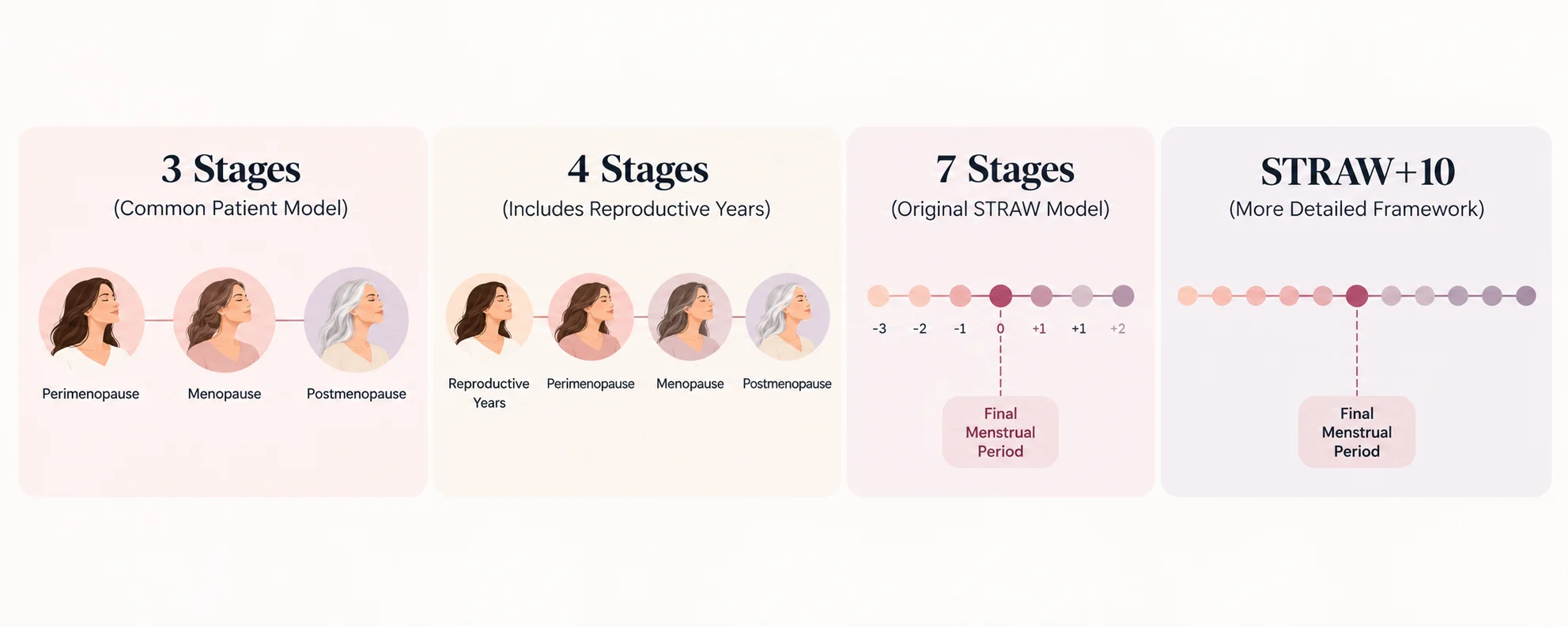
Search online and you will find several different answers. Cleveland Clinic and the U.S. Office on Women’s Health commonly teach three stages: perimenopause, menopause, and postmenopause. Some patient guides add the reproductive or premenopausal years and call it a four-stage timeline. Other pages talk about the “7 stages of menopause,” while research papers use STRAW+10 stage numbers such as -3, -2, -1, 0, +1, and +2.
The phrase 7 stages of menopause comes from the original STRAW reproductive-aging framework, which divided adult reproductive life into seven broad stages centered on the final menstrual period. The updated STRAW+10 system refined several stages into additional substages. In other words, these models are not describing different bodies; they are using different levels of detail. The +10 refers to the workshop held ten years after the original STRAW meeting, not to the number of stages.
|
Model
|
What It Includes
|
Best Use
|
|
3-stage patient model
|
Perimenopause → Menopause → Postmenopause
|
Simple patient education
|
|
4-stage patient timeline
|
Reproductive / premenopause → Perimenopause → Menopause → Postmenopause
|
Useful when explaining changes before obvious perimenopause
|
|
Original STRAW “7 stages”
|
3 reproductive stages + 2 transition stages + 2 postmenopause stages
|
Historical research framework
|
|
STRAW+10
|
Refined late reproductive, early/late transition, final menstrual period, early postmenopause substages, late postmenopause
|
Current clinical/research staging of reproductive aging
|
Why this matters for search and for patients
A woman asking “what are the stages of menopause?” usually does not need a debate about numbering. She needs a map that tells her where she may be now, what clues define the stage, and what deserves medical attention. That is why this guide shows the simple model and the clinical model together.
The Clinical Menopause Timeline: STRAW+10 in Simple English
STRAW+10 stands for the Stages of Reproductive Aging Workshop +10. It is the most widely used framework for describing reproductive aging around the final menstrual period. The most important practical feature is that menstrual-cycle criteria are primary. Hormone markers such as FSH, AMH, inhibin B, and estradiol can support the picture, but they are not meant to replace the bleeding history in a woman whose cycles can be observed.
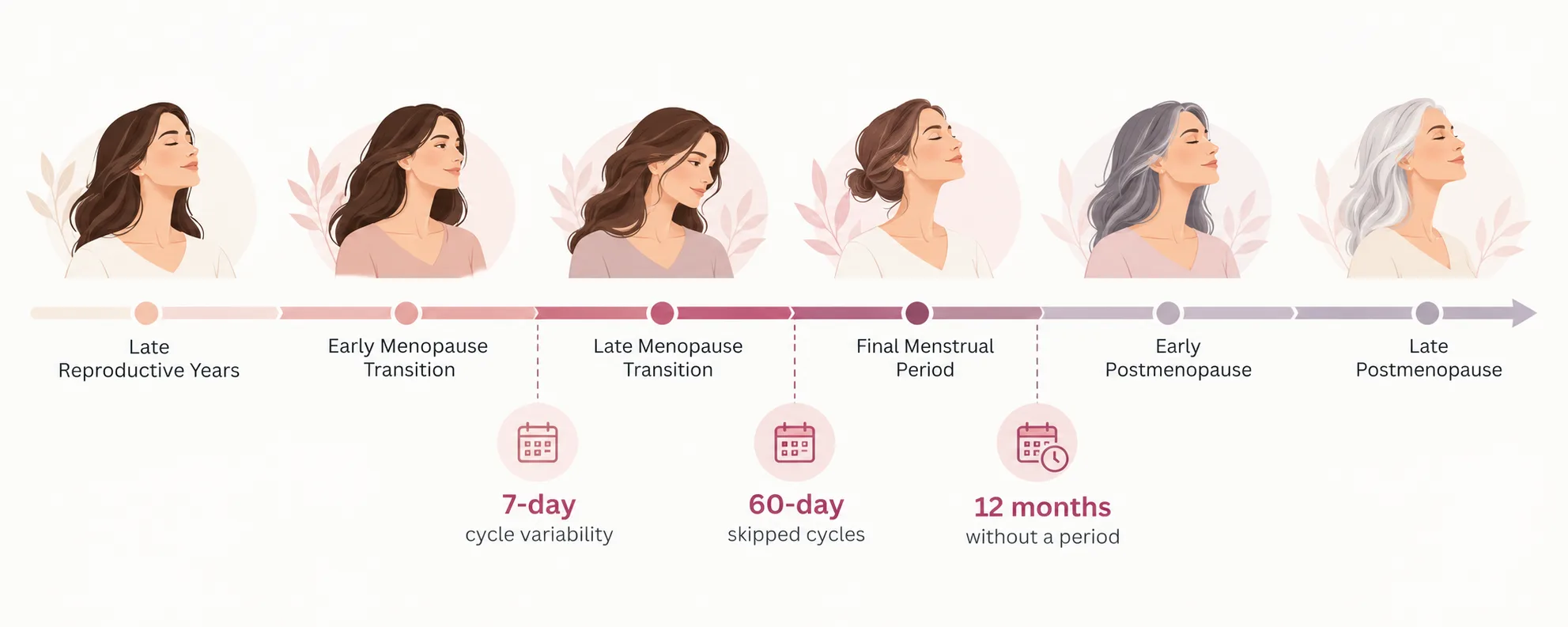
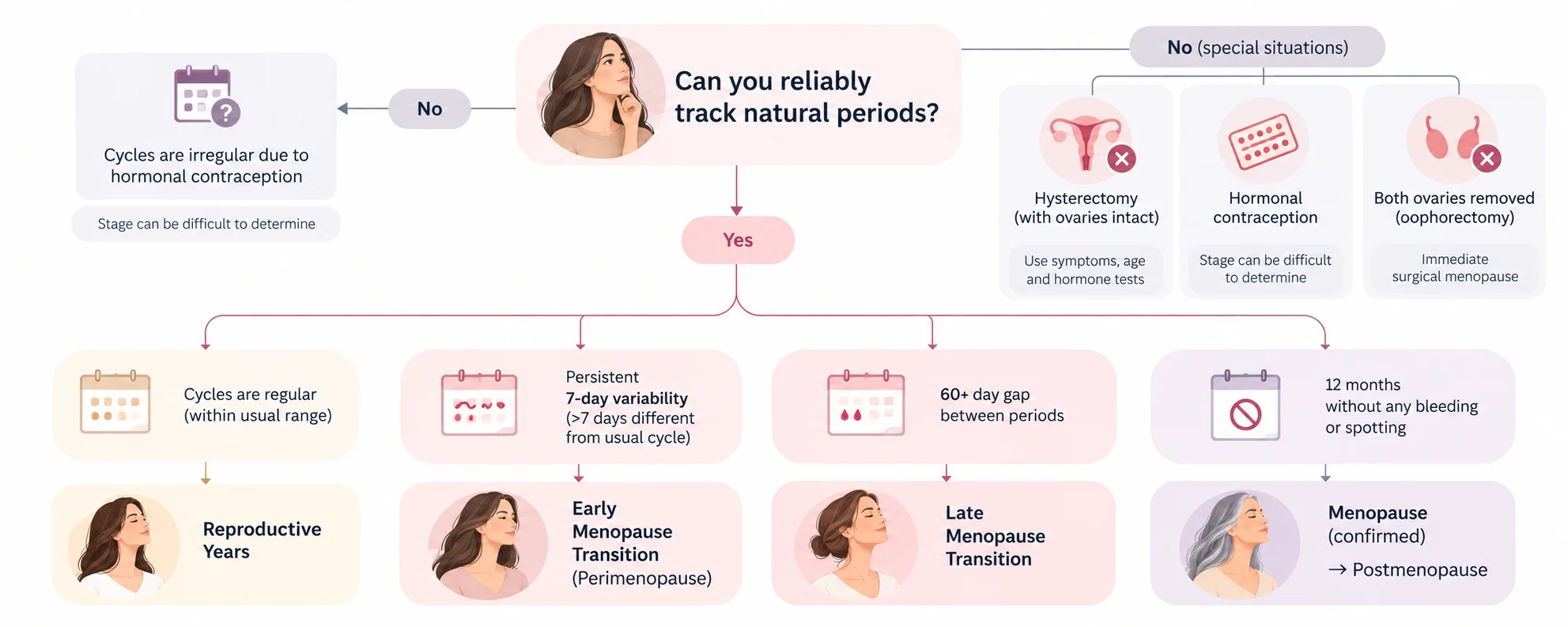
The two transition thresholds worth remembering are simple: persistent cycle-length variability of 7 days or more suggests the early menopause transition, while an interval of 60 days or longer without menstruation is characteristic of the late transition. The final menstrual period is Stage 0. Early postmenopause follows, and late postmenopause then continues for the rest of life. Persistent means the variability recurs within 10 cycles.
|
Practical Tip
If you are trying to understand your stage, a six-to-twelve-month calendar of actual bleeding dates is often more useful than a folder of isolated hormone results. Record the first day of each period, how long the bleeding lasted, whether it was unusually heavy or light, and the symptoms that matter most to you.
|
Stage 1: Late Reproductive Years (STRAW -3) : Before Perimenopause Is Obvious
Technically, the late reproductive stage is not yet the menopause transition. I still include it because this is where many women begin saying, “Something feels different, but my periods are still regular.” In current research and in my clinic, that matters. Symptoms can begin before a woman has the textbook irregular cycles she expects to see in perimenopause.
Ovarian reserve is gradually declining, but ovulation may still occur regularly. Cycles can remain predictable, or they may become subtly shorter. Some women notice a change in flow, stronger PMS-like symptoms, new sleep disruption, or a sense that they are not responding to stress the way they used to. None of those findings, by themselves, proves perimenopause.
This is also the stage where I am especially careful not to over-attribute symptoms to hormones. A woman in her late 30s or early 40s with fatigue, anxiety, palpitations, irregular bleeding, or weight change may also need evaluation for pregnancy, thyroid disease, iron deficiency, sleep disorders, medication effects, prolactin abnormalities, PCOS, or other causes depending on the pattern.
What I Am Looking For Before I Call This Perimenopause
I separate a new symptom from a new pattern. One bad month of sleep, one late period after travel, or one episode of palpitations does not automatically equal perimenopause. What matters is whether the change persists, whether it tracks with the menstrual cycle, and whether several clues are appearing together.
This is also where context matters. If a woman tells me that her mother reached menopause early, she recently had ovarian surgery, she smokes, or she had chemotherapy or pelvic radiation, I interpret the same symptoms differently than I would in someone without those factors.
|
Dr. Kashyap’s Clinical Perspective
I have written before about women in their late 30s and 40s being told that fatigue, brain fog, sleep changes, abdominal weight gain, anxiety, or irregular periods are “just stress.” I do not want those symptoms dismissed , but I also do not want every symptom automatically labeled perimenopause. Good menopause care does both: recognize the transition early and keep the differential diagnosis open.
|
Stage 2: Early Menopause Transition (STRAW -2) : The First Clear Cycle Pattern Change
The early menopause transition is where cycle history becomes especially useful. STRAW+10 defines this stage by a persistent difference of 7 days or more in the length of consecutive menstrual cycles. The Menopause Society uses the same practical marker when explaining perimenopause to patients.
Imagine that your periods used to arrive every 28 to 30 days. Over several months, your cycles now look like 27 days, 36 days, 28 days, 35 days, and 26 days. One unusual cycle is not enough. The important clue is a recurring departure from your established pattern.
|
Cycle
|
Example Length
|
What I Would Notice
|
|
Your prior pattern
|
28-30 days
|
Predictable baseline
|
|
Cycle 1
|
27 days
|
Close to baseline
|
|
Cycle 2
|
36 days
|
About 9 days longer than Cycle 1
|
|
Cycle 3
|
28 days
|
Returns closer to baseline
|
|
Cycle 4
|
35 days
|
Repeated large variability
|
|
Cycle 5
|
26 days
|
Shorter again; pattern remains variable.
|
Hormones do not simply slide downward during this stage. Ovulation may still occur, but it is less predictable. Progesterone exposure can become inconsistent when ovulation is delayed or does not occur. Estradiol can be low on one day and relatively high on another. That is one reason symptoms may feel intermittent and one reason a single blood test can be misleading.
That hormone variability is one reason I ask women to look at trends rather than individual days. You may have breast tenderness or heavier bleeding during a higher-estrogen cycle, then hot flashes, sleep disruption or a longer gap in a different cycle. The symptoms can look contradictory because the ovary is not following a smooth downward line.
|
What I usually advise in early perimenopause
Track 6–12 cycles, not just the last one. Record the first day of bleeding, the cycle length, unusually heavy flow, any skipped cycle, sleep changes, hot flashes, migraines and the two or three symptoms that affect your day most. That gives us something clinically useful instead of a vague memory that “everything has been off for months.”
|
What You May Notice in Early Perimenopause
Periods still happen, but the spacing changes more than it used to.
Bleeding may become somewhat heavier, lighter, shorter, or longer.
Sleep may become less predictable, including early-morning waking.
PMS-like symptoms, migraines, or mood sensitivity may change in pattern.
Hot flashes can begin, although they are not required for the diagnosis.
Brain fog, lower stress tolerance, vaginal dryness, or libido changes can appear , but they are nonspecific and should be interpreted in context.
If those symptoms are mild, the first step may simply be tracking, sleep support, strength and aerobic activity, nutrition and identifying obvious triggers. If they are disrupting work, sleep, mood, intimacy or exercise, I do not wait for menopause to become 'official' before discussing treatment. Perimenopause is treatable.
Symptoms becoming the bigger issue?
This article is focused on staging. For a deeper review of symptoms by age and stage, including hot flashes, sleep, mood, brain fog, vaginal and urinary symptoms, use the dedicated symptom guide. Read the Menopause Symptoms guide |
Important :You can still become pregnant in the early menopause transition. Irregular ovulation is not the same as no ovulation. If pregnancy is not desired, do not assume contraception is no longer needed just because your cycles are changing.
Stage 3: Late Menopause Transition (STRAW -1) : Periods May Disappear for Months
The late menopause transition has a clearer cycle marker: an interval of 60 days or more without menstruation. This stage usually lasts about one to three years before the final menstrual period, although individual timing varies.
This is the phase many women recognize as “obvious perimenopause.” A cycle may disappear for two or three months, return, and then disappear again. Ovulation becomes less frequent. Hormone levels can swing widely. Vasomotor symptoms , hot flashes and night sweats , become more likely, and sleep disruption can become a major quality-of-life issue.
Heavy bleeding can also occur during the transition, particularly when ovulation is inconsistent and the endometrium has had longer estrogen exposure without a normal progesterone pattern. But “perimenopause can cause heavy bleeding” should never be used as a reason to ignore abnormal bleeding. Polyps, fibroids, adenomyosis, medications, endometrial hyperplasia, pregnancy-related causes, and other conditions may need to be considered.
The practical distinction I make is between bleeding that is explainable in the context of the transition and bleeding that still needs a workup. A 72-day gap followed by a heavier period can happen in late perimenopause. Bleeding so heavy that you are soaking protection very rapidly, becoming dizzy or short of breath, bleeding after sex, or bleeding in a pattern that is clearly new for you should not be waved away as 'just hormones.'
Late perimenopause is also where I start asking more directly about quality of life. If hot flashes are waking you five times a night, if you are exhausted at work, or if your mood and concentration are deteriorating because you are not sleeping, the treatment decision should be based on that burden , not on whether you have reached a particular stage number.
|
Dr. Kashyap’s clinical reasoning
A 60-day gap tells me something about stage. It does not tell me whether you need treatment. The treatment decision comes from symptom severity, bleeding safety, pregnancy risk, medical history, uterus status and your goals.
|
Clues That You May Be Moving Toward the Final Period
- Longer stretches between periods, including gaps of 60 days or more.
- More unpredictable bleeding patterns rather than one stable new cycle length.
- Hot flashes or night sweats becoming more frequent or intrusive.
- Sleep disruption that tracks with vasomotor symptoms.
- Periods that may return after several months without bleeding.
|
Safety Point
If bleeding is very heavy, prolonged, occurs between periods, follows sex, or feels clearly different from your usual pattern, bring it to your OB/GYN. A changing cycle can be normal in perimenopause; abnormal bleeding still deserves evaluation.
|
Stage 4: Final Menstrual Period (STRAW 0) : A Point in Time, Not a Years-Long Stage
Menopause is your final menstrual period. The confusing part is that you do not know it was the final one when it happens. You know only in hindsight, after 12 consecutive months pass without another period, bleeding, or spotting, when there is no other explanation for the absence of menstruation.
For example, if your last natural period is March 15, 2025 and there is no further bleeding or spotting, that period can be identified retrospectively as your final menstrual period after March 15, 2026. The final period happened in 2025; confirmation became possible after March 15, 2026.
If bleeding returns before the 12-month mark, the time interval used to confirm natural menopause starts again. But do not assume every episode is simply “another perimenopause period.” Bleeding that is unusual for you should still be discussed with a clinician, especially in the later transition.
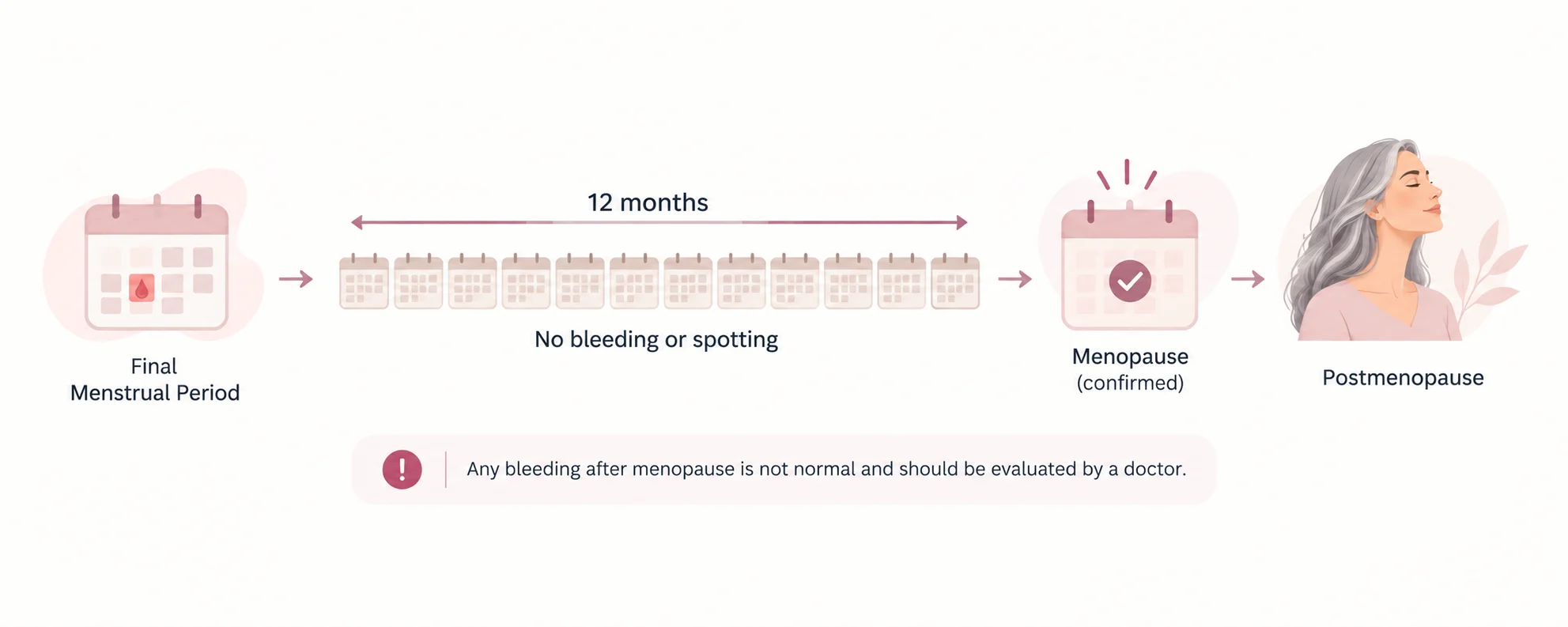
This 12-month definition is important, but I do not use it as a reason to delay care. A woman can have severe vasomotor symptoms at month three, month six or month nine without a period. We can treat her symptoms while we are still waiting to know whether the last period truly was the final menstrual period.
The distinction I want patients to remember
The 12-month rule answers one question: 'Can we confirm natural menopause?' It does not answer, 'Are my symptoms real?', 'Do I need treatment?', 'Can I stop contraception today?' or 'Is this bleeding safe to ignore?' Those are separate clinical questions. |
Stage 5: Early Postmenopause (STRAW +1) : Hormones Are Still Settling
Postmenopause begins after the final menstrual period, although we can only identify that final period retrospectively. STRAW+10 divides early postmenopause into several substages because reproductive hormone levels do not become completely stable the moment periods stop.
On average, FSH continues to rise and estradiol continues to fall for about two years after the final menstrual period before those levels become more stable. The broader early postmenopause stage is estimated to last about five to eight years. Vasomotor symptoms are especially common around the late transition and early postmenopause.
This matters because women often expect a sharp finish line: “I have gone a year without a period, so why am I still having hot flashes?” The answer is that the menstrual milestone and the symptom timeline are not the same thing. In the SWAN cohort, frequent vasomotor symptoms persisted for years for many women, including after the final menstrual period.
At this stage I broaden the visit. I still ask about hot flashes and sleep, but I also want to know whether the woman is losing muscle, whether her blood pressure or lipids have changed, whether she has risk factors for osteoporosis, whether vaginal or urinary symptoms are emerging, and whether sexual discomfort is affecting intimacy. The absence of periods is only one part of the health picture.
|
What changes in my advice after the final period
The conversation becomes less about 'When will my next period come?' and more about symptom control plus prevention. This is where strength training, adequate protein, bone-health assessment, blood pressure, metabolic health and vaginal/urinary care become increasingly important.
|
What My Priorities Begin to Shift Toward
Persistent hot flashes, night sweats, sleep disruption, and quality of life.
Vaginal dryness, painful sex, urinary urgency, recurrent UTIs, or other symptoms of genitourinary syndrome of menopause (GSM).
Bone health, because bone loss accelerates around the menopause transition.
Cardiovascular risk factors such as blood pressure, lipids, smoking, diabetes risk, and physical activity.
Body composition and metabolic health, including preservation of muscle and attention to visceral fat.
Sexual health, mood, cognition, and overall healthy aging.
Stage 6: Late Postmenopause (STRAW +2) , The Longest Stage
Late postmenopause lasts for the remainder of life. Reproductive hormone fluctuations are no longer the defining feature. Instead, the health effects of aging and long-term low estrogen exposure become more relevant.
Some of the “louder” symptoms of the transition , unpredictable periods and, for many women, frequent hot flashes , may fade with time. But other issues do not necessarily improve on their own. Vaginal dryness, painful sex, urinary urgency, recurrent urinary infections, and tissue changes associated with GSM can persist or become more noticeable later in postmenopause.
Bone and cardiovascular health also deserve attention precisely because the important changes can be silent. Osteoporosis does not announce itself with a hot flash. Elevated blood pressure, insulin resistance, or unfavorable lipid changes may not cause obvious symptoms either. This is why postmenopause is not the stage where I stop talking about menopause care; it is where preventive care becomes even more important.
I also ask directly about genitourinary symptoms because women often do not volunteer them. Dryness, burning, pain with sex, urinary urgency and recurrent urinary infections are common and treatable. They are not something a woman has to accept simply because she is several years past menopause.
|
Symptoms are only one part of the story
For a body-system-by-body-system guide to hot flashes, brain fog, sleep, mood, joints, vaginal and urinary symptoms, and how those patterns change with age, use our dedicated symptom guide. Read: Menopause Symptoms by Age & Stage
|
Hormonal Changes Across the Menopause Timeline
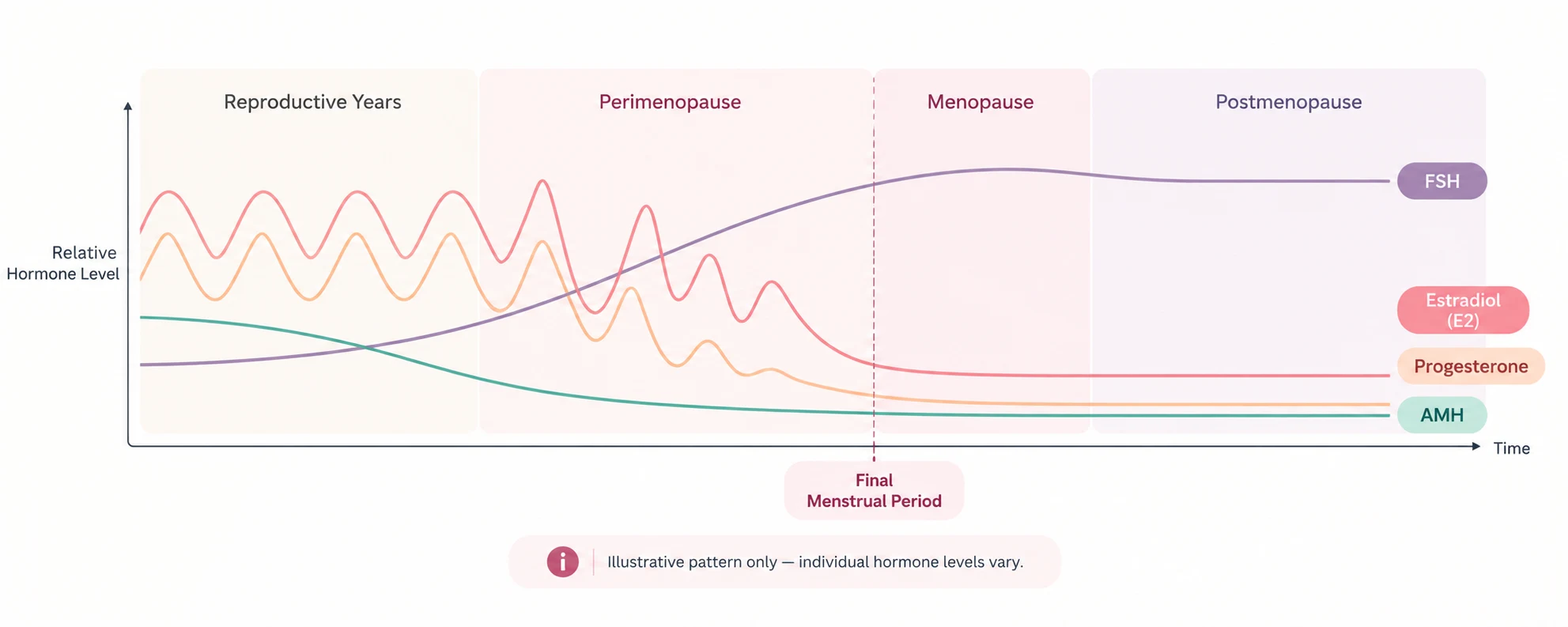
The phrase “estrogen declines” is true but incomplete. The transition is not a smooth downward line. Estradiol can fluctuate widely during perimenopause, progesterone becomes less predictable as ovulation becomes less consistent, FSH generally rises as the ovary becomes less responsive, and ovarian-reserve markers such as AMH decline earlier in the reproductive-aging process. That is why a woman can feel very different from one month to the next even though she is moving in one overall direction.
When I explain this in clinic, I often separate 'stage markers' from 'symptom mechanisms.' Cycle pattern helps me stage the transition. Hormone fluctuation helps explain why symptoms can be erratic. Neither one means that a single blood draw can capture the whole process.
|
Why I am cautious with 'hormone imbalance' language
Perimenopause is not simply a case of one hormone being 'too high' or 'too low' every day. The defining problem is variability and changing ovarian responsiveness. That is why I prefer specific language , irregular ovulation, variable estradiol, inconsistent progesterone exposure, rising FSH , rather than telling every woman she has the same generic 'imbalance.'
|
|
Hormone / Marker
|
Typical Pattern Across the Transition
|
What It Does , and Does Not Tell Us
|
|
Estradiol (E2)
|
Can fluctuate substantially in perimenopause; becomes persistently low after the final period
|
Explains why one “normal” result does not rule out perimenopause
|
|
Progesterone
|
Becomes less consistent as ovulation becomes less regular; very low after ovulation ceases
|
Helps explain changing bleeding patterns and why cycle physiology changes before estrogen stays low
|
|
FSH
|
Tends to rise but can swing widely; often higher in late transition and postmenopause
|
Supportive marker, not a reliable single-test countdown to menopause
|
|
AMH
|
Declines with ovarian reserve and may become very low before the final period
|
Useful in fertility/ovarian-reserve contexts; not routinely recommended to date natural menopause
|
|
LH
|
Generally rises as ovarian feedback declines
|
Not routinely used alone to diagnose the menopause stage
|
|
Why hormone testing can be confusing
A patient may have an elevated FSH one month and a lower value later because ovarian function and estradiol are still fluctuating. That variability is expected biology in perimenopause. I use labs when they answer a specific question, not because every woman needs a “menopause panel.”
|
Stages of Menopause and Symptoms: What Typically Changes
Symptoms do not obey stage boundaries as neatly as a chart suggests. A woman can have hot flashes while her periods are still fairly regular. Another can skip cycles for months and have almost no symptoms. A third may experience her most disruptive night sweats after her final period. The stage tells us about reproductive aging; it does not determine how miserable , or symptom-free , you are “supposed” to feel.
For me, the most useful symptom questions are not only 'Do you have hot flashes?' but 'What changed first?', 'What is waking you?', 'What symptom is making your day harder?', and 'Is there anything here that does not fit a typical menopause pattern?' That last question matters because thyroid disease, anemia, sleep apnea, medication effects, arrhythmias, depression, anxiety and other conditions can overlap with menopause.
What I do not tell women
I do not say, “You are only in early perimenopause, so you should not have that symptom yet.” Stage helps organize the biology; it does not invalidate the woman in front of me.
|
Stage
|
Period Pattern
|
Symptoms That May Become More Noticeable
|
What I Watch For
|
|
Late reproductive
|
Usually regular
|
Sleep or mood changes, stronger PMS-like pattern, subtle VMS in some women
|
Do not assume every symptom is hormonal; consider other causes
|
|
Early transition
|
Persistent cycle variability
|
Cycle changes, sleep disruption, mood changes, migraines, possible hot flashes
|
Pregnancy risk remains; bleeding pattern matters
|
|
Late transition
|
60+ day gaps may occur
|
Hot flashes/night sweats, sleep problems, brain fog, vaginal changes, mood symptoms
|
Heavy or unusual bleeding still requires evaluation
|
|
Early postmenopause
|
No periods
|
VMS may continue or peak; GSM can appear; body composition and bone priorities increase
|
Treatment should follow symptom burden and health risks
|
|
Late postmenopause
|
No periods
|
VMS may lessen; GSM may persist/worsen; bone/heart/metabolic issues may be silent
|
Preventive screening and healthy-aging care become central
|
|
Dr. Kashyap’s Clinical Perspective
I never tell a woman, “You cannot have that symptom yet because you are only in early perimenopause.” Stages organize the physiology. They do not invalidate the patient’s experience. The clinical job is to decide whether the symptom fits the transition, whether another condition overlaps, and what needs treatment now.
|
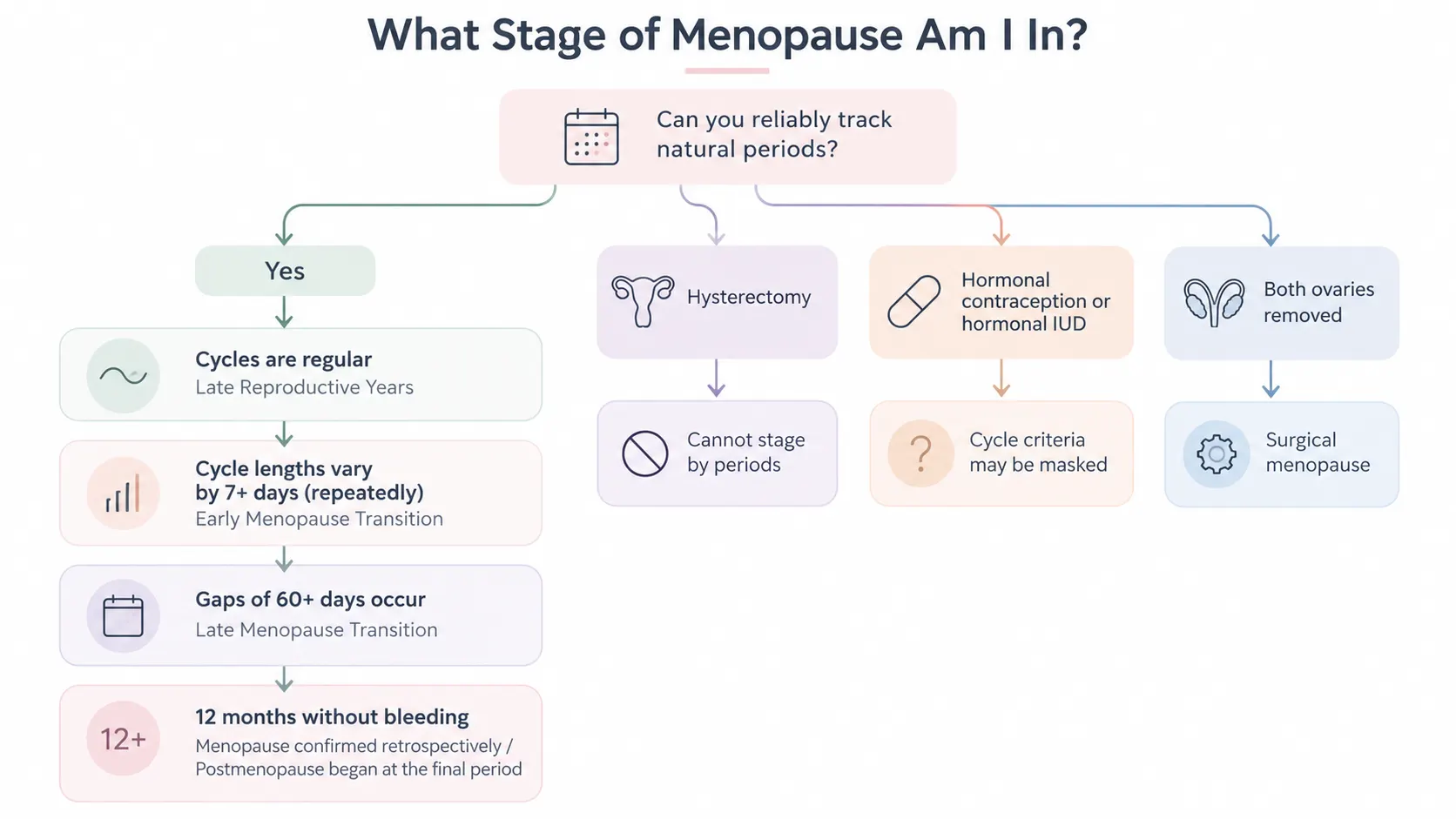
What Stage of Menopause Am I In?
This is the search question most stage articles fail to answer directly. You cannot diagnose yourself perfectly from a table, but the menstrual pattern can give you useful clues when you are not using a treatment or procedure that changes bleeding.
If your periods can be observed naturally, I start with three numbers: your usual cycle length, the amount of recurring cycle-to-cycle variability, and your longest gap without bleeding. Then I add context: age, symptoms, pregnancy possibility, contraception, surgery, medications and whether the bleeding pattern itself needs evaluation.
|
A practical way to use the stage-check table
Use it to prepare questions, not to self-diagnose a treatment plan. If your pattern points toward late perimenopause but your main problem is heavy bleeding, the next step is not simply 'accept that this is Stage 3.' The next step is deciding whether that bleeding is safe and what is causing it.
|
|
What You Notice
|
Stage It May Suggest
|
Important Caveat
|
|
Periods still follow your usual pattern
|
Late reproductive years
|
Symptoms alone do not establish a stage
|
|
Cycle lengths repeatedly differ by 7 days or more
|
Early menopause transition
|
One unusual cycle is not enough; persistence matters
|
|
You go 60 days or longer without a period and then bleeding returns
|
Late menopause transition
|
Pregnancy is still possible; abnormal bleeding still needs assessment
|
|
You have gone several months without a period
|
Likely late transition
|
You have not yet met the 12-month menopause criterion
|
|
12 consecutive months without bleeding or spotting
|
Menopause can be confirmed retrospectively; postmenopause began at the final period.
|
Only when the bleeding pattern is interpretable and no other cause explains amenorrhea
|
|
You had a hysterectomy but kept your ovaries
|
Cannot stage by periods
|
Use age, symptoms, history and selected labs when useful
|
|
Both ovaries were removed
|
Surgical menopause
|
The natural STRAW bleeding timeline does not apply in the same way
|
|
You use a hormonal IUD, injection, pill or other method that suppresses bleeding
|
Cycle criteria may be masked
|
Do not stop contraception simply to “test” menopause without medical guidance
|
Stages of Menopause and Age: Why Age Is Context, Not a Diagnosis
The average age of natural menopause in the United States is about 51 to 52. Most women reach natural menopause between about 45 and 55. Perimenopause commonly begins in the 40s, often in the mid-40s, but some women notice changes earlier. These are population patterns, not appointment dates for an individual ovary.
|
Age / Timing
|
How I Interpret It Clinically
|
|
Late 30s
|
Possible early reproductive-aging changes, but I look carefully for pregnancy, thyroid disease, prolactin issues, medication effects, hypothalamic causes, PCOS, and POI depending on the pattern
|
|
40-44
|
Perimenopause can occur naturally; if permanent menopause occurs before 45, it is considered early menopause and deserves evaluation
|
|
45-49
|
Common years for noticeable cycle variability and classic perimenopause symptoms
|
|
50-52
|
Near the U.S. average for the final menstrual period, though many women have already had symptoms for years
|
|
After 55
|
Later natural menopause can occur; any bleeding after confirmed menopause still requires evaluation
|
|
Before 40
|
Loss or marked reduction of ovarian function raises concern for primary ovarian insufficiency and needs a different evaluation pathway
|
Want to focus specifically on timing?
Our age-and-timing guide goes deeper into the U.S. average age, early menopause, POI, family history, and why FSH or AMH cannot predict your exact menopause date. Read: When Does Menopause Start?
|
Can Blood Tests Tell You What Stage of Menopause You Are In?
Usually not as precisely as women are led to believe. ACOG’s current patient guidance says most women do not need hormone testing to identify perimenopause; age, symptoms, and menstrual changes are often enough. For people aged 40–45 with menopause-associated symptoms and menstrual changes, NICE advises considering an FSH test to help confirm menopause; suspected menopause before age 40 warrants evaluation for primary ovarian insufficiency. Tests can also be useful when another diagnosis is suspected.
|
Question
|
Most Useful Approach
|
|
“Am I in typical perimenopause at 47 with changing cycles?”
|
Usually clinical assessment: age + cycle pattern + symptoms + history
|
|
“My periods changed at 39.”
|
More likely to need testing for POI and other causes, depending on the clinical picture
|
|
“Could I be pregnant?”
|
Pregnancy testing when relevant
|
|
“Could this be thyroid-related?”
|
TSH when symptoms or history make thyroid disease plausible
|
|
“Can AMH tell me my exact menopause date?”
|
No; it is not a precise individual countdown tool
|
|
“Can one FSH result prove my stage?”
|
Not reliably during perimenopause because levels fluctuate
|
FSH can be elevated during the transition, but it also fluctuates. Estradiol can be low, normal, or temporarily high. AMH declines with ovarian reserve but is not a routine diagnostic test for natural menopause. Home urine FSH tests can show an elevated FSH at one moment; they cannot reliably tell you whether you are in early versus late perimenopause or predict your final period.
The question I ask before ordering a lab is simple: 'What decision will this result help me make?' In a 48-year-old with a classic changing-cycle pattern, repeating FSH just to prove perimenopause often adds noise. In a 38-year-old with months of absent periods, the testing question is very different because POI and other endocrine causes need to be considered.
Practical Tip
If you are seeing a clinician for possible perimenopause, bring the dates of your last 6-12 periods, the bleeding pattern, your top three symptoms, your medications/contraception, and any relevant surgeries. That history usually gives us more actionable information than an isolated “menopause panel.”
|
When Periods Cannot Be Used to Stage Menopause
The usual timeline assumes that bleeding reflects ovarian function. That is not true for every woman. Hysterectomy, endometrial ablation, hormonal contraception, a progestin-releasing IUD, some medications, and cancer treatment can make the 7-day, 60-day, and 12-month rules difficult or impossible to use.
This is why one of my first questions is not simply 'When was your last period?' but 'Why are you not bleeding?' A last period after natural cycles, no bleeding after hysterectomy, amenorrhea with a hormonal IUD and no bleeding after endometrial ablation are four very different clinical situations.
|
Bring this information
If your bleeding is altered by surgery or hormones, bring the date and type of hysterectomy or ablation, whether one or both ovaries remain, the name of your contraceptive or hormone therapy, and when you last had natural cycles. Those details change how I interpret the timeline.
|
Hysterectomy With Ovaries Left in Place
Removing the uterus stops menstrual bleeding, but if one or both ovaries remain, ovarian hormone production may continue. No period after hysterectomy therefore does not automatically mean menopause. I rely more on age, symptoms, surgical history, and selected testing when it changes management.
Hormonal IUDs, Pills, Injections, or Other Methods That Alter Bleeding
Hormonal contraception can make periods lighter, irregular, or absent. The absence of bleeding may reflect the medication rather than the final menstrual period. Do not stop contraception simply to “find out if you are menopausal” without discussing pregnancy risk and an appropriate plan with your clinician.
Endometrial Ablation
Ablation can reduce or eliminate uterine bleeding while the ovaries continue cycling. Again, the absence of periods is not a reliable ovarian-stage marker.
Special Situations: Surgical Menopause, POI, and Cancer Treatment
Surgical Menopause
Removal of both ovaries causes an abrupt loss of ovarian hormone production. This is very different from the gradual natural transition. Symptoms can begin quickly, and age at surgery matters for bone, cardiovascular, sexual, cognitive, and overall health planning. The natural menstrual staging rules do not apply in the same way.
Primary Ovarian Insufficiency (POI)
POI refers to loss or intermittent reduction of ovarian function before age 40. It is not simply “Stage 3 happening early.” Ovarian activity can be intermittent, fertility counseling may be relevant, and the long-term health implications of early estrogen deficiency require a different clinical discussion.
Early Menopause
Natural menopause between ages 40 and 44 is considered early menopause. It deserves individualized assessment because the length of lifetime estrogen exposure changes bone and cardiovascular considerations.
Chemotherapy, Pelvic Radiation, and Other Medical Causes
Cancer treatment can cause temporary or permanent loss of ovarian function depending on the treatment, dose, age, and ovarian reserve. In this setting, staging and treatment decisions should be coordinated with the oncology team and should not be inferred from a generic age-based menopause chart.
These special situations are exactly why I do not force every woman onto the same natural-menopause chart. The goal is not to make the timeline fit. The goal is to understand ovarian function, symptom burden, long-term health implications and the safest treatment options for that specific woman.
|
Safety Point
If your periods stop or become markedly abnormal before age 40, do not accept “it is just menopause” without a proper evaluation. POI and other causes require assessment because the health and fertility implications are different from natural menopause at the usual age.
|
Bleeding Changes and Red Flags: What Should Never Be Dismissed as “Just Menopause”
Cycle changes are expected in perimenopause, but expected does not mean every bleeding pattern is automatically benign. ACOG specifically advises discussing abnormal bleeding during the transition, and any bleeding after menopause needs evaluation.
The age and pattern matter, but so do the consequences. If bleeding is causing iron deficiency, dizziness, fatigue, shortness of breath, missed work or fear of leaving the house, that is clinically important even before we know the final cause.
|
Bleeding / Symptom Pattern
|
Why I Would Evaluate It
|
|
Any bleeding or spotting after confirmed menopause
|
Postmenopausal bleeding is not considered normal and requires assessment
|
|
Very heavy bleeding, prolonged bleeding, or rapidly changing flow
|
Fibroids, polyps, adenomyosis, endometrial pathology, medications, pregnancy-related causes, or other conditions may overlap with perimenopause
|
|
Bleeding between periods or after sex
|
Needs evaluation rather than automatic attribution to hormone fluctuation
|
|
Periods stopping before age 40
|
POI or another cause should be investigated
|
|
New pelvic pain, pressure, or persistent bloating
|
May reflect a gynecologic or non-gynecologic condition unrelated to menopause
|
|
New severe palpitations, shortness of breath, fainting, or other atypical systemic symptoms
|
Do not assume a menopause symptom before other causes are assessed
|
|
Symptoms significantly disrupting sleep, work, mood, intimacy, or daily functioning
|
You do not have to wait for a different “stage” before discussing treatment
|
Safety advice
After 12 months without natural bleeding, even a small amount of new spotting should be evaluated. Before menopause, very heavy, prolonged, between-period or post-coital bleeding also deserves attention. 'Perimenopause' is context, not an exemption from evaluation.
How Care Priorities Change Across the Different Stages of Menopause
The stage matters, but treatment should not be prescribed from the stage label alone. Two women in the same stage may need completely different care. One may want reassurance and cycle tracking. Another may have severe hot flashes, insomnia, painful sex, heavy bleeding, or a significant mood change that needs active treatment.
I also separate the symptom from the route of treatment. A woman with isolated vaginal dryness may benefit from local therapy rather than systemic treatment. A woman with severe vasomotor symptoms may need a systemic option. A woman with heavy bleeding may first need a bleeding evaluation. Matching treatment to the actual problem is more useful than asking, 'What treatment belongs to this stage?'
|
Stage
|
What I Usually Prioritize
|
Common Conversations
|
|
Late reproductive / early transition
|
Correct diagnosis, cycle tracking, fertility/contraception, sleep/mood, early symptoms
|
Lifestyle foundations, bleeding evaluation when needed, contraception, symptom-directed care
|
|
Late transition
|
VMS, sleep, heavy/irregular bleeding, quality of life, pregnancy risk
|
Hormonal and nonhormonal treatment options, bleeding workup, contraception until appropriate
|
|
Menopause confirmation / early postmenopause
|
Persistent VMS, GSM, sexual health, bone and cardiometabolic risk
|
Menopausal hormone therapy when appropriate, nonhormonal therapies, vaginal treatment, screening and prevention
|
|
Late postmenopause
|
GSM, bone health, cardiovascular/metabolic health, mobility and healthy aging
|
Local vaginal therapies when needed, osteoporosis prevention/screening, cardiovascular risk management, strength and mobility
|
Menopausal hormone therapy is the most effective treatment for bothersome vasomotor symptoms for appropriate candidates, while evidence-based nonhormonal treatments are available when hormones are not suitable or not preferred. Vaginal and urinary symptoms often respond to local treatment. The right choice depends on symptoms, age, time since menopause, uterus status, medical history, risk factors, and personal goals , not simply “Stage 2 versus Stage 3.”
|
When you are ready to talk treatment
Our treatment guide compares lifestyle foundations, systemic and local hormone therapy, nonhormonal options, vaginal and urinary care, bone health, and how I personalize the plan. Read: Menopause Treatment , A Personalized GuideRead: Menopause Treatment - A Personalized Guide
|
|
Prefer a lifestyle-first companion?
Nutrition, strength, sleep, stress regulation, vaginal/urinary care, supplements, and hidden drivers are covered in our natural-support guide. Read: 7 Natural Menopause Treatments
|
Does Menopause Ever End?
The transition ends. Postmenopause does not. Once natural menopause has occurred, you remain postmenopausal for the rest of your life. What changes is the symptom pattern and the health priorities.
This distinction matters because women are often told, “You should be over menopause by now.” A hot flash may improve. A sleep problem may resolve. Vaginal dryness may persist. Bone density and cardiovascular risk still deserve attention. Postmenopause is a life stage, not a disease and not an expiration date for care.
I would rather a woman ask, 'What needs attention in this stage of my health?' than 'When will I be done?' That question leads to better care because it keeps the focus on symptoms that deserve treatment and health risks that deserve prevention.
Final Thoughts: Use the Stage as a Map, Not a Label
The stages of menopause are useful because they give us a map. They explain why a woman can have symptoms while she is still menstruating, why periods may disappear and return, why menopause cannot be declared the day bleeding first stops, and why health priorities continue to evolve after the final period.
But a stage is not a script. Two women can be the same age and have completely different cycle patterns. Two women in late perimenopause can have completely different symptoms. One woman can have a normal-looking hormone result while her cycle history clearly shows the transition. Another can have absent periods for a reason that has nothing to do with menopause.
When I evaluate a woman, I want to know what changed, when it changed, what her cycle is doing, which symptoms are affecting her life, whether pregnancy is still possible, what health risks need attention, and what she wants help with. That tells me far more than a generic “Stage 2” label.
Knowing your stage should give you context , not anxiety. It should help you recognize what is normal, identify what is not, understand when testing is useful, and know when it is time to move from watching the transition to actively treating the symptoms or protecting long-term health.
Menopause is not one event you simply “get through.” It is a reproductive and health transition. Understanding where you are in that transition helps us decide what matters next.
If there is one message I want you to take from this guide, it is this: do not wait for a perfect stage label before asking for help. A changing cycle can be normal and still deserve support. A normal-looking lab can coexist with a real menopause transition. A common symptom can still need treatment. And an unusual symptom should still be investigated.
|
Need Help Understanding Your Menopause Stage?
If your periods, sleep, mood, hot flashes, vaginal or urinary symptoms, weight, or overall sense of well-being have changed and you are not sure where you are in the transition, a personalized evaluation can help. At Galleria Women’s Health in Henderson, Nevada, I review your cycle pattern, symptoms, age, health history, medications, risk factors, uterus/ovary status, and treatment goals together , rather than trying to diagnose menopause from one number.
Explore Menopause Support & Treatment at Galleria Women’s Health
|
Key Terms Explained
- Perimenopause: The transition around menopause when menstrual cycles and hormone levels begin changing. In everyday use, it usually refers to the years before the final period; STRAW+10 also includes the first 12 months afterward.
- Menopause Transition: STRAW+10 stages −2 and −1, characterized by increasing menstrual-cycle variability before the final menstrual period.
- Final Menstrual Period (FMP): The last natural menstrual period, identified retrospectively after 12 consecutive months without bleeding.
- Menopause: The final menstrual period, confirmed retrospectively after 12 months without menstruation when no other cause explains its absence.
- Postmenopause: The stage beginning after the final menstrual period and continuing for the rest of life.
- Estradiol (E2): The primary ovarian estrogen that fluctuates during perimenopause and remains relatively low after menopause.
- Progesterone: A hormone produced after ovulation that becomes less predictable as ovulation becomes irregular.
- FSH (Follicle-Stimulating Hormone): A pituitary hormone that generally rises as ovarian function declines but can fluctuate during perimenopause.
- AMH (Anti-Müllerian Hormone): A marker of ovarian reserve that cannot reliably predict an individual's exact menopause date.
- Vasomotor Symptoms (VMS): Hot flashes and night sweats associated with menopause-related temperature regulation changes.
- GSM (Genitourinary Syndrome of Menopause): Vaginal, vulvar, sexual, and urinary symptoms associated with reduced estrogen.
- POI (Primary Ovarian Insufficiency): Reduced or intermittent ovarian function occurring before age 40.
- Surgical Menopause: Abrupt menopause resulting from the surgical removal of both ovaries.
- STRAW+10: Stages of Reproductive Aging Workshop +10, a clinical framework for classifying reproductive aging around the final menstrual period.
References and Further Reading
1. American College of Obstetricians and Gynecologists (ACOG). Bleeding After Menopause Could Be a Problem. Here’s What to Know. Guidance on postmenopausal bleeding.
2. American College of Obstetricians and Gynecologists (ACOG). Do I Need to Have Testing of My Hormone Levels During Perimenopause? Guidance on hormone testing during perimenopause.
3. American College of Obstetricians and Gynecologists (ACOG). Perimenopausal Bleeding and Bleeding After Menopause. Guidance on menstrual changes and abnormal bleeding evaluation.
4. American College of Obstetricians and Gynecologists (ACOG). reVITALize Gynecology Data Definitions. Definitions of menopause, perimenopause, postmenopause, and postmenopausal bleeding.
5. Avis NE, Crawford SL, Greendale G, et al. (2015). Duration of Menopausal Vasomotor Symptoms Over the Menopause Transition. JAMA Internal Medicine. Research on hot flash and night sweat duration from the SWAN study.
6. Cleveland Clinic. What to Expect in Each Stage of Menopause. Patient-friendly overview of menopause stages.
7. Deepali Kashyap, MD. “Most women don’t miss the signs of menopause…” LinkedIn. Clinician commentary on early menopausal symptoms and transition patterns.
8. Galleria Women’s Health. An Expert Guide to 7 Natural Menopause Treatments. Lifestyle-focused companion guide.
9. Galleria Women’s Health. Bleeding After Menopause: What It Means, Common Causes & When to See a Doctor. Read Guide
10. Galleria Women’s Health. Menopause Support & Treatment. Clinical service page.
11. Galleria Women’s Health. Menopause Symptoms by Age & Stage. Internal companion guide on menopause symptoms.
12. Galleria Women’s Health. Menopause Treatment: A Comprehensive Personalized Guide from a Female Menopause Specialist. Read Guide
13. Galleria Women’s Health. What Is Menopause? Foundational guide to menopause, symptoms, causes, and treatments.
14. Galleria Women’s Health. When Does Menopause Start? Internal companion guide on age and timing.
15. Harlow SD, Gass M, Hall JE, et al. (2012). Executive Summary of STRAW+10: Addressing the Unfinished Agenda of Staging Reproductive Aging. Foundational research establishing the updated reproductive-aging framework.
16. Mayo Clinic. Menopause – Symptoms and Causes. Medical overview of menopause symptoms, timing, and reproductive health.
17. National Institute for Health and Care Excellence (NICE). Menopause: Identification and Management (NG23). Recommendations 1.3.1 and 1.3.6. Read Guidelines
18. The Menopause Society. Perimenopause. Patient guidance on menstrual changes and menopause-transition criteria.
19. U.S. Office on Women’s Health. Navigating the Road to Menopause. Guidance on menopause stages, timing, and health considerations.
Medical Disclaimer
This article is for educational purposes and does not replace individualized medical advice, diagnosis, or treatment. Menstrual changes, menopausal symptoms, abnormal bleeding, fertility concerns, and treatment decisions should be discussed with a qualified healthcare professional who can review your age, history, medications, risk factors, examination findings, and goals.



 Meet Your Doctor


 03 Jul, 2026
 10:13 AM



Leave a Comment