"I found something. Can you just look at it?"
I hear some version of that sentence almost every month , usually said fast, almost apologetically, like the patient is hoping I'll wave it off before she even finishes the sentence. Most of the time, I can. Most breast lumps are benign. But some are, and in fifteen-plus years of practice, the difference between those two outcomes has come down, again and again, to the same thing: whether a woman knew what she was looking at, and didn't talk herself out of getting it checked.
Most of what's written about breast cancer online falls into one of two camps: purely clinical content that's accurate but reads like an encyclopedia entry, or a single mammogram reminder that treats prevention as one yearly appointment rather than the layered picture it actually is. Breast cancer risk is shaped by genetics, breast density, family history, lifestyle, prior medical treatments, and even social determinants of health , not just age and a yearly scan. I want this guide to cover both halves properly: the full clinical picture (symptoms, types, stages, diagnosis, treatment) and the risk conversation that too often gets skipped, from someone who has this conversation for a living and who also specializes in the hormone side of a woman's life where a lot of the real confusion lives.
Key Takeaways
● Most breast lumps are not cancer, but every new lump, area of thickening, or persistent change deserves a professional exam , not a wait-and-see approach.
● The average woman has about a 12% lifetime risk of breast cancer, but that number shifts substantially based on density, family history, genetics, and personal history , it is not the same for everyone.
● About half of all women have dense breasts, which can both mask cancer on a mammogram and independently raise risk.
● Family history should span three generations on both sides of the family, not just your mother's side.
● Hereditary risk isn't only about BRCA anymore , multi-gene panels now evaluate CHEK2, PALB2, ATM, and others.
● Breast cancer symptoms go well beyond a lump , skin dimpling, nipple changes, and swelling under the arm all count.
● Current guidance has shifted from rigid monthly self-exams to breast self-awareness , knowing your normal and reporting change promptly.
● Hormone replacement therapy and breast cancer risk is one of the most misunderstood topics I handle , the actual data is more nuanced than either "HRT causes cancer" or "HRT is completely risk-free."
● Type and stage , not just "having breast cancer" , determine treatment, so two women with the same diagnosis can have very different paths forward.
● Individualized risk models (Tyrer-Cuzick, Gail, BCSC, CanRisk) are increasingly used to personalize screening instead of relying on age alone.
Quick Overview: What This Guide Covers
|
Topic
|
What You'll Learn
|
|
Symptoms and warning signs
|
What actually counts as a sign, and what usually doesn't
|
|
Understanding your personal risk
|
Density, family history, genetics, prior biopsies, radiation, lifestyle, and personalized risk models
|
|
Types of breast cancer
|
The major categories and what distinguishes them
|
|
Stages of breast cancer
|
What stage 0 through IV actually mean
|
|
Diagnosis
|
What happens between "we found something" and an actual diagnosis
|
|
Breast self-awareness
|
What replaced the old monthly self-exam, and why
|
|
Treatment overview
|
The main treatment categories, in plain language
|
|
Menopause, hormones, and breast cancer
|
The connection I field questions about more than any other , and the part of this topic that's genuinely my specialty
|
What Is Breast Cancer, Exactly?
Before we get into symptoms and risk, it helps to have the one-paragraph version clear in your head, because everything else in this guide builds on it.
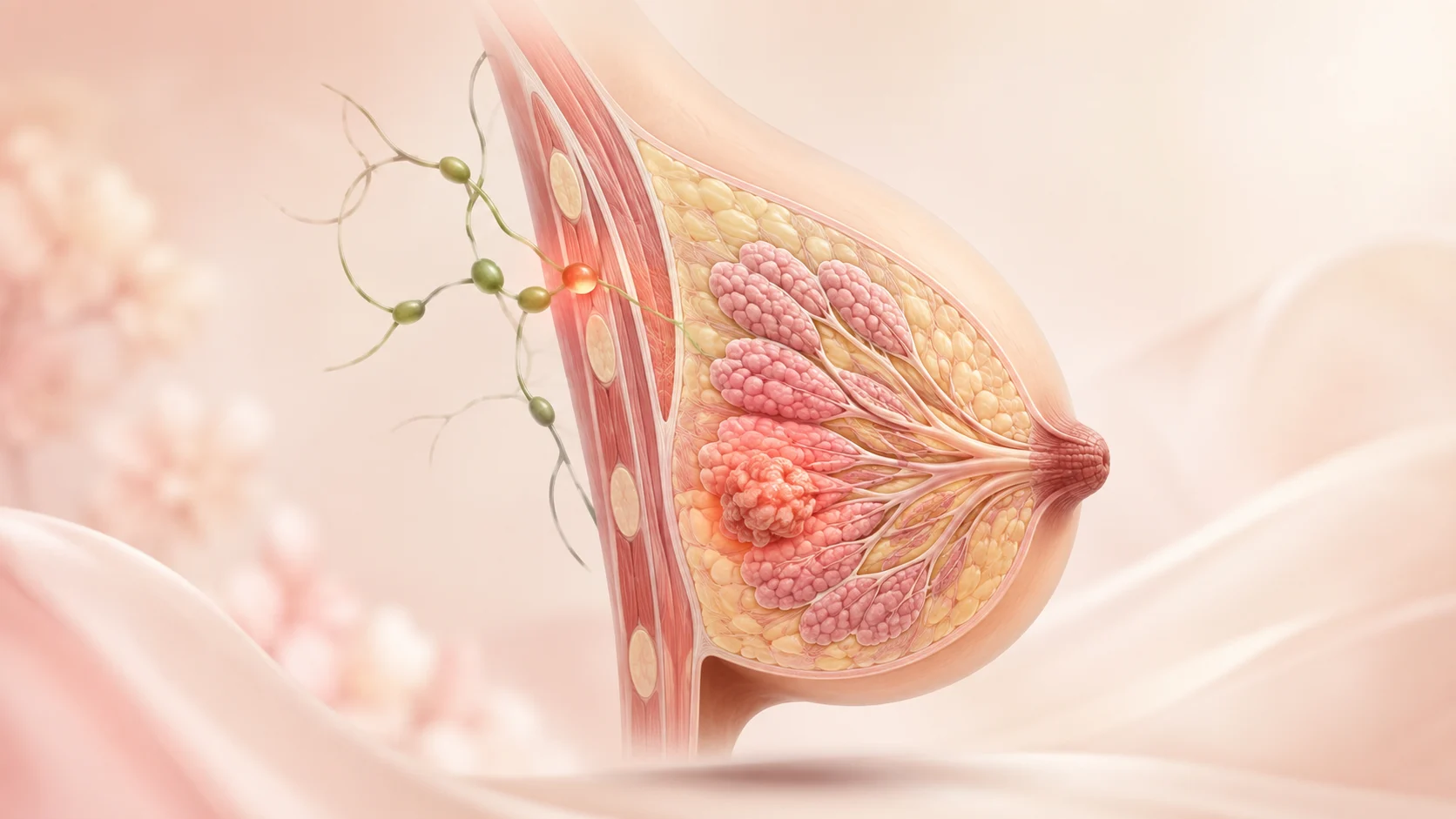
Breast cancer happens when cells inside the breast , usually in the milk ducts or the milk-producing lobules , start growing and dividing in a way the body can no longer control. Normally, cells divide, do their job, and die on a schedule. Cancer cells stop following that schedule. They keep dividing, can crowd out normal tissue, and in some cases spread beyond the breast to lymph nodes or other organs. That's really it , everything from "what causes it" to "what stage" to "what treatment" is just a more detailed answer to how far along that process is, and what's driving it in a particular case.
With that in mind, let's walk through it in the order I actually think about it with a patient: what to watch for, what raises or lowers the odds, what the different forms look like, how we confirm a diagnosis, and what happens next.
1. Breast Cancer Symptoms: What I Actually Look For
Here's something worth knowing upfront: most breast cancers are found on a screening mammogram before a woman ever notices a symptom at all.¹ That's exactly why screening matters even when you feel completely fine , the disease process described above can be well underway before it ever produces something you'd notice on your own. But symptoms do happen, and recognizing them early can matter enormously.
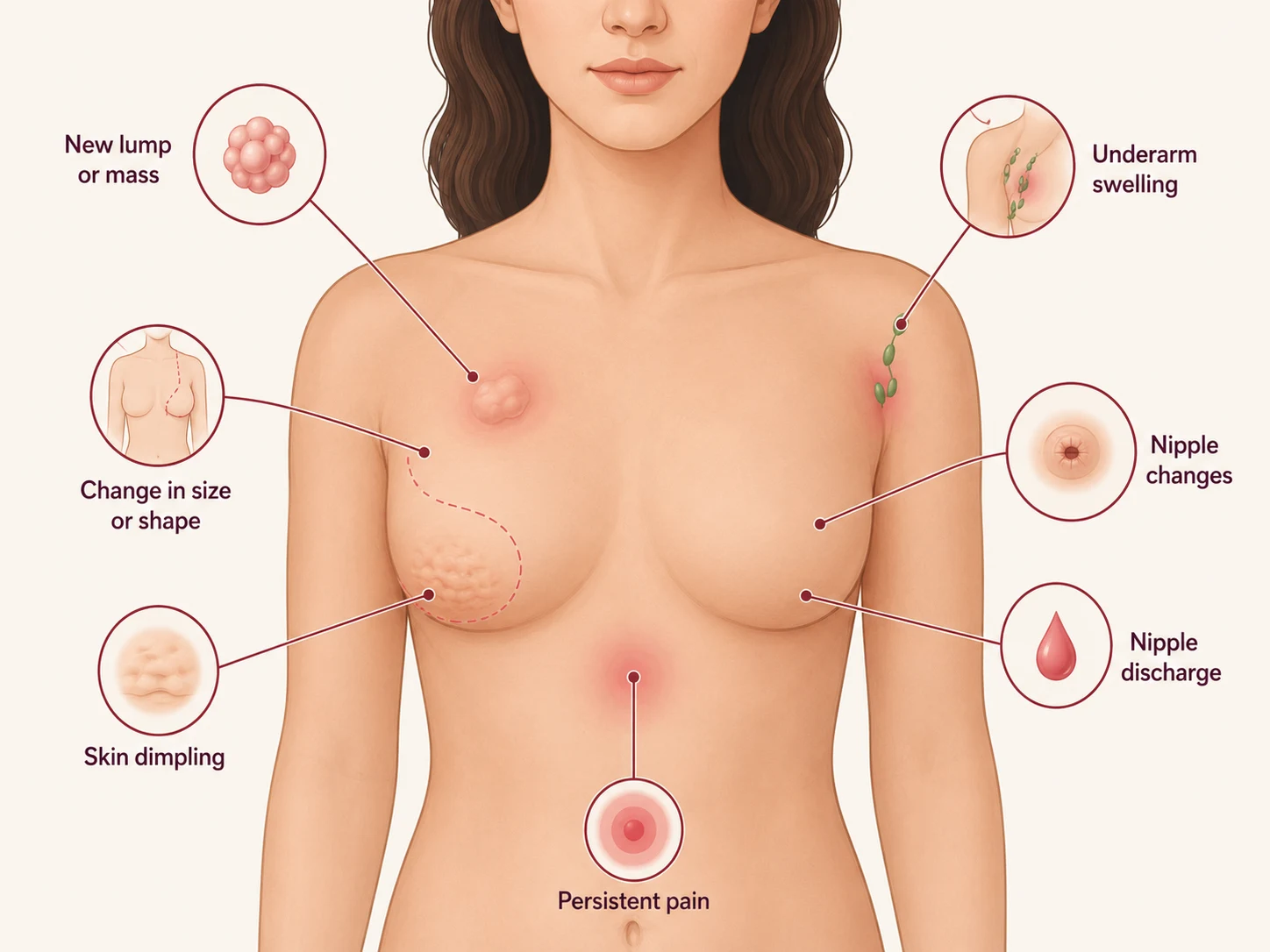
The Signs Worth Knowing
|
Sign
|
What It Can Feel or Look Like
|
Why It Matters
|
|
A new lump or mass
|
Often painless, hard, with irregular edges , though it can also be soft, round, or tender
|
The most common symptom, though most lumps turn out to be benign
|
|
Change in breast size or shape
|
Swelling or shrinkage, especially if only on one side
|
Can occur even without a lump you can feel
|
|
Skin changes
|
Dimpling, puckering, or a texture like an orange peel (peau d'orange)
|
A hallmark sign of inflammatory breast cancer, which needs urgent evaluation
|
|
Nipple changes
|
Pulling inward, new flattening, scaling, or a rash
|
Different from lifelong inverted nipples , it's the new change that matters
|
|
Nipple discharge
|
Clear, bloody, or unusual discharge unrelated to breastfeeding
|
Worth checking, even though most causes are benign
|
|
Swelling near the collarbone or underarm
|
Can indicate lymph node involvement
|
Sometimes noticed before any breast lump at all
|
|
Persistent breast or nipple pain
|
Less common as a standalone sign, but can occur
|
Pain alone is rarely the only symptom, but combined with other changes, it's worth mentioning
|
What I tell patients: A lump doesn't have to hurt to matter, and it doesn't have to be huge to matter. The single biggest mistake I see is women waiting because "it doesn't hurt, so it's probably nothing." Pain is actually a poor predictor either way , plenty of benign cysts hurt, and a fair number of cancers don't.
How I recommend approaching this: If you notice any of the above for more than a full menstrual cycle (or persistently, if you're postmenopausal), call your doctor. Don't wait for your next annual exam.
2. Understanding Your Personal Risk , Not Just "What Causes Breast Cancer"
Symptoms tell you what to watch for once something is already happening. This section is about the step before that , what actually raises or lowers the odds of it happening in the first place, and why that number looks so different from one woman to the next.
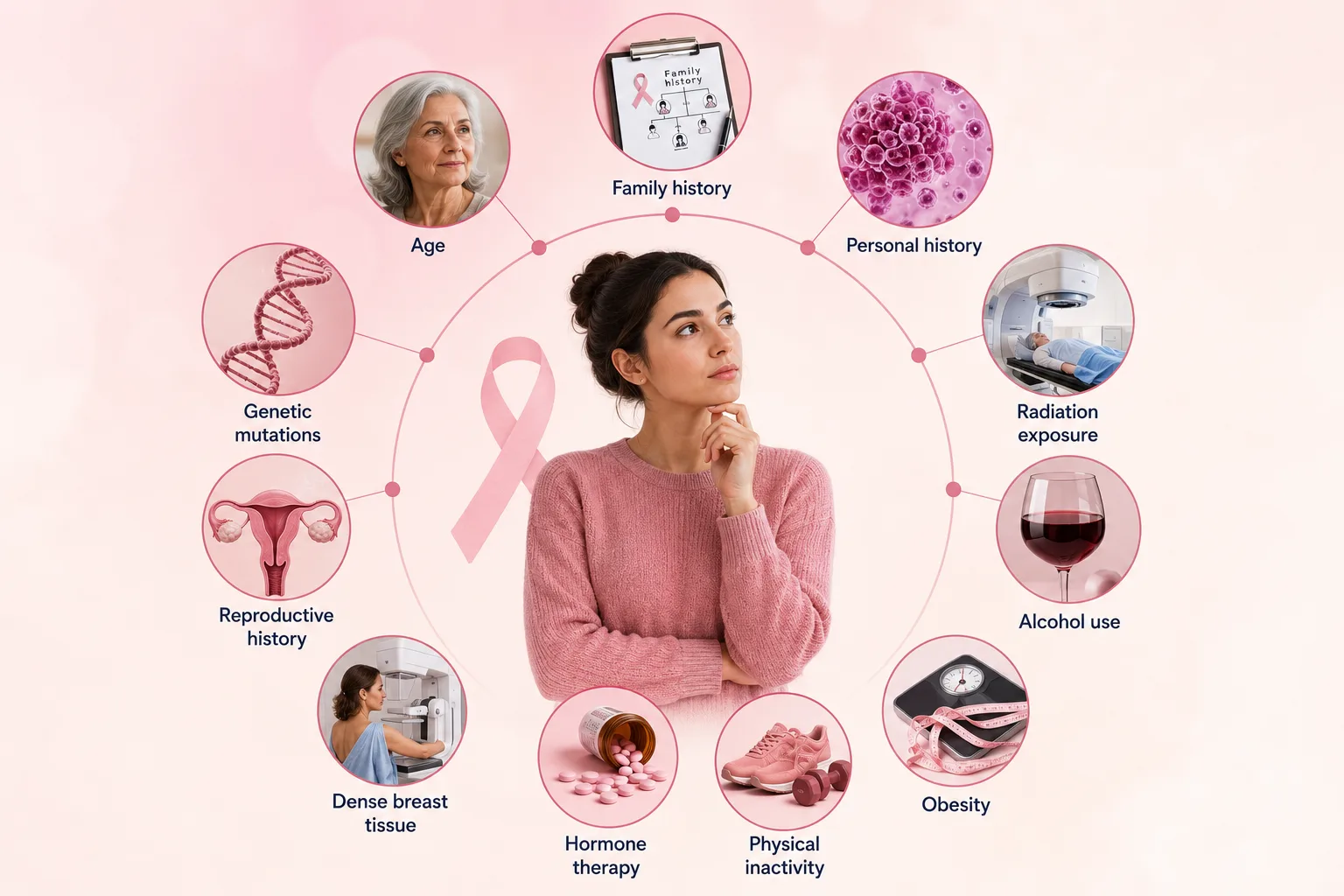
This is one of the most searched topics on breast cancer, and I understand why patients want a reason, something they did or didn't do. The honest, sometimes unsatisfying answer: up to 90% of breast cancers occur in women with no known genetic mutation,² and many happen without any single identifiable cause. Breast cancer starts when cells in breast tissue begin to grow uncontrollably, usually due to an accumulation of genetic changes over time , some inherited, most acquired simply through aging and cellular wear.
But "what causes it" is the wrong first question for most women. The better question is: what is my personal risk, and does it change what my screening plan should look like? The average woman has approximately a 12% lifetime risk of developing breast cancer , but that number can be substantially higher depending on the factors below. Some women have only a slightly elevated risk; others may qualify for enhanced screening, genetic testing, or even preventive interventions. The goal here isn't fear. It's clear.
Risk Factors at a Glance
|
Category
|
Specific Factors
|
Can You Change It?
|
|
Age
|
Risk rises significantly after 50
|
No
|
|
Family history
|
First-degree relative with breast or ovarian cancer
|
No, but it should prompt earlier or additional screening
|
|
Genetic mutations
|
BRCA1, BRCA2, and other inherited mutations
|
No, but genetic counseling can guide surveillance and prevention
|
|
Reproductive history
|
Early menstruation (before 12), late menopause (after 55), never being pregnant, first pregnancy after 30
|
No
|
|
Personal history
|
Previous breast cancer or certain benign breast conditions (like atypical hyperplasia)
|
No
|
|
Dense breast tissue
|
Makes mammograms harder to read and is independently associated with higher risk
|
No, but it changes your screening plan
|
|
Radiation exposure
|
Prior chest radiation, especially at a young age
|
No
|
|
Alcohol use
|
Even moderate drinking is associated with increased risk
|
Yes
|
|
Obesity, especially after menopause
|
Fat tissue produces estrogen, which can influence risk after menopause
|
Yes
|
|
Physical inactivity
|
Independently associated with higher risk
|
Yes
|
|
Combined hormone therapy
|
Risk depends on the specific formulation , particularly the type of progestogen, duration of use, and timing of initiation
|
Discuss with your doctor , more in Section 8
|
A note on "causes of breast cancer in unmarried girls" , a phrase I see searched often. Marital status itself is not a risk factor. What may be conflated here is that pregnancy history (never having a full-term pregnancy, or a first pregnancy later in life) is associated with a modest increase in risk , but that's about reproductive history, not marital status, and it's one factor among many, not a determining one.
Now let's go deeper on the factors that deserve more than a table row , because in my practice, this is where most women learn something they'd never been told before.
The Risk Factor Many Women Don't Know About: Breast Density
One of the most common questions I hear in clinic is:
"My mammogram says I have dense breasts. What does that mean?"
Breast density refers to the amount of fibroglandular tissue compared with fatty tissue seen on a mammogram. It cannot be determined by touch or physical examination. Approximately half of all women have dense breasts.
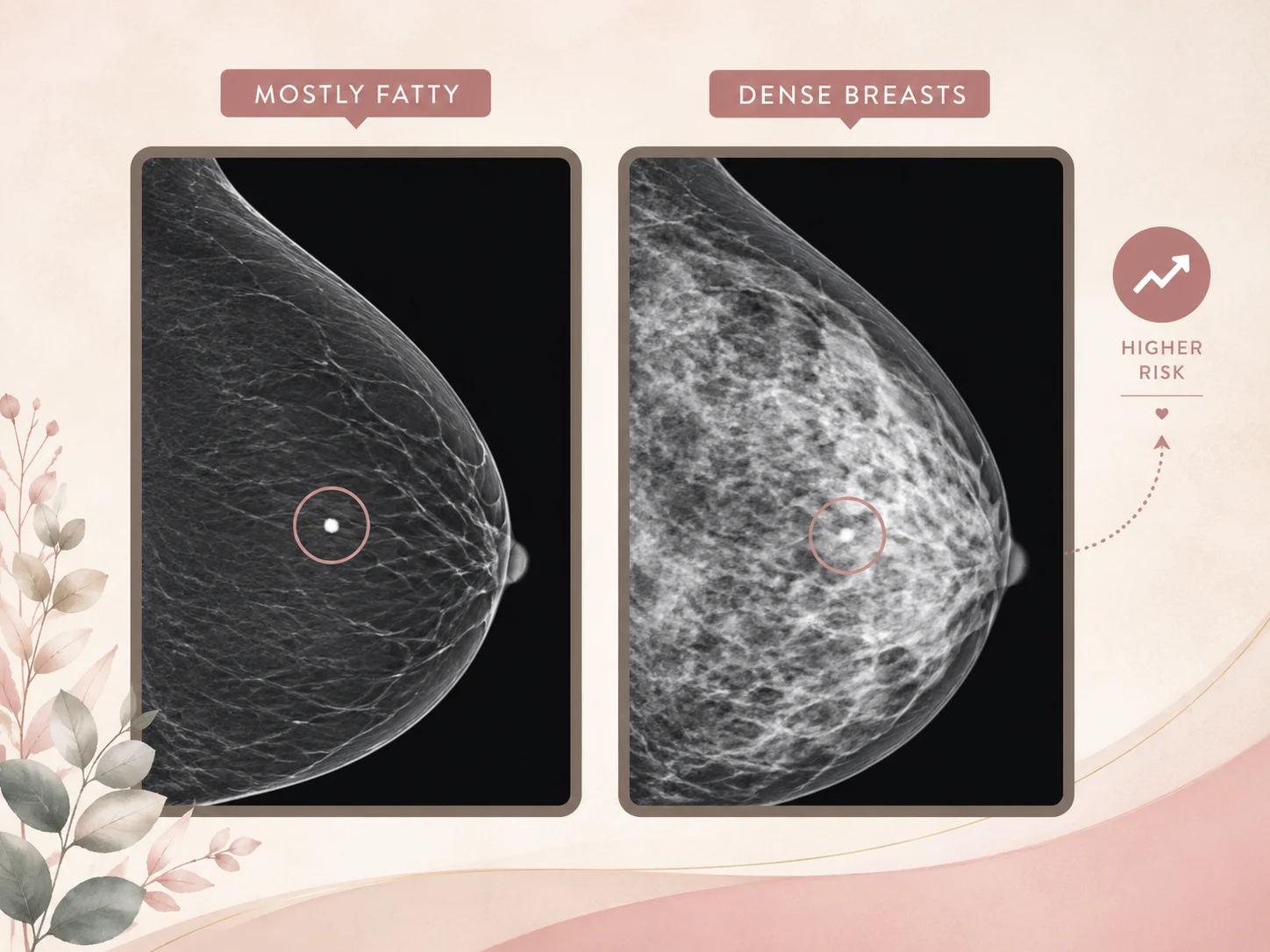
Dense breasts matter for two reasons:
1. They can make cancer harder to detect. On a mammogram, both dense tissue and breast cancer appear white. Radiologists sometimes describe this as trying to find a snowball in a snowstorm , dense tissue can mask cancers and make them more difficult to identify.
2. They independently increase breast cancer risk. Women with extremely dense breasts have a significantly increased risk of breast cancer compared with women whose breasts are mostly fatty , studies estimate this at approximately two to four times the risk, depending on the study.
However, dense breasts alone do not automatically place someone in a high-risk category. Density is just one piece of the puzzle , which is exactly why risk assessment should never rely on a single factor.
Dr. Kashyap's Practical Tip Your mammogram report almost always states your breast density category, even if no one has ever pointed it out to you , it's usually a line like "heterogeneously dense" or "extremely dense" buried in the technical language. Ask your provider directly: "What's my breast density category, and does it change what screening I should be getting?" You're entitled to that answer, and it should never require you to go digging for it yourself.
FROM MY PRACTICE A patient in her mid-40s had been getting yearly mammograms for nearly a decade and had never once been told she had extremely dense breast tissue , it was on every report, just never discussed. Once we talked through what that actually meant for her, we added a supplemental breast ultrasound to her screening routine. Identifying details have been changed to protect privacy.
Family History: Still One of the Strongest Predictors
Long before genetic testing became available, family history helped physicians identify women at increased risk. Important questions include:
● Did a parent, sibling, or child have breast cancer?
● Was breast cancer diagnosed before age 50?
● Is there ovarian cancer in the family?
● Has anyone had pancreatic cancer, prostate cancer, or male breast cancer?
● Has anyone tested positive for a hereditary cancer mutation?
A thorough family history should include both maternal and paternal relatives and ideally span three generations. Many people are surprised to learn that cancer history on their father's side is just as important as cancer history on their mother's side.
Dr. Kashyap's Practical Tip Before your next visit, spend ten minutes texting or calling a parent, aunt, or sibling and simply asking, "Has anyone in our family had breast, ovarian, pancreatic, or prostate cancer, and around what age?" I ask a version of this question at almost every new patient visit, and it's astonishing how often the answer is "actually, now that you mention it..." A family history is only useful if it's complete.
It's Not Just BRCA Anymore
Most people have heard of BRCA1 and BRCA2. These genes dramatically increase breast cancer risk and can also increase ovarian cancer risk , women with BRCA mutations may have lifetime breast cancer risks ranging from approximately 40% to 75%.
But hereditary breast cancer is no longer viewed through a BRCA-only lens. Today, multi-gene panel testing often evaluates several important genes, including CHEK2, PALB2, ATM, and other hereditary cancer genes. For the right patient, identifying one of these mutations can change screening recommendations, influence treatment decisions, and provide important information for family members.
FROM MY PRACTICE I once evaluated a patient who had already tested negative for BRCA1 and BRCA2 years earlier at another practice and had been told, essentially, "you're in the clear." Her family history was still strong enough that I recommended a broader multi-gene panel. It came back positive for a PALB2 mutation , a gene most people, including some of my own patients' prior doctors, have simply never heard of. Her entire screening plan changed as a result. Identifying details have been changed to protect privacy.
Who should consider genetic counseling? It may be appropriate if you have:
● Breast cancer diagnosed before age 50
● Triple-negative breast cancer
● Multiple family members with breast cancer
● Ovarian cancer in the family
● Pancreatic cancer in the family
● Male breast cancer in the family
● A known hereditary cancer mutation in a relative
● Ashkenazi Jewish ancestry with concerning family history
Genetic counseling and genetic testing don't always happen in a strict, separate-visit sequence. In many gynecology practices, including ours, hereditary cancer panels are appropriately ordered directly once a patient meets established testing criteria. Most testing companies also provide built-in access to a genetic counselor, and that conversation can happen before testing, after results return, or both, depending on the clinical situation. Wherever it happens, the purpose is the same: helping patients understand what testing can and cannot tell them, how to interpret results, and what actions may follow.
Dr. Kashyap's Practical Tip I tell patients: genetic counseling and genetic testing are partners, not necessarily a strict two-step sequence. If you meet criteria for hereditary cancer testing, we may order the panel directly, and a genetic counselor , through the testing company or by referral , is available to help you interpret what a positive result would mean for your screening, your surgical options, and your family members, before or after your results come back. Just as important is understanding what a negative result would not rule out, so that genetic counseling support remains part of the process either way.
Other Risk Factors That Are Often Overlooked
Prior abnormal breast biopsies. Certain biopsy findings significantly increase future breast cancer risk, including Atypical Ductal Hyperplasia (ADH), Atypical Lobular Hyperplasia (ALH), and Lobular Carcinoma In Situ (LCIS). These conditions are not invasive breast cancer, but they signal a higher likelihood of developing it later.
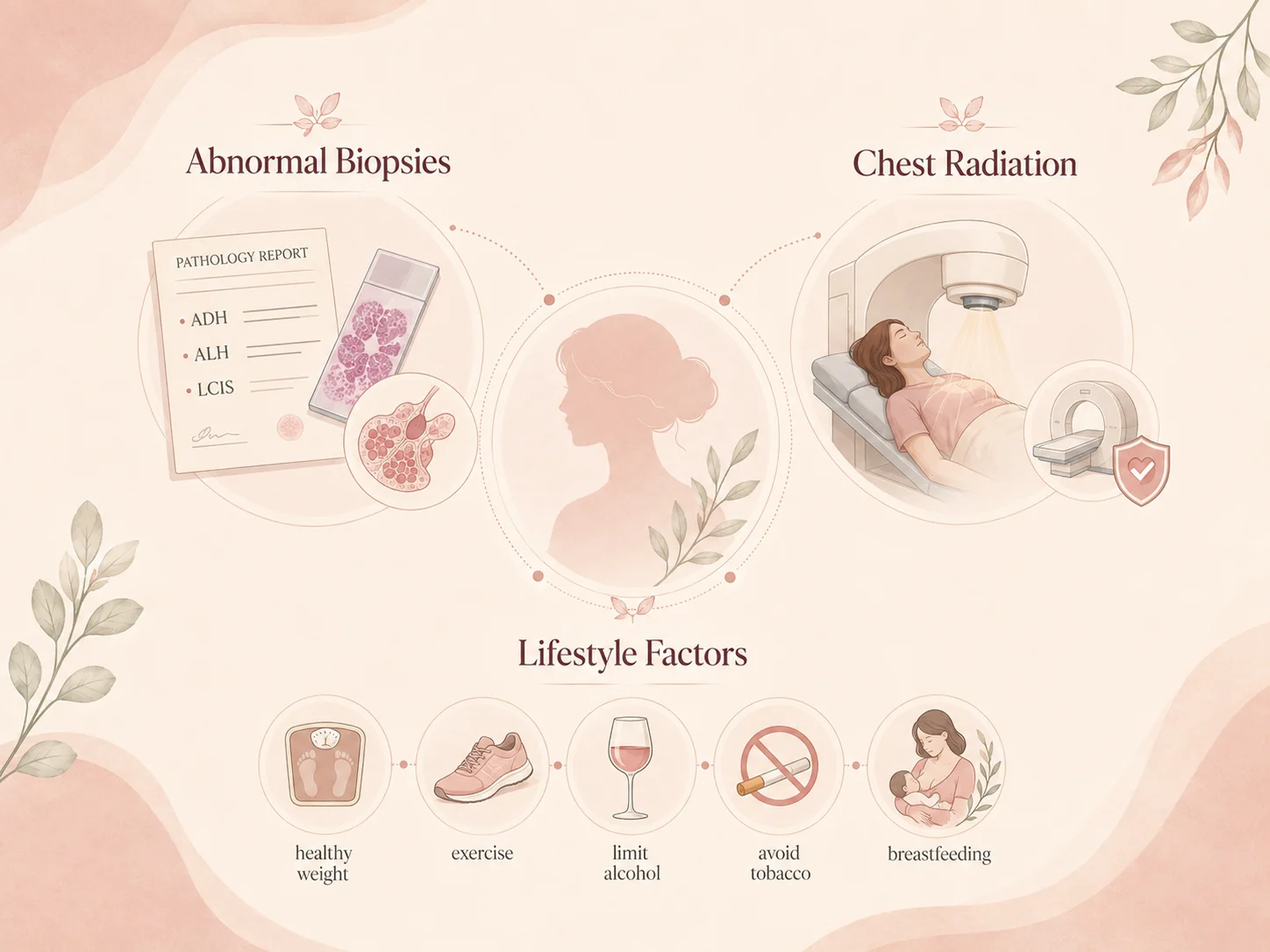
Prior chest radiation. Women who received therapeutic chest radiation at a young age , for conditions such as lymphoma or other childhood cancers , have a substantially elevated lifetime risk of breast cancer. Many survivors are unaware that they qualify for earlier and more intensive screening.
FROM MY PRACTICE A patient in her late 30s came to me for an unrelated concern, and it was almost by accident that I learned she'd had radiation for Hodgkin lymphoma at age 19. No one had ever told her this meant she qualified for annual breast MRI starting years earlier than standard mammography guidelines. This is one of the risk factors I actively screen for now with every new patient, precisely because it's so easy to miss in a routine intake. Identifying details have been changed to protect privacy.
Lifestyle factors. No lifestyle strategy can completely eliminate breast cancer risk, but several habits appear beneficial: maintaining a healthy weight, regular physical activity, limiting alcohol, avoiding tobacco, and breastfeeding when possible.
Dr. Kashyap's Practical Tip I'm careful with this conversation in clinic, because I've seen it go wrong both ways , patients who assume lifestyle changes make them immune, and patients who assume lifestyle doesn't matter at all since "it's all genetic anyway." Neither is accurate. You can't control your genes or your breast density, but alcohol intake and physical activity are two of the few levers you actually get to pull, so they're worth pulling , not because they guarantee anything, but because they meaningfully shift the odds in your favor.
Why Risk Assessment Is Becoming More Personalized
One of the biggest shifts in modern medicine is moving away from one-size-fits-all screening. Two women of the same age may have very different breast cancer risks based on their breast density, family history, genetic profile, personal medical history, prior radiation exposure, and lifestyle factors.
This is why individualized risk assessment is increasingly incorporated into preventive care. Risk models such as Tyrer-Cuzick, Gail, BCSC, and CanRisk can help estimate short-term and lifetime risk and guide conversations about screening strategies , some women, based on their score, may qualify for annual MRI in addition to mammography, or earlier screening than standard guidelines recommend.
Dr. Kashyap's Practical Tip I use one of these risk calculators , usually Tyrer-Cuzick , selectively, when a patient's combination of dense breasts, family history, or a prior biopsy finding makes it clinically indicated. Time constraints mean it isn't practical to run for every eligible patient, but when it's used, it takes about five minutes in the visit, and it's often the single most clarifying part of the appointment: it turns a vague worry into an actual number we can plan around together.
3. Types of Breast Cancer
Everything so far has been about odds and warning signs, the "before" picture. If a workup does find something, the next question changes completely: not "will this happen," but "what exactly is this." Breast cancer isn't one disease, it's a category, and the specific type shapes both prognosis and treatment.
|
Type
|
What It Is
|
Key Characteristic
|
|
Ductal carcinoma in situ (DCIS)
|
Non-invasive; abnormal cells confined to the milk ducts
|
Considered stage 0 , the earliest, most treatable form
|
|
Invasive ductal carcinoma (IDC)
|
Begins in the milk ducts and spreads into surrounding tissue
|
The most common type, accounting for about 80% of invasive cases
|
|
Invasive lobular carcinoma (ILC)
|
Begins in the milk-producing lobules
|
Second most common; can be harder to detect on mammogram
|
|
Inflammatory breast cancer (IBC)
|
Rare and aggressive; blocks lymphatic vessels in the skin
|
Causes redness, swelling, and an orange-peel skin texture rather than a distinct lump; needs urgent care
|
|
Triple-negative breast cancer
|
Lacks estrogen, progesterone, and HER2 receptors
|
Tends to grow faster and has fewer targeted treatment options, though newer therapies are improving outcomes
|
|
HER2-positive breast cancer
|
Overexpresses the HER2 protein
|
Historically aggressive, but highly responsive to HER2-targeted therapies
|
|
Hormone receptor-positive breast cancer
|
Estrogen and/or progesterone receptor-positive
|
The most common receptor status; treatable with hormone-blocking therapies
|
|
Paget's disease of the breast
|
Rare; affects the nipple and areola
|
Often presents as a scaly, red rash mistaken for eczema
|
Why this matters practically: Receptor status (hormone receptor and HER2 status) drives treatment decisions far more than the anatomical type alone. This is also where my specialty intersects directly, hormone receptor status is the reason menopause, hormone therapy, and breast cancer are such an interconnected conversation (see Section 8).
4. Stages of Breast Cancer
Type tells you what it is. Stage tells you how far it's gotten , and together, those two pieces of information do more to shape a treatment plan than almost anything else. Staging describes how far cancer has spread at the time of diagnosis, and it's one of the strongest predictors of treatment approach and outlook.
|
Stage
|
What It Means
|
|
Stage 0
|
Non-invasive (like DCIS); abnormal cells haven't spread beyond the ducts or lobules
|
|
Stage I
|
Small, invasive tumor, no or minimal lymph node involvement
|
|
Stage II
|
Larger tumor and/or limited spread to nearby lymph nodes
|
|
Stage III
|
Larger tumor with more extensive lymph node involvement, or spread to nearby skin/chest wall
|
|
Stage IV (metastatic)
|
Cancer has spread to distant organs , most commonly bone, liver, lungs, or brain
|
On stage 1 symptoms specifically: Early-stage breast cancer often has no symptoms at all, which is why it's usually caught on a screening mammogram rather than by feel. When symptoms are present at stage 1, it's typically a small, painless lump.
On stage 4 treatment: Advances in therapy now allow many women with metastatic breast cancer to live longer with good quality of life, though treatment is generally not curative. Care at this stage remains highly individualized, focusing on disease control, quality of life, and the specific receptor profile of the cancer. This is squarely oncology territory.
5. How Is Breast Cancer Diagnosed
Type and stage aren't things you're simply told , they're determined through a specific sequence of steps, and knowing that sequence makes a confusing process feel a lot less overwhelming if you ever go through it.
|
Step
|
What Happens
|
|
Clinical breast exam
|
Your doctor examines both breasts and lymph node areas by hand
|
|
Mammogram
|
X-ray imaging of breast tissue; can detect changes before they're felt
|
|
Ultrasound
|
Often used to further evaluate a specific area, especially in dense breast tissue
|
|
MRI
|
Used in select cases , higher-risk patients (including those flagged by the risk models above), or to clarify ambiguous findings
|
|
Biopsy
|
The only way to confirm a diagnosis , a small tissue sample is examined for cancer cells
|
|
Receptor and genomic testing
|
Once cancer is confirmed, further testing determines hormone receptor status, HER2 status, and sometimes genomic risk scores that guide treatment
|
How I recommend approaching this: If you're called back after a mammogram, try not to catastrophize , a large share of callbacks lead to "this is just dense tissue" or "this is a benign cyst," confirmed by additional imaging. But don't skip the follow-up appointment either. The only way to know for certain is to complete the workup.
6. Breast Self-Awareness: What Replaced the Monthly Self-Exam
Everything above describes what happens in a clinical setting. But most changes are actually first noticed at home, which is exactly why what you do between appointments matters just as much as the appointments themselves. For years, women were taught to perform a structured monthly breast self-exam. Current recommendations have evolved: rather than a rigid formal technique, experts now encourage breast self-awareness , simply knowing what's normal for your body and reporting changes promptly, rather than following a strict monthly ritual.
Seek medical evaluation if you notice:
● A new lump
● Skin dimpling or thickening
● Nipple changes
● Persistent breast pain
● New asymmetry
● Enlarged lymph nodes under the arm
Dr. Kashyap's Practical Tip Patients often ask me if they're "doing self-awareness right," as if there's a formal technique to follow now. There isn't , that's the point. You don't need a schedule or a script. You simply need to become familiar with the normal appearance and feel of your breasts, in the shower or getting dressed, so that if something changes, you notice.
If you'd still prefer a structured method to build that familiarity, here's a step-by-step version some women find useful , this isn't required, but it's a reasonable way to get comfortable with your own normal, especially early on:
|
Step
|
What to Do
|
|
1. Visual check
|
Stand in front of a mirror, arms at your sides, then raised overhead. Look for changes in size, shape, skin texture, or nipple position.
|
|
2. Hands-on-hips check
|
Press hands firmly on hips, flex chest muscles, and look again for dimpling or puckering.
|
|
3. Lying down
|
Lie flat, use the pads of your fingers, and check the entire breast and armpit area in a circular or grid pattern, using light, medium, and firm pressure.
|
|
4. In the shower
|
Repeat the circular check with soapy, slippery fingers, which can make it easier to feel changes.
|
|
5. Nipple check
|
Gently squeeze each nipple to check for discharge.
|
Precaution: Don't panic over lumpy or fibrous-feeling tissue , many women have naturally glandular breasts, and that texture is normal for them (especially with dense breasts, discussed above). The goal is noticing change, not achieving a perfectly smooth exam.
When to get medical guidance: Any new lump, change, or symptom found through self-awareness , whether casual or structured , should be evaluated by a clinician, not just monitored at home. Self-exams, structured or not, are a familiarity tool, not a replacement for mammograms.
7. Breast Cancer Treatment: An Overview
If a self-check or a screening test does turn up something that's confirmed as cancer, this is where things head next. Treatment is built around type, stage, receptor status, and your overall health , which is why two women with "the same" diagnosis on paper can have very different treatment plans.
|
Treatment Type
|
What It Involves
|
Typically Used For
|
|
Surgery (lumpectomy or mastectomy)
|
Removes the tumor or the entire breast
|
Nearly all stages, often combined with other treatments
|
|
Radiation therapy
|
Targeted radiation to destroy remaining cancer cells
|
Usually after lumpectomy, sometimes after mastectomy
|
|
Chemotherapy
|
Systemic medication to kill rapidly dividing cells
|
Higher-risk or larger tumors, certain receptor profiles, or metastatic disease
|
|
Hormone (endocrine) therapy
|
Blocks or lowers estrogen to slow hormone receptor-positive cancers
|
Hormone receptor-positive breast cancer, often for 5–10 years
|
|
Targeted therapy
|
Drugs aimed at specific proteins, like HER2-targeted agents
|
HER2-positive breast cancer
|
|
Immunotherapy
|
Helps the immune system recognize and attack cancer cells
|
Select cases, particularly triple-negative breast cancer
|
Where I fit into this as a gynecologist: I am not the one designing chemotherapy regimens , that's oncology's domain, and rightly so. My role is often before diagnosis (screening, risk assessment, the first exam that leads to a referral) and after treatment (managing the menopause-like symptoms that hormone-blocking therapies can cause, bone health monitoring, and helping patients navigate hormone therapy questions with their oncology team). If you're facing a breast cancer diagnosis, please build your core team around a breast surgeon and oncologist , this guide is meant to inform you, not replace that relationship.
8. Menopause, Hormones, and Breast Cancer: The Conversation I Have Most
One more piece ties everything above together, and it's the one that brings me back to my own specialty specifically. This is the part of the topic where my specialty actually lives, and it's also the most misunderstood corner of this entire subject. I've presented on this exact intersection , hormone therapy and breast cancer risk , to fellow clinicians, because even within medicine, the nuance gets lost easily.
What the data actually shows: Much of the historical alarm around hormone therapy and breast cancer traces back to the Women's Health Initiative (WHI) trials, but the increased risk seen there was specifically associated with conjugated equine estrogen combined with medroxyprogesterone acetate (MPA), a synthetic progestin. Current practice more commonly uses micronized progesterone, and the available evidence suggests its breast-safety profile may differ from MPA's. Estrogen-alone therapy (for women without a uterus) has shown a different, generally more favorable risk profile in that same data. In short, breast cancer risk with hormone therapy depends on the specific formulation , the type of progestogen used, duration of therapy, timing of initiation, and the individual patient's baseline risk , rather than hormone therapy broadly "causing" breast cancer. As of the FDA's November 2025 safety labeling review, boxed warning language on this topic has been updated to better reflect current evidence and current menopause society guidance, rather than the broader alarm generated by the initial WHI reporting in the early 2000s.⁴
What this means in practice:
● A history of breast cancer, or a known hormone-sensitive cancer, is generally a reason not to use systemic hormone therapy , this hasn't changed.
● For women without that history, the risk conversation is individualized: age, timing since menopause, type of hormone therapy, and personal/family history all factor in.
● Local vaginal estrogen, used for genitourinary menopause symptoms, carries a very different , and much lower , risk profile than systemic hormone therapy, because so little reaches the bloodstream. This distinction gets lost constantly, including with breast cancer survivors who are sometimes told, incorrectly, that all estrogen is off the table.
● Women with a personal history of hormone receptor-positive breast cancer usually manage menopause symptoms with non-hormonal options, in close coordination with their oncologist , but their symptoms still deserve real treatment, not just "you'll have to live with it."
How I recommend approaching this: If you're a breast cancer survivor struggling with hot flashes, vaginal dryness, or sleep disruption, ask specifically whether local vaginal therapies or non-hormonal medications are appropriate for you , don't assume every hormone-adjacent option is automatically off the table without that direct conversation between your gynecologist and your oncologist.
FROM MY PRACTICE A patient going through active treatment for hormone receptor-positive breast cancer came to me miserable with vaginal dryness so severe she could barely sit through her workday. She'd been told "no estrogen, period," by well-meaning providers, and had simply been enduring it. After a joint conversation with her oncology team, we found a non-hormonal path that gave her real relief , she didn't need to just tolerate it for the next five years of endocrine therapy. Identifying details have been changed to protect privacy.
When to See a Doctor Right Away
● Any new lump or area of thickening, regardless of pain
● Skin changes , dimpling, redness, or an orange-peel texture, especially if it appeared quickly
● New nipple inversion, scaling, or unusual discharge
● Swelling in the armpit or near the collarbone
● Any breast change that doesn't resolve after one full menstrual cycle
● A callback after a mammogram , please don't skip the follow-up imaging or biopsy out of fear
Final Thoughts
If you take one thing from this guide, let it be this: breast cancer risk isn't determined by a single mammogram result, a single gene, or a single family member's diagnosis , it's the sum of many factors working together, and understanding yours is what lets your screening plan be built around you, not just your age. You don't need a lump to justify asking about that plan, and you don't need to be certain something's wrong to get it checked. The women I see with the best outcomes are rarely the ones who felt the most confident nothing was wrong , they're the ones who understood their risk, and got the ambiguous thing looked at anyway.
This article is for educational purposes and is not a substitute for personalized medical advice, diagnosis, or treatment. Breast cancer screening, genetic testing, diagnosis, and treatment decisions should always be made with your physician, genetic counselor, breast surgeon, or oncologist based on your individual history and risk factors. Patient stories in this article are composites, with identifying details changed to protect privacy.
References
-
Centers for Disease Control and Prevention. "What Are the Symptoms of Breast Cancer?" https://www.cdc.gov/breast-cancer/symptoms/index.html
-
National Cancer Institute. "Breast Cancer Risk in American Women." https://www.cancer.gov/types/breast/risk-fact-sheet
-
American Cancer Society. "How Common Is Breast Cancer?" https://www.cancer.org/cancer/types/breast-cancer/about/how-common-is-breast-cancer.html
-
U.S. Food and Drug Administration. "FDA Approves Labeling Changes to Menopausal Hormone Therapy Products." November 10, 2025. https://www.fda.gov/news-events/press-announcements/fda-approves-labeling-changes-menopausal-hormone-therapy-products
-
American Cancer Society. "Breast Cancer Signs and Symptoms." https://www.cancer.org/cancer/types/breast-cancer/screening-tests-and-early-detection/breast-cancer-signs-and-symptoms.html
-
American Cancer Society. "Breast Cancer Stages." https://www.cancer.org/cancer/types/breast-cancer/understanding-a-breast-cancer-diagnosis/stages-of-breast-cancer.html


 Meet Your Doctor

 03 Jul, 2026
 10:13 AM
Leave a Comment