THE MENOPAUSE DIET: A 5-DAY MEAL PLAN FOR MENOPAUSE WEIGHT MANAGEMENT
“I’m eating the same way I always have. Why is my weight suddenly moving to my middle?”
I hear some version of this almost every week. A woman in her late 40s or 50s tells me she has reduced portions, skipped dessert, added more salads, or returned to the diet that worked perfectly well for her ten years ago. Yet the scale barely changes , or her weight stays similar while her waistline changes anyway.
That experience is real. Midlife aging is the major driver of weight gain, while menopause itself contributes to a shift toward more abdominal and visceral fat. At the same time, muscle becomes increasingly important to protect because lean mass naturally declines with age. Sleep disruption, hot flashes, stress, reduced activity, and changes in insulin sensitivity can make the picture even more complicated.
That is why I do not approach a menopause diet as “eat less and try harder.” The better question is: how do we build an eating pattern that protects muscle, keeps you satisfied, supports metabolic and bone health, and is realistic enough to continue after the first five days?
Five days will not “reset” your metabolism or melt menopause belly fat. Five structured days can, however, show you what adequate protein, fiber, vegetables, healthy fats, and balanced carbohydrates actually look like in everyday meals. That can be a very useful starting point.
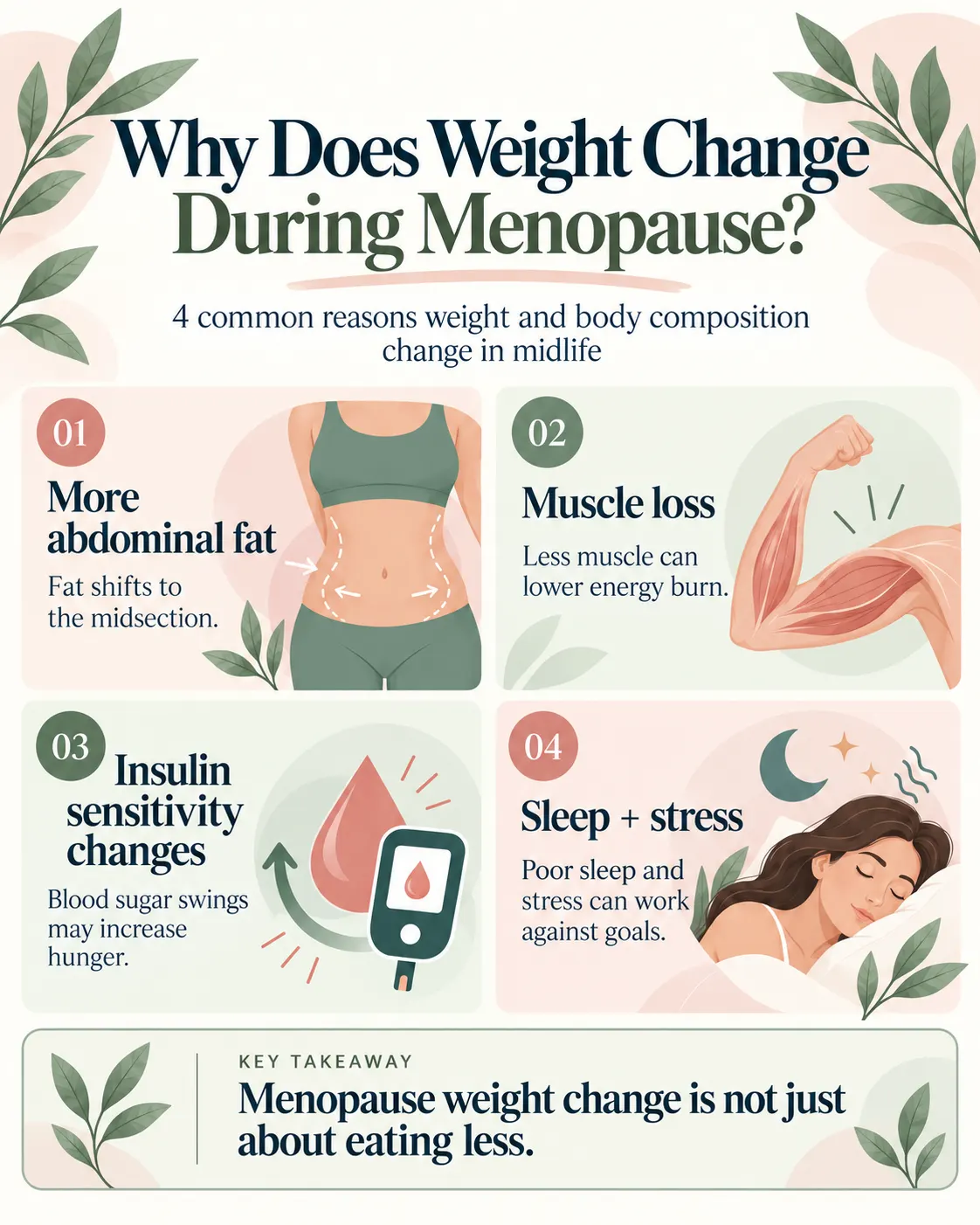
Why Does Weight Change During Menopause?
Fat Is More Likely to Shift Toward the Abdomen
Declining ovarian estrogen is associated with changes in body composition and a greater tendency to accumulate central or visceral fat. Your total body weight may not change dramatically while your waistline and where you carry fat change noticeably. This is one reason I encourage women not to judge progress using the bathroom scale alone.
Muscle Becomes Easier to Lose
Muscle mass naturally decreases with aging. The Menopause Society notes that adults may lose approximately 3% to 8% of muscle mass per decade after age 30. Reduced muscle contributes to lower energy expenditure over time, which is why I talk so much about protein plus strength training.
Protein provides building material. Resistance exercise gives your body a reason to maintain and build that tissue. Doing one without the other leaves part of the strategy unfinished.
Blood Sugar Regulation Matters More
Changes in body composition, sleep, activity, and aging can make insulin resistance more common in midlife. A meal built mostly around refined carbohydrates may leave some women hungry again quickly, craving sugar, or experiencing energy crashes. Protein, fiber, and minimally processed carbohydrates can help make meals more satisfying and blood sugar more stable.
Sleep and Stress Can Work Against Weight-Loss Efforts
A woman who wakes repeatedly with night sweats may have less energy to exercise, more cravings, and poorer recovery from strength training the next day. Menopause also often arrives during a life stage filled with career responsibilities, caregiving, aging parents, relationship changes, financial pressure, and chronic stress. Food cannot solve all of that, but a nutrition plan works much better when sleep and stress are treated as part of the same metabolic picture.
What Can a 5-Day Menopause Diet Actually Do?
I want to be clear here because “five-day weight-loss plans” are often marketed irresponsibly.
In five days, this plan can help you:
- Establish regular, balanced meals.
- Understand what roughly 25–30 g of protein at a meal can look like
- Increase vegetables and fiber.
- Cut down on ultra-processed foods and excess sodium.
- Reduce decision fatigue.
- Identify meals that actually keep you satisfied.
- Build a grocery and meal-prep routine you can continue.
- You may also notice less bloating or water retention.
What five days cannot do
- Guarantee a specific amount of fat loss
- Selectively burn menopause belly fat.
- Reverse significant insulin resistance.
- Rebuild lost muscle.
- “Detox” your hormones.
- Correct hypothyroidism.
- Treat severe menopause symptoms.
- Replace an individualized medical weight-management plan.
If your weight changes quickly during the first few days, some of that difference may reflect water, sodium, glycogen, bowel contents, or bloating rather than body-fat loss.
|
Dr. Kashyap’s Insight
I don’t tell my patients five days will fix menopause weight. What five days can do is reveal how different you feel when breakfast contains real protein, lunch is more than a light salad, and fiber is spread across your day. Many women discover that they weren’t overeating , they were simply under-building their meals earlier in the day.
|
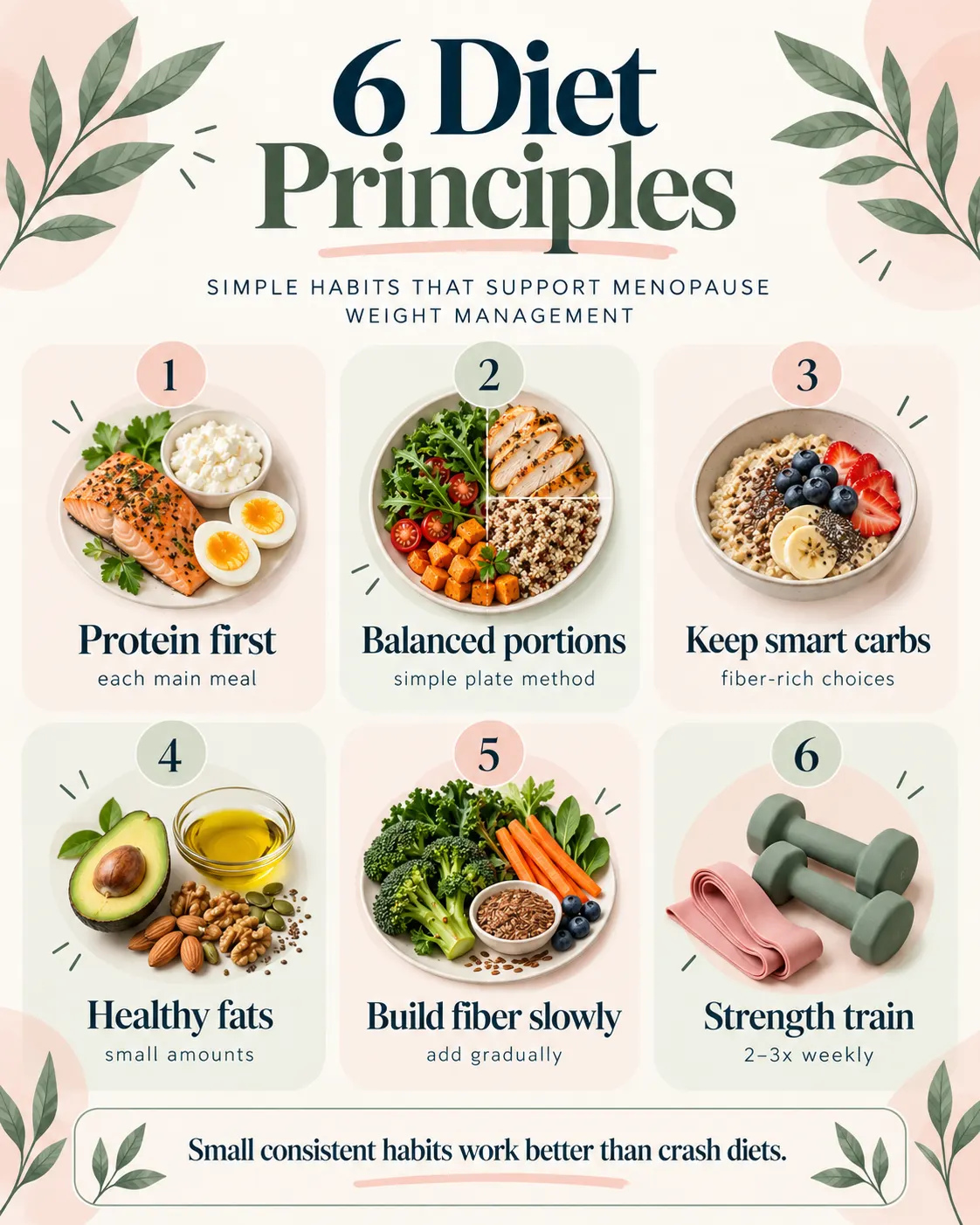
Before You Begin: 6 Principles Behind This Menopause Diet
1. Prioritize Protein Throughout the Day
This is probably the most important nutritional change I discuss with women in midlife. The Menopause Society’s current midlife weight guidance recommends about 1.2 grams of protein per kilogram of body weight per day, with individualization for health status, body size, activity, and clinical needs.
In practice, I often use a simpler starting point: aim for roughly 25–30 g of protein at a main meal, adjusted for body size, activity, total intake, goals, and kidney health.
|
A common pattern to change
Breakfast: coffee + toast | Lunch: small salad | Dinner: most of the day’s protein. A better pattern distributes meaningful protein across breakfast, lunch, and dinner.
|
2. Use a Simple Plate Method
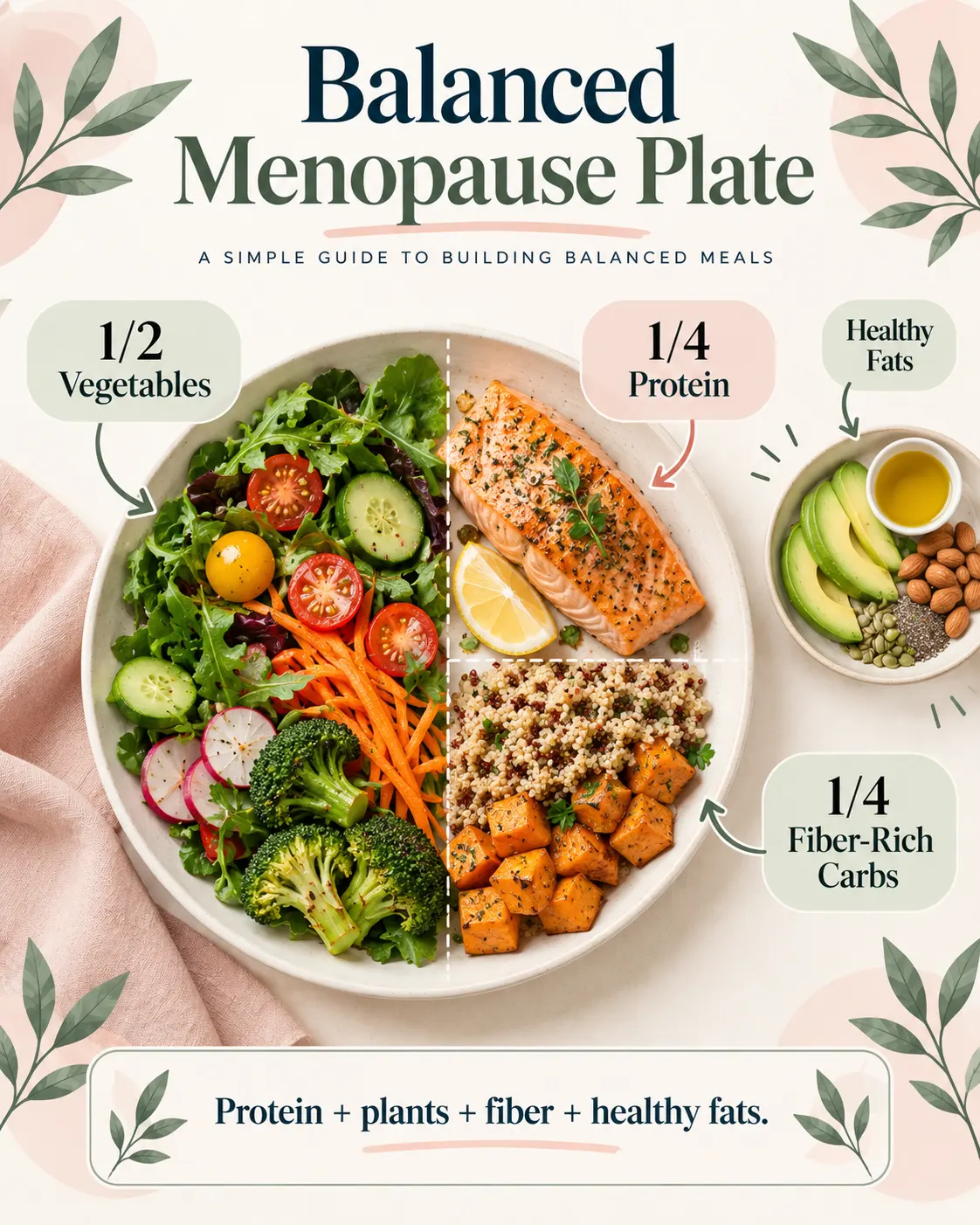
- ½ plate: vegetables , leafy greens, broccoli, peppers, zucchini, cauliflower, green beans, carrots, cabbage.
- ¼ plate: protein , fish, chicken, turkey, eggs, tofu, tempeh, lentils, beans, Greek yogurt, cottage cheese
- ¼ plate: fiber-rich carbohydrate , beans, lentils, oats, quinoa, brown rice, barley, farro, sweet potato, whole grains.
- Add a small amount of healthy fat , olive oil, avocado, nuts, or seeds.
3. Keep Carbohydrates , Choose Better Ones
You do not need a zero-carb menopause diet. Oats, beans, lentils, quinoa, fruit, sweet potatoes, brown rice, and whole grains provide fiber and nutrients and can fit very well into a menopause weight-management pattern. The issue is more often refined, low-fiber carbohydrates eaten without enough protein or fiber.
4. Include Healthy Fats , But Remember They Are Energy-Dense
Extra-virgin olive oil, avocado, walnuts, almonds, pumpkin seeds, chia, flax, and fatty fish support overall diet quality and cardiovascular health. “Healthy” does not mean unlimited , a small amount can enhance a meal without turning every dish into an energy-dense “health food.”
5. Build Fiber Gradually
Fiber supports fullness, bowel regularity, gut health, and steadier blood sugar. But going overnight from a low-fiber diet to large amounts of beans, chia, vegetables, and whole grains can cause bloating. Increase gradually and drink adequate fluids.
6. Pair the Diet With Strength Training
Nutrition and resistance exercise belong together. Current U.S. physical-activity guidance recommends muscle-strengthening activity on at least two days each week. I often encourage women to build toward 2–3 resistance sessions per week depending on fitness and health status. Bodyweight exercises, resistance bands, and weights all count.
How to Use This Plan Without Turning It Into Another Restrictive Diet
The portions in this guide are examples, not prescriptions. I use the structure below to help women build meals first, then adjust quantity for hunger, activity, body size, medications, goals, and medical conditions. The goal is not to make every plate identical; it is to make the nutritional job of the meal clear.
1. Start with the protein anchor. Build the meal around the food that is doing most of the protein work. For many women, roughly 25–30 g at a main meal is a useful practical target, but individual needs vary.
2. Add plants before you cut food. Vegetables, fruit, beans, and whole grains can increase volume, fiber, and nutrient density. I would rather improve the structure of the plate than automatically shrink every portion.
3. Adjust carbohydrate to the person, not the menopause label. A more active woman may need a different portion than someone who is sedentary or using glucose-lowering medication. Fiber-rich carbohydrates are not automatically the problem.
4. Use healthy fats deliberately. Olive oil, avocado, nuts, and seeds add flavor and unsaturated fats, but they are energy-dense. A small amount can make a meal satisfying without becoming the largest calorie source on the plate.
5. Snacks are optional. Use them when hunger, long meal gaps, activity, or your total protein needs justify them , not because a meal plan says you must eat every few hours.
A practical check before you eat less
If a meal is mostly toast, cereal, fruit, salad, or soup, ask what the protein anchor is before you cut the portion. Many women are already eating “light”; the problem is that the meal may not be built to support satiety or muscle. |
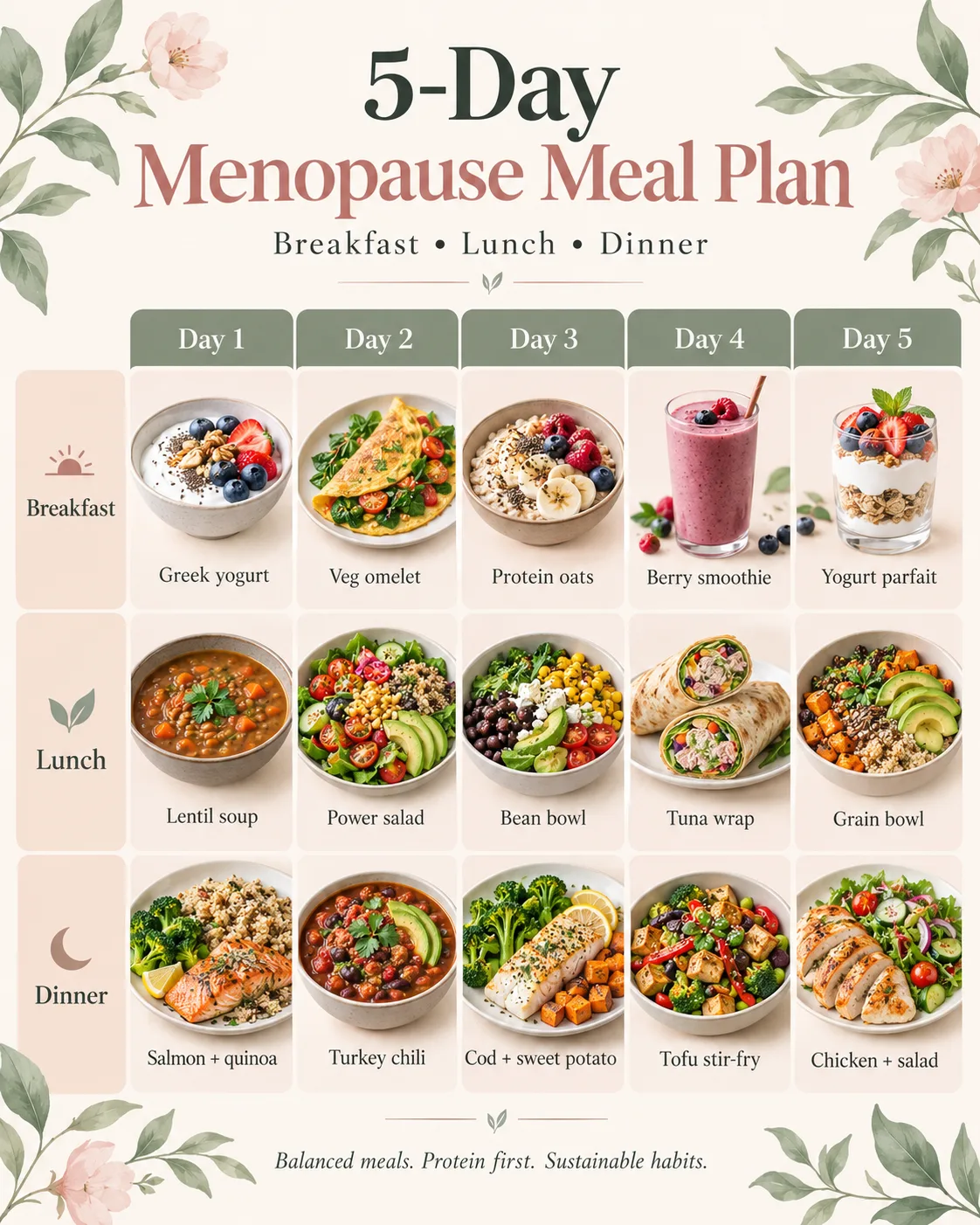
The 5-Day Menopause Diet Plan
This plan is not calorie-counted because calorie requirements differ substantially by body size, activity, medications, health conditions, and goals. Instead, it is built around protein + plants + fiber + healthy fats, with practical substitutions throughout.
Table 1: 5-Day Meal Plan – Daily Lessons & Practice
|
Day
|
Main Lesson
|
What I Want You to Practice
|
| Day 1 |
Build the plate |
See what protein + vegetables + fiber-rich carbohydrate + healthy fat looks like in normal meals. |
| Day 2 |
Protect the morning |
Start with enough protein so breakfast is not just coffee, toast, or cereal carrying you to lunch. |
| Day 3 |
Support muscle |
Spread protein across the day and pair the eating pattern with resistance exercise. |
| Day 4 |
Make it work when busy |
Use leftovers, canned foods, frozen produce, wraps, and smoothies without losing the meal structure. |
| Day 5 |
Turn the plan into normal eating |
Practice flexible meals you can repeat, swap, order, or build without “starting over” on Monday. |
Table 2: How to Use the Plan
|
Guideline
|
What You Need to Know
|
|
Portions
|
Treat portions as examples, not a prescription.
|
|
Adjustments
|
Adjust food amounts to hunger, body size, activity, and medical needs.
|
|
Snacks
|
Snacks are optional. Have one if you are physically hungry, meals are far apart, or you need additional protein.
|
|
Medical Precautions
|
If you have diabetes, chronic kidney disease, significant food allergies, celiac disease, active GI disease, or a history of disordered eating, read the precautions section before starting.
|
Day 1 , Learn What a Balanced Menopause Plate Looks Like
What I want you to notice today: fullness should come from the structure of the meal , not from removing every carbohydrate or relying on willpower between meals.
Breakfast: Greek Yogurt, Berries, Flax and Walnuts
Example serving: 1 cup plain Greek yogurt + ½–1 cup berries + 1 tablespoon ground flax + a small sprinkle of walnuts.
Why it is here
- Greek yogurt provides concentrated protein plus calcium, important for midlife bone health.
- Berries provide fiber and colorful plant compounds without requiring added sugar.
- Ground flax adds fiber, ALA omega-3 fat, and lignans.
- Walnuts add unsaturated fats and texture.
Smart swaps
- Dairy-free or vegan: use a high-protein fortified soy yogurt when appropriate.
- Lactose intolerance: lactose-free Greek yogurt may work if milk protein is tolerated.
- Soy allergy: choose another tolerated yogurt and add a pea- or other tolerated protein source.
- Nut allergy: skip walnuts and use pumpkin, sunflower, chia, or flax seeds if seeds are safe.
Lunch: Lentil and Vegetable Soup + Side Salad
Example structure: 1½–2 cups lentil-vegetable soup + a generous salad with olive oil and lemon or vinegar.
Why it is here
Lentils provide protein and fiber in the same food, making a plant-forward lunch far more satisfying than a light salad alone. Vegetables add volume and micronutrient diversity.
Lentil soups vary widely in protein. If yours is mostly broth and vegetables, add a protein side, such as Greek yogurt, a hard-boiled egg, chicken, or edamame, to reach roughly 25–30 g.
If legumes cause bloating
Start with a smaller serving, rinse canned lentils thoroughly, or choose another tolerated protein. People with IBS or certain gastrointestinal disorders may need more individualized guidance.
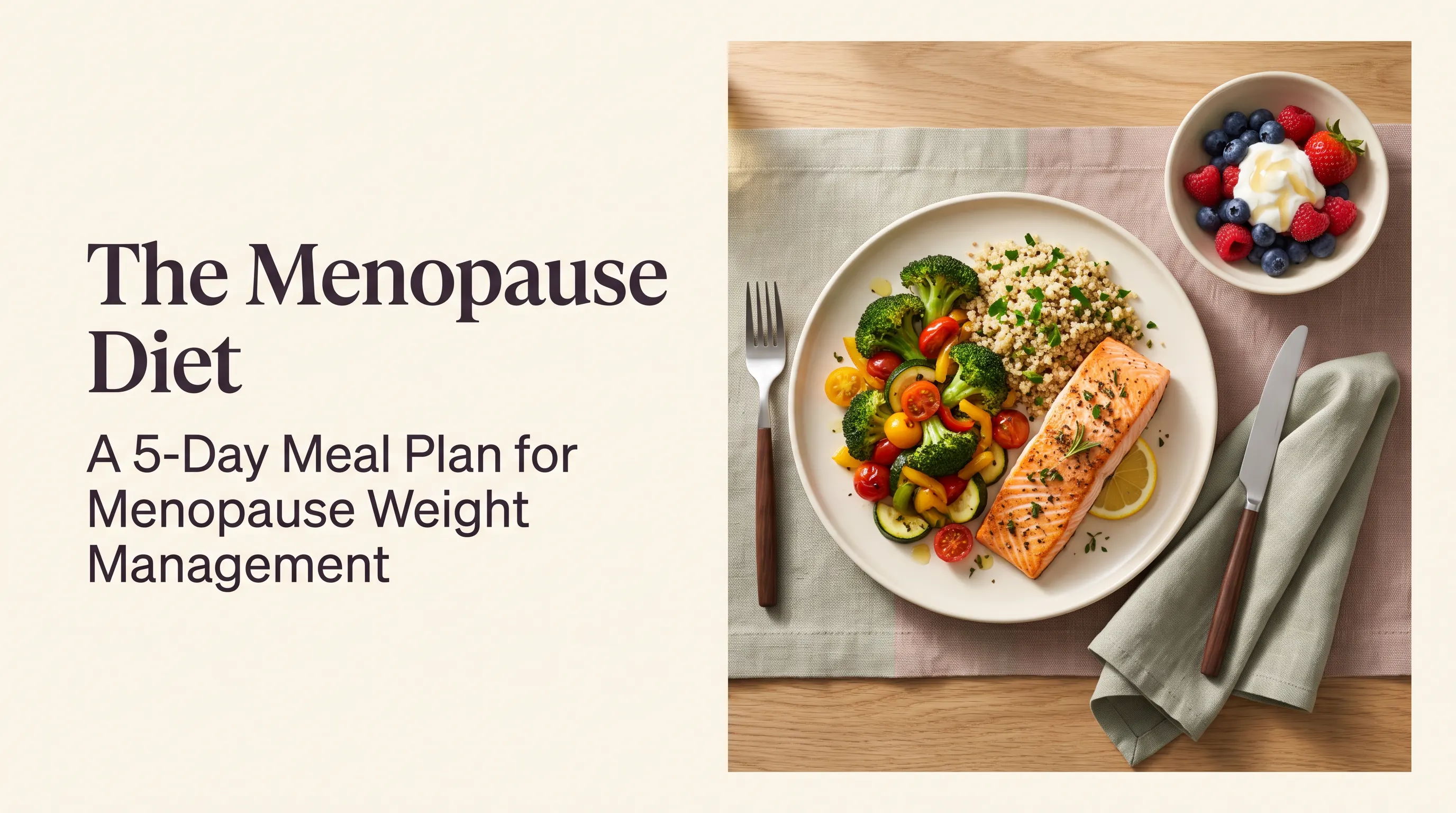
Dinner: Salmon + Roasted Broccoli + Quinoa
Example serving: about 4–5 oz cooked salmon + 1–2 cups vegetables + ½–¾ cup cooked quinoa.
Why it is here
- Salmon provides high-quality protein plus EPA/DHA omega-3 fats.
- Broccoli contributes fiber, vitamin C, folate, and plant diversity , it does not need to be marketed as a “detox” food to be useful.
- Quinoa is a fiber-containing carbohydrate with some protein and is naturally gluten-free.
Smart swaps
- Vegetarian/vegan: tofu, tempeh, or a lentil-quinoa bowl.
- Fish allergy: chicken, turkey, tofu, tempeh, beans, or lentils.
- Quinoa alternative: brown rice, certified gluten-free buckwheat, sweet potato, or farro if gluten is tolerated.
Optional snack: cucumber, peppers, or carrots + hummus
Sesame allergy: use tahini-free hummus, bean dip, or guacamole.
Day 2 , Stabilize the Morning
What I want you to notice today: breakfast is an opportunity to get ahead on protein. If the first meal is mostly refined carbohydrate, many women spend the rest of the morning trying to “catch up” on hunger.
Breakfast: Vegetable Omelet + Whole-Grain Toast
Example serving: 3 eggs (or 2 eggs + ½ cup egg whites) with spinach, peppers, mushrooms, or tomatoes + one slice whole-grain toast. For more protein, add a side of Greek yogurt or cottage cheese.
Why it is here
This gives you a much more protein-forward start than toast or cereal alone. Vegetables add volume and fiber without requiring an enormous meal.
Smart swaps
- Egg-free or vegan: tofu scramble, or a chickpea-flour scramble paired with a protein side such as soy yogurt or edamame. Chickpea flour alone provides less protein than eggs.
- Gluten-free: certified gluten-free whole-grain bread, potatoes, or oats.
Lunch: Chicken or Tofu Power Salad
Build it with mixed greens, 4–5 oz chicken or a generous tofu serving, chickpeas, cucumber, tomatoes, peppers, and olive oil + lemon.
Why add chickpeas if there is already protein?
Because they contribute additional fiber, plant protein, and slower-digesting carbohydrate. A salad consisting only of lettuce, vegetables, and dressing often leaves women hungry. This one is actually a meal.
Dinner: Turkey and Bean Chili + Greens
Use lean turkey, kidney or black beans, tomatoes, peppers, onions, spices, and a side of sautéed greens.
Why it is here
Turkey and beans make this a protein-and-fiber meal rather than a bowl of meat and sauce. The beans also provide carbohydrate and fiber, while the vegetables increase volume. Chili is especially useful for menopause weight management because one batch can cover dinner, lunch leftovers, and a freezer meal without changing the basic plate structure.
Vegetarian or vegan
Use a three-bean or bean-and-lentil chili. Chili is practical because it combines protein, fiber, and vegetables in one meal and freezes well.
Optional snack: cottage cheese + berries
Dairy-free: high-protein soy yogurt or edamame.
Day 3 , Focus on Muscle Preservation
What I want you to notice today: one high-protein dinner cannot do all the work. Spreading meaningful protein across breakfast, lunch, and dinner makes the plan more useful for muscle preservation.
Breakfast: Protein Overnight Oats
Combine oats, chia, berries or sliced banana, Greek yogurt and/or milk, and protein powder if needed to make the meal sufficiently protein-rich.
Why ordinary overnight oats may need an upgrade
Oats, chia, and fruit are nutritious but can still be relatively low in protein. The goal is to turn them from a carbohydrate-heavy breakfast into a balanced midlife breakfast.
Smart swaps
- Vegan: fortified soy milk + soy yogurt + pea or another plant protein if needed
- Gluten-free: use certified gluten-free oats
- Soy-free: use a tolerated milk alternative plus a non-soy protein source.
Lunch: Leftover Chili or Bean-and-Vegetable Bowl
Leftovers are intentional. A diet that assumes you have unlimited time to prepare unique meals every day is not realistic. Add leftover chili to greens and vegetables; include avocado if desired.
Why it is here
This meal teaches reuse, not restriction. Leftovers reduce decision fatigue while the extra greens and vegetables increase volume. If the leftover portion is light on protein, add edamame, Greek yogurt, cottage cheese, tofu, chicken, or another appropriate protein rather than assuming a bean bowl automatically reaches your protein target.
Dinner: Baked Cod + Sweet Potato + Green Beans
Example serving: 4–5 oz cod + a moderate sweet potato + 1–2 cups vegetables.
Why it is here
Cod provides lean protein. Sweet potato is a fiber-containing carbohydrate with potassium and carotenoids. Pairing carbohydrate with protein and vegetables creates a very different meal from eating refined carbohydrates alone.
Smart swaps
- Vegetarian/vegan: tofu, tempeh, seitan if gluten is tolerated, or a lentil patty.
- Fish allergy: chicken or another tolerated plant protein.
Optional snack: apple + small handful of almonds
Nut allergy: pumpkin seeds, sunflower-seed butter, or another tolerated protein source.
Day 4 , Make the Plan Work on a Busy Day
What I want you to notice today: convenience is not the enemy. Canned fish, canned beans, frozen vegetables, prewashed greens, and a well-built smoothie can be more realistic than a perfect meal you never have time to make.
Breakfast: Protein Berry Smoothie
Blend Greek yogurt or protein powder, berries, spinach, milk or a fortified alternative, and chia or flax if tolerated.
Why smoothies can go wrong
A smoothie made mostly from banana, juice, honey, and fruit can become a liquid carbohydrate meal. The solution is not to avoid smoothies , it is to anchor them with protein.
Lunch: Tuna or Chickpea Wrap
Use tuna or chickpeas, a whole-grain wrap, greens, cucumber, tomato, and a Greek-yogurt- or olive-oil-based dressing.
Why it is here
A wrap can be a complete lunch when the filling does the nutritional work. Tuna makes the protein target easier to reach; chickpeas add plant protein and fiber but may need a larger portion or an additional protein side. The vegetables add volume, and the wrap provides a practical carbohydrate source that travels well.
Smart swaps
- Fish allergy / vegetarian / vegan: chickpea salad.
- Gluten-free: certified GF wrap, corn tortilla, lettuce wrap, or serve the filling over quinoa or greens.
Dinner: Chicken or Tofu Vegetable Stir-Fry + Brown Rice
Use plenty of broccoli, peppers, mushrooms, snap peas, cabbage, and a moderate portion of brown rice.
Why it is here
Stir-fry is useful because the same meal can be adjusted without becoming a different recipe. Keep the protein portion substantial, use vegetables generously, and treat rice as one part of the meal rather than the whole bowl. This makes it easier to adapt the meal for different hunger and activity levels.
Smart swaps
- Soy allergy: chicken, eggs, beans, lentils, fish if tolerated, or another appropriate protein.
- Gluten-free: use gluten-free tamari rather than standard soy sauce if needed.
Optional snack: plain yogurt + berries or seeds
Skip added honey if you do not need extra sweetness.
Day 5 , Turn the “Diet” Into Normal Eating
What I want you to notice today: the plan should now feel less like a diet and more like a repeatable template. The long-term skill is knowing how to build the next meal even when the exact recipe changes.
Day 5 should not feel like the last day before you “go back to normal.” This is the pattern we want to normalize.
Breakfast: Greek Yogurt Parfait
Use Greek yogurt, berries, a modest amount of low-added-sugar granola, and seeds.
Why it is here
The yogurt is the protein anchor; the berries and seeds add fiber and plant variety. Granola is there for texture and carbohydrate , not to be the main ingredient. If your yogurt is not especially high in protein, check the label and add another protein source rather than compensating with more granola.
Why watch the granola?
Granola can be nutrient-dense, but portions become very large very quickly. Think of it as a topping rather than the entire breakfast.
Lunch: Mediterranean Grain Bowl
Build with quinoa or farro, chickpeas, roasted vegetables, leafy greens, and tahini-lemon dressing. This base bowl is vegetarian and can also be vegan if the dressing contains no dairy or honey.
Why it is here
This bowl shows how Mediterranean-style eating can still be protein-conscious. Quinoa or farro supplies carbohydrate and some protein, chickpeas add fiber and plant protein, vegetables provide volume, and tahini contributes fat and flavor. For a vegan bowl, adding tofu, tempeh, or edamame makes the protein target more realistic than relying on grains and chickpeas alone.
Smart swaps
- Omnivore option: add grilled chicken, salmon, or another tolerated animal protein if desired.
- Gluten-free: use quinoa or brown rice instead of farro.
- Sesame allergy: skip tahini and use olive oil + lemon, avocado dressing, or another allergen-safe dressing.
- Vegan: add tofu, tempeh, or edamame to bring the bowl closer to 25–30 g of protein.
Dinner: Grilled Chicken or Salmon + Large Mixed Salad
Add leafy greens, tomatoes, cucumber, colorful vegetables, olive oil, and lemon. Include a fiber-rich carbohydrate if needed, such as beans, quinoa, sweet potato, or whole grains.
Why it is here
A large salad can look “healthy” and still be nutritionally incomplete. Here, chicken or salmon supplies the protein anchor, vegetables provide volume and fiber, olive oil adds unsaturated fat, and the optional carbohydrate can be adjusted to hunger and activity. I do not want dinner to be a bowl of leaves that sends you looking for snacks an hour later.
Vegetarian/vegan
Use tofu, tempeh, lentils, beans, or seitan if tolerated.
Optional snack: vegetables + guacamole
5-Day Menopause Meal Plan at a Glance
|
Day
|
Breakfast
|
Lunch
|
Dinner
|
|
Day 1
|
Greek yogurt, berries, flax
|
Lentil vegetable soup
|
Salmon, broccoli, quinoa
|
|
Day 2
|
Vegetable omelet
|
Chicken/tofu power salad
|
Turkey/bean chili
|
|
Day 3
|
Protein overnight oats
|
Chili or bean bowl
|
Cod, sweet potato, greens
|
|
Day 4
|
Protein berry smoothie
|
Tuna/chickpea wrap
|
Chicken/tofu stir-fry
|
|
Day 5
|
Greek yogurt parfait
|
Mediterranean grain bowl
|
Chicken/salmon + large salad
|
Vegetarian and Vegan Menopause Diet: Can This Plan Still Work?
Absolutely. You do not need animal protein to build a supportive menopause diet. The main thing to watch is protein density , “plant-based” does not automatically mean protein-rich.
Strong vegetarian protein choices
- Greek yogurt
- Cottage cheese
- Eggs
- Tofu
- Tempeh
- Edamame
- Beans
- Lentils
- Chickpeas
- Seitan (made from wheat gluten; not suitable for celiac disease)
- Protein-fortified foods
Strong vegan protein choices
- Tofu
- Tempeh
- Edamame
- Lentils
- Beans
- Chickpeas
- Seitan (made from wheat gluten; not suitable for celiac disease)
- Pea protein
- Fortified soy milk or yogurt
Vegan nutrition deserves a little more planning
Pay particular attention to protein, vitamin B12, calcium, vitamin D, iron, iodine, and omega-3 fats. That does not mean a vegan diet is inferior. It means nutritionally complete plant-based eating needs deliberate planning.
Food Allergy and Intolerance Swaps
“Healthy” food is not healthy for you if it triggers an allergic reaction. The swaps below help preserve the nutritional role of the meal without assuming everyone can eat dairy, eggs, soy, gluten, fish, nuts, or sesame.
Food Allergy and Intolerance Swaps
|
If this applies…
|
Instead of…
|
Consider…
|
|
Lactose intolerance
|
Regular milk/yogurt if symptomatic
|
Lactose-free Greek yogurt or milk if milk protein is tolerated
|
|
Milk-protein allergy or vegan
|
Greek yogurt, cottage cheese, regular milk
|
Fortified high-protein plant alternatives; check protein and calcium on the label
|
|
Egg allergy
|
Omelet
|
Tofu scramble, chickpea-flour scramble, or another protein-rich breakfast
|
|
Fish allergy
|
Salmon, tuna, cod
|
Poultry, tofu, tempeh, beans, or lentils; address omega-3 intake separately if needed
|
|
Soy allergy
|
Tofu, tempeh, soy yogurt
|
Eggs, dairy, beans, lentils, poultry, or fish depending on dietary pattern
|
|
Tree-nut allergy
|
Almonds, walnuts
|
Pumpkin/sunflower seeds or seed butter if tolerated
|
|
Sesame allergy
|
Tahini or standard hummus
|
Tahini-free hummus, avocado, or olive-oil dressing
|
|
Gluten/celiac disease
|
Farro, regular bread/wraps
|
Quinoa, brown rice, corn tortillas, potatoes, or certified gluten-free oats
|
Allergy ≠ intolerance
For example, lactose intolerance may allow lactose-free dairy, while a milk-protein allergy requires avoiding milk proteins. If you have a diagnosed food allergy , especially one associated with anaphylaxis , also account for ingredient labels and cross-contact during preparation.
Why These Foods Appear in the Plan
These foods are not on the plan because they are “menopause superfoods.” Each one has a practical job: help you reach protein, fiber, calcium, omega-3, plant-diversity, or meal-satisfaction goals without turning the diet into a supplement list.
When I say “best use,” I mean where the food is most useful in this meal plan , not that menopause requires a special clock time for eating it.
Protein Anchors: Why They Matter and Where to Use Them
Protein Anchors: Why They Matter and Where to Use Them
|
Food
|
Why it helps
|
How and when to use it
|
|
Greek yogurt
|
Concentrated protein plus calcium. Especially useful when breakfast would otherwise be low in protein.
|
Breakfast, snack, smoothie base, or a protein side with a plant-based lunch. Choose plain/low-added-sugar versions and check the protein label; lactose-free or fortified high-protein plant yogurt can work when needed.
|
|
Eggs
|
High-quality protein in a quick, familiar food. They help turn toast and vegetables into a meal that better supports muscle and fullness.
|
Best at breakfast or as a quick protein add-on to soup or salad. If eggs alone do not get the meal close to your protein goal, add egg whites, Greek yogurt, cottage cheese, or another protein. Tofu is an easy vegan swap.
|
|
Salmon & fatty fish
|
High-quality protein plus EPA/DHA omega-3 fats; some fatty fish also provide vitamin D.
|
Lunch or dinner when you want one food to do most of the protein work. The sample plan uses about 4–5 oz cooked fish. If fish is not suitable, use another protein; flax/chia/walnuts provide ALA but are not identical to EPA/DHA.
|
|
Tofu, tempeh & edamame
|
Protein-dense plant foods that make vegetarian and vegan meals easier to build. Some calcium-set or fortified products also contribute calcium.
|
Use in scrambles, grain bowls, stir-fries, salads, or as a protein side. I use soy as a protein food, not as a hot-flash treatment; The Menopause Society does not recommend soy foods or extracts for treating hot flashes.
|
|
Lentils, beans & chickpeas
|
Plant protein + fiber + carbohydrate in the same food, which can make plant-forward meals more filling.
|
Use in soup, chili, wraps, salads, or bowls. Do not assume every lentil soup reaches 25–30 g protein; add yogurt, eggs, tofu/tempeh, edamame, chicken, fish, or another protein when needed. Increase gradually if legumes cause bloating.
|
Fiber, Plant Foods & Healthy Fats: What They Add
Fiber, Plant Foods & Healthy Fats: What They Add
|
Food
|
Why it helps
|
How and when to use it
|
|
Berries & whole fruit
|
Fiber, water, and plant compounds without requiring added sugar. Frozen fruit is a practical option too.
|
Breakfast or snack, ideally paired with a protein source when you want more staying power. Fruit does not need to be removed for menopause weight management.
|
|
Leafy greens & cruciferous vegetables
|
Add fiber, volume, folate, vitamin C, vitamin K, and plant diversity. Their value is nutrient density, not “detoxing estrogen.”
|
Lunch and dinner. Rotate varieties; cooked vegetables may be easier than raw ones for women with GI sensitivity.
|
|
Oats, quinoa & whole grains
|
Fiber-rich carbohydrate that can support energy and meal satisfaction when the meal also has enough protein.
|
Oats at breakfast; quinoa/farro/brown rice at lunch or dinner. Oats alone are not a high-protein breakfast, so add Greek yogurt, milk/fortified soy milk, eggs, cottage cheese, or protein powder. Use certified gluten-free grains when needed.
|
|
Flax & chia
|
Add fiber and ALA omega-3 fats in a small volume; ground flax also provides lignans.
|
Stir into yogurt, oats, or smoothies. The plan uses about 1 tablespoon as a practical amount. Increase fiber gradually and drink enough fluid. Useful food, not a proven hormone “balancer.”
|
|
Olive oil & avocado
|
Unsaturated fats that fit a Mediterranean-style pattern and can make vegetables, grains, and salads more satisfying.
|
Use in dressings, roasting, or bowls. Healthy fats are energy-dense, so use enough for flavor and satisfaction without letting them become the largest part of the meal.
|
|
Fermented foods
|
Can add dietary variety and support gut-health goals without promising to change hormones.
|
Plain yogurt/kefir at breakfast or snack; sauerkraut/kimchi as a side if tolerated. Choose options that fit sodium, sugar, dairy, and GI needs; fermented foods are optional, not mandatory.
|
What Is the Best Overall Diet for Menopause?
There is no universally superior branded “menopause diet.” A Mediterranean-style, protein-conscious pattern is a practical evidence-aligned foundation for many women: abundant vegetables, fruit, beans and lentils, whole grains, olive oil, nuts and seeds, fish where eaten, adequate protein, and limited ultra-processed foods.
The point is not to become perfectly Mediterranean. The point is that this pattern supports cardiovascular health, metabolic health, muscle, bone, and weight management , the health priorities that become increasingly important in midlife.
Do You Need Keto, Very Low Carb, or a “Hormone-Balancing” Diet?
No single branded diet is required for menopause. I prefer to start with the pattern a woman can sustain while still getting enough protein, fiber, calcium, vegetables, and overall energy. Different approaches can work, but they solve different problems and create different trade-offs.
Diet Approaches for Menopause: What Works Best?
|
Approach
|
What it usually emphasizes
|
How I think about it in menopause
|
|
Mediterranean-style, protein-conscious
|
Vegetables, legumes, whole grains, olive oil, fish/lean proteins, nuts/seeds, adequate protein
|
My usual starting framework because it is flexible, heart-friendly, and easier to sustain than a short “menopause diet.”
|
|
Lower-carbohydrate
|
Reduces carbohydrate intake while prioritizing protein and non-starchy vegetables
|
Can suit some people, especially when individualized, but menopause does not require eliminating oats, beans, fruit, or whole grains.
|
|
Keto / very-low-carbohydrate
|
Very low carbohydrate with higher fat intake
|
Not required for menopause weight management. It can be difficult to sustain and may make fiber/food variety harder for some women.
|
|
Vegetarian / vegan
|
Plant-based proteins plus legumes, grains, vegetables, fruit, nuts/seeds
|
Can work well when protein density, B12, calcium, vitamin D, iron, iodine, and omega-3 intake are planned deliberately.
|
|
Detox / crash diet
|
Severe restriction, juices, cleanses, or very low calorie intake
|
I do not use this approach. It does not “reset hormones” and can work against muscle preservation, nutrient adequacy, and long-term adherence.
|
Do Soy Foods Belong in a Menopause Diet?
For most women, whole soy foods such as tofu, tempeh, edamame, and unsweetened soy milk can be useful protein foods. However, I do not recommend soy as a hot-flash treatment. The Menopause Society's 2023 nonhormone therapy position statement does not recommend soy foods or soy extracts for managing hot flashes. A nutritious food does not have to cure a menopause symptom to belong in your diet.
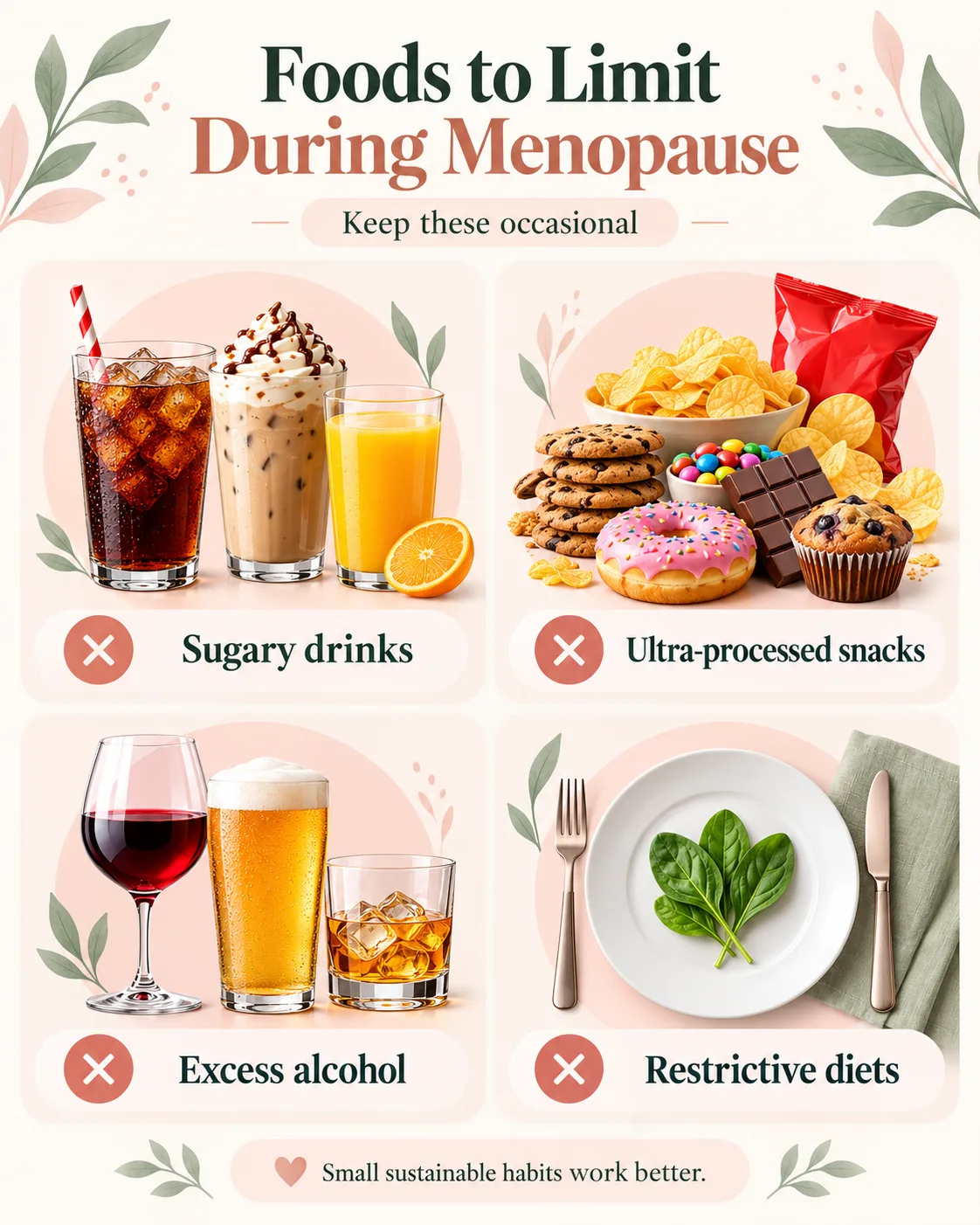
Foods and Eating Patterns That May Work Against You
- This is not about labeling foods “good” and “bad.” It is about recognizing patterns that make satiety, sleep, blood sugar, and long-term adherence harder.
- Ultra-Processed Snack Foods: These often combine low fiber, low protein, refined starch, added fat, and high sodium , making it easy to eat large amounts without staying full.
- Sugary Drinks: Soda, sweetened coffee, energy drinks, large juices, and sweet tea deliver sugar quickly without much satiety.
- Very Low-Protein Breakfasts : Coffee + muffin, toast + jam, or cereal with very little protein may leave you hungry long before lunch. You do not need to ban them forever; stop asking them to do a job they are poorly designed to do.
- Excess Alcohol :Alcohol can add calories, disrupt sleep, affect blood sugar, and worsen hot flashes for some women.
- Repeated Restrictive Dieting : Eating very little for five days and then returning to old habits is not a menopause strategy. The goal is a pattern you can use in week 2, month 3, and next year.
What Should You Drink?
Water :There is no universal magic number. Drink regularly and increase fluids when exercising, living in hot climates, or increasing dietary fiber. Adequate hydration can also support bowel regularity.
Coffee: You do not automatically need to stop coffee because you are menopausal. Consider reducing it or moving caffeine earlier in the day if it worsens sleep, anxiety, palpitations, or your personal hot-flash pattern.
Tea: Unsweetened tea can fit easily. There is no special “menopause detox tea” required.
Alcohol :Reducing alcohol can make calorie management and sleep easier. If you notice alcohol reliably worsens your night sweats or sleep, your individual pattern matters more than any generic trigger list.
A Word About “Detox”
Your liver and kidneys continuously process and eliminate substances your body does not need. This plan does not “flush estrogen,” “cleanse your liver,” or “reset your hormones.” What may make you feel less bloated after several days is much more ordinary: less sodium, fewer ultra-processed foods, better bowel regularity, more water, more fiber, and more consistent meals. That explanation may be less exciting. It is also more accurate.
Menopause Weight-Loss Grocery List
Buy for the meals you will actually make. You do not need every item below; choose enough options to cover five days, keep one or two convenience foods in reserve, and repeat ingredients across meals to reduce waste.Menopause Weight-Loss Grocery List
|
Category
|
Useful options
|
How I would shop/use them
|
|
Protein anchors
|
Eggs; plain Greek yogurt; cottage cheese; chicken; turkey; salmon; cod; canned tuna/salmon; tofu; tempeh; edamame; lentils; beans; chickpeas
|
Choose 3–5 anchors you will actually use. Keep at least one no-cook or freezer-friendly option for a busy day.
|
|
Vegetables
|
Spinach; mixed greens; kale; broccoli; cauliflower; peppers; zucchini; green beans; carrots; cabbage; frozen mixed vegetables
|
Fresh and frozen both work. Buy a mix of raw/snack vegetables and vegetables you can roast, stir-fry, or add to soup.
|
|
Fruit
|
Berries; apples; oranges; bananas; pears; frozen berries
|
Use whole fruit at breakfast or snacks. Frozen berries are useful for smoothies and reduce waste.
|
|
Fiber-rich carbohydrates
|
Oats; quinoa; brown rice; farro; barley; sweet potatoes; whole-grain bread/wraps; beans; lentils
|
Choose 2–3 for the week rather than buying everything. Use certified gluten-free versions where needed.
|
|
Healthy fats & seeds
|
Olive oil; avocado; walnuts; almonds; chia; ground flax; pumpkin seeds; sunflower seeds
|
Use small amounts to finish meals. Ground flax/chia are easiest in yogurt, oats, or smoothies.
|
|
Convenience foods
|
Canned beans; canned tuna/salmon; frozen vegetables; frozen berries; microwave quinoa/brown rice with minimal added sodium; prewashed greens; plain Greek yogurt; rotisserie chicken; low-sodium soup
|
Convenience is part of adherence. Check sodium, added sugar, allergen labels, and the protein content rather than assuming “convenient” means nutritionally poor.
|
A 45–60 Minute Prep Session That Makes the Five Days Easier
You do not need to meal-prep every plate. I would prepare the components that remove the most friction:
• Cook one grain such as quinoa or brown rice, or buy a minimally seasoned microwave option.
• Make one batch meal such as lentil soup or turkey/bean chili so lunch can become leftovers instead of another cooking session.
• Wash or portion berries and snack vegetables; use frozen produce when that is more realistic.
• Prepare one easy protein backup , hard-boiled eggs, cooked chicken/tofu, edamame, canned fish, or plain Greek yogurt.
• Mix a simple olive-oil-and-lemon dressing and keep it ready for salads and grain bowls.
• Portion nuts/seeds if “a handful” tends to turn into several handfuls.
The point is to make the nutritious choice the easy choice. You do not earn extra health points for making every ingredient from scratch.
What About Calcium and Vitamin D?
Weight loss should not come at the expense of bone health. Bone loss accelerates around menopause as estrogen declines. Women older than 50 generally need about 1,200 mg of calcium daily, preferably from food where practical, although individual recommendations can vary.
Food sources include yogurt, milk, fortified plant milk, calcium-set tofu, sardines with bones, and lower-oxalate greens such as kale or bok choy, along with other fortified foods. Vitamin D needs depend on age, intake, sun exposure, and blood levels. For women with risk factors such as bone loss, malabsorption, limited sun exposure, or certain medications, I individualize testing and supplementation rather than assuming every woman needs the same dose.
Menopause Diet + Strength Training: Why They Belong Together
If your goal is simply to make the scale fall as fast as possible, losing muscle can make the number move. That does not mean it is a good outcome. I care about fat loss where appropriate, muscle retention, strength, mobility, glucose control, visceral fat, and bone health.
- 2–3 strength sessions, adjusted to fitness and health status.
- Regular aerobic activity you actually enjoy. U.S. guidelines recommend at least 150 minutes of moderate activity per week, such as brisk walking.
- Progress gradually rather than designing the perfect workout you stop doing after two weeks.
|
Beyond Day 5: How to Keep Going
Do not finish Day 5 and start another restrictive diet. Keep the structure.
Most meals
Protein + vegetables + fiber-rich carbohydrate + healthy fat.
Most weeks
- Strength train.
- Walk or move regularly.
- Prioritize sleep.
- Limit ultra-processed foods.
- Include enjoyable foods too.
I do not want my patients eating from a clinical meal plan forever. I want them to learn the framework well enough that they no longer need one.
Can Diet Specifically Remove Menopause Belly Fat?
No. There is no food that selectively burns abdominal fat. Menopause is associated with greater central fat deposition, but reducing overall excess body fat while preserving or gaining muscle is the realistic strategy. Be suspicious of any diet promising to “target hormonal belly fat.”
Can Diet Replace Hormone Therapy?
No , and it should not be presented that way. Diet helps support muscle, bone, cardiovascular health, metabolic health, gut health, energy, and weight management. But salmon, broccoli, and flaxseed are not evidence-based substitutes for treatment of significant vasomotor symptoms or genitourinary syndrome of menopause.
|
Dr. Kashyap’s Insight
I see nutrition as part of the foundation of menopause care , not a competitor to medical treatment. The idea that you must choose between “natural lifestyle care” and evidence-based medical care creates a false choice. We use nutrition, movement, sleep, and stress support because they matter. We add hormonal or nonhormonal treatment when the woman’s symptoms, history, and goals indicate that she needs more.
|
Important Precautions Before Following a High-Protein Menopause Diet
This plan is intended as a general educational framework. Talk with your clinician or dietitian before significantly changing your intake if any of the following apply.
Chronic Kidney Disease
Higher protein is not appropriate for everyone. People with kidney disease may need individualized protein restriction. Do not adopt a high-protein plan simply because it is marketed for menopause.
Diabetes or Glucose-Lowering Medication
Increasing fiber and changing carbohydrate intake can affect glucose patterns, especially if you use insulin, sulfonylureas, or other glucose-lowering medications. Monitoring or medication adjustment may be needed.
GLP-1 Medication
GLP-1–based weight treatment may require additional attention to protein density, hydration, nausea, constipation, micronutrient intake, and muscle preservation. This five-day plan is not a substitute for individualized GLP-1 nutrition guidance.
Celiac Disease
Use certified gluten-free oats, quinoa, rice, potatoes, corn, and other certified GF foods. Avoid assuming a food is gluten-free simply because it looks minimally processed.
Significant Food Allergies
Use allergen-safe substitutions and account for cross-contact and packaged-food labeling.
Active Gastrointestinal Disease
Very high fiber may worsen symptoms in some people with IBD, IBS, gastroparesis, or other gastrointestinal conditions.
History of Disordered Eating
A rigid meal plan or weight-loss focus may be inappropriate. Work with a clinician or eating-disorder-informed dietitian rather than using this as a restrictive five-day cycle.
When Weight Change Needs Medical Evaluation
Do not keep tightening your diet indefinitely if something feels wrong. Consider medical evaluation for:
- Rapid unexplained weight gain.
- Unexplained weight loss.
- Severe fatigue.
- Hair thinning with weight change.
- Significant cold or heat intolerance.
- Excessive thirst or urination.
- Signs of insulin resistance or diabetes.
- Major changes in menstrual bleeding.
- Severe sleep disturbance.
- Persistent menopause symptoms.
- Inability to maintain muscle despite appropriate nutrition and exercise.
Underlying issues may include thyroid dysfunction, insulin resistance, medication effects, sleep apnea, depression, menopause-related hormone changes, or other medical conditions.
How I Track Midlife Weight in My Practice
The scale is only one data point. For appropriate patients, I am often more interested in changes in waist circumference, visceral fat, muscle mass, HbA1c, fasting glucose, fasting insulin, and insulin-resistance measures such as HOMA-IR.
Through Galleria Women’s Health’s MetaboLonge™ research program, we are looking more closely at these body-composition and metabolic changes because a woman can improve metabolic health even when the scale tells an incomplete story. That distinction matters in menopause, when fat distribution and muscle loss may change before total body weight changes dramatically.
The Bottom Line
A menopause diet should not punish you for having a body that changed. It should help you adapt to what your body needs now.
- Adequate protein throughout the day.
- Strength training to protect muscle.
- Vegetables and fiber-rich foods.
- Healthy fats.
- Reasonable portions of minimally processed carbohydrates.
- Better sleep and stress management.
- Medical evaluation when weight change does not make sense.
Five days will not cure menopause weight gain. But five thoughtfully structured days can teach you a pattern that is far more useful than another crash diet.
Need Help With Menopause Weight or Metabolic Changes?
If your weight, waistline, or body composition has changed during perimenopause or menopause despite your usual diet and exercise routine, the answer may involve more than eating less. At Galleria Women’s Health, Dr. Deepali Kashyap takes an individualized approach that considers symptoms, hormone changes, body composition, sleep, insulin resistance, thyroid health, lifestyle, and treatment options together.
Schedule a Menopause Consultation
Key Terms Explained
- Menopause: The stage of life when menstrual periods have permanently stopped, confirmed after 12 consecutive months without a period, when no other cause is present.
- Perimenopause: The transitional years before menopause when hormone levels fluctuate, often causing changes in periods, sleep, metabolism, and body composition.
- Visceral Fat: Fat stored deep inside the abdomen around internal organs. Excess visceral fat is associated with increased metabolic and cardiovascular risks.
- Insulin Resistance: A condition in which the body's cells respond less effectively to insulin, making blood sugar regulation more difficult.
- Lean Muscle Mass: The muscle tissue that supports strength, mobility, and metabolic health. Muscle mass naturally declines with aging.
- Protein Anchor: The main protein-rich food in a meal, such as eggs, fish, Greek yogurt, tofu, or lentils, that helps support daily protein needs.
- Fiber-Rich Carbohydrates: Foods such as oats, beans, quinoa, vegetables, and whole grains that provide dietary fiber alongside carbohydrates.
- Healthy Fats: Primarily unsaturated fats found in foods such as olive oil, avocado, nuts, seeds, and fatty fish.
- Mediterranean-Style Diet: An eating pattern emphasizing vegetables, fruits, legumes, whole grains, olive oil, nuts, seeds, and adequate protein.
- Resistance Training: Exercise using weights, resistance bands, or body weight to maintain or improve muscle strength.
- Body Composition: The proportion of fat, muscle, bone, and other tissues in the body. It provides information beyond body weight alone.
- Hormone Replacement Therapy (HRT): Medical treatment using hormones, commonly estrogen with a progestogen when indicated, to manage menopause-related symptoms.
- GLP-1 Medications: Medicines that act on GLP-1 pathways to improve blood sugar regulation and, for certain medications, support weight management.
- HOMA-IR: A calculation based on fasting glucose and insulin levels used to estimate insulin resistance, primarily in clinical and research settings.
References and Further Reading
-
The Menopause Society — MenoNote: Midlife Weight Gain
-
The Menopause Society — Hot Flashes
-
American College of Obstetricians and Gynecologists (ACOG) — The Menopause Years
-
-
NIH Office of Dietary Supplements — Iron Fact Sheet for Consumers
-
American Heart Association — Menopause Transition and Cardiovascular Disease Risk
-
Centers for Disease Control and Prevention (CDC) — Physical Activity Guidelines for Adults
-
PubMed Central — Higher Protein Intake and Lean Mass in Postmenopausal Women Following Resistance Exercise
-
National Kidney Foundation — Kidney Disease and Protein
-
Food Allergy Research & Education (FARE) — Food Allergy Cross-Contact and Management Resources
-
-
Galleria Women’s Health — Menopause Treatment
-
Galleria Women’s Health — MetaboLonge™ Research Program
-
The Menopause Society — 2023 Nonhormone Therapy Position Statement
-
U.S. Department of Health and Human Services & U.S. Department of Agriculture — Dietary Guidelines for Americans, 2025–2030
-
NIH Office of Dietary Supplements — Calcium Fact Sheet for Consumers
-
ACOG — Weight Control: Eating Right and Keeping Fit
This article is for educational purposes only and does not replace individualized medical advice, diagnosis, or treatment. Dietary and weight-management needs vary based on medical history, medications, and health conditions. Consult a qualified healthcare professional before making significant changes to your diet.


 Meet Your Doctor


 03 Jul, 2026
 10:13 AM




Leave a Comment