WHAT ARE HOT FLASHES?
Hot flashes are the most recognized symptom of menopause, but that's only part of the story. They have identifiable triggers you can influence, a well-established neuroendocrine mechanism behind them, and more treatment options today than at any point in history, ranging from proven hormone therapy to a newly FDA-approved non-hormonal option that targets the exact brain pathway behind the flash.
This is the guide meant for every woman navigating this transition, and for the people who care about her.
|
DR. KASHYAP'S INSIGHT
"Menopause is a dynamic state of neuroendocrine recalibration, not just an estrogen deficiency. Your role is to interpret the signal, not just silence the symptom." — Dr. Deepali Kashyap
|
Hot Flashes at a Glance
|
Fact
|
What the Evidence Shows
|
|
Affects up to
|
80% of women during the menopause transition
|
|
Duration per episode
|
1–5 minutes; some episodes stretch to 30 minutes
|
|
How long they persist
|
Median 7–8 years; many women experience them for 10+ years
|
|
Also seen in
|
Younger women, cancer patients and survivors, and people on certain medications
|
|
Most common driver
|
Declining estrogen, though stress, diet, and lifestyle strongly influence frequency and severity
|
|
Most effective treatment
|
Hormone therapy (the FDA's first-line recommendation); non-hormonal options are now available too
|
|
Newest option (2023)
|
Fezolinetant (Veozah), the first FDA-approved non-hormonal pill that targets the brain's hot flash pathway
|
What Is a Hot Flash? The Definition You Actually Need
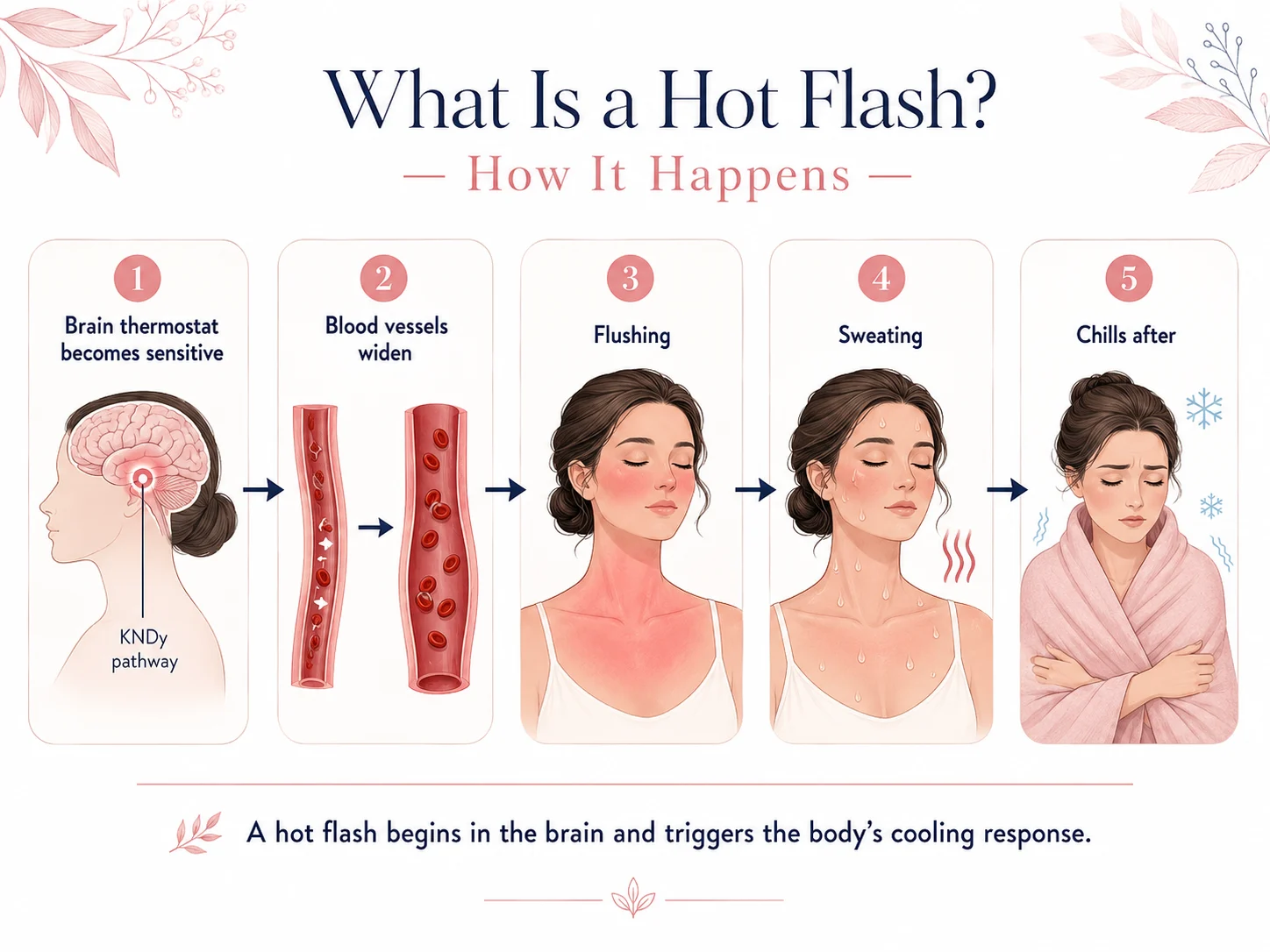
A hot flash is a sudden, intense wave of heat that rises through the body, most commonly through the chest, neck, and face, without any external cause. Doctors call it a vasomotor symptom. It begins with changes in the brain's temperature-regulating center, which then trigger a heat-dissipation response including blood vessel dilation, flushing, and sweating.
Within seconds of it starting, your body shifts into heat-dissipation mode. Blood vessels open, your skin flushes red, and your sweat glands activate all at once. The result is a wave of heat and visible flushing, often followed by a bout of sweating and then chills once the cooling response overshoots.
A typical hot flash lasts between one and five minutes, though some stretch as long as thirty. How often they happen varies enormously from person to person: some women get a few a week, others get dozens in a single day. When a hot flash happens during sleep, it's called a night sweat, and these commonly disrupt restorative sleep and contribute to daytime fatigue.
|
DR. KASHYAP'S INSIGHT
I describe hot flashes to my patients as the brain's thermostat becoming a hair trigger. Before menopause, it takes a significant temperature rise to set it off. After estrogen falls, it takes almost nothing. The good news is that now that we know exactly which brain pathway fires the alarm, we can target it, with or without hormones.
|
What Are Hot Flashes a Sign Of?
Hot flashes aren't always about menopause, even though that's the first thing most people assume. Here's a walk through every major cause, starting with the most common.
The Most Common Causes in Women
Perimenopause: The Most Likely Cause Between Ages 40 and 55
Perimenopause is the transition phase before your final period, when ovarian hormone production begins to fluctuate and decline. It typically starts in your early-to-mid 40s, though for some women it can begin as early as 38 or 39. Up to 80% of women experience hot flashes at some point during this window.
The point most women miss is that hot flashes can start while your periods are still regular, or only mildly irregular. You don't need to have skipped periods to be in perimenopause; the symptoms often show up first.
Postmenopause
Menopause is officially defined as twelve consecutive months without a period. Once you've reached that milestone, you're considered postmenopausal, and hot flashes can continue for years or even decades afterward. A Mayo Clinic study of nearly 5,000 women found that a significant number of women were still reporting hot flashes into their 60s, 70s, and even 80s, which means the popular assumption that they simply stop after a few years isn't true for everyone.
Premature Ovarian Insufficiency (POI)
When the ovaries stop functioning normally before age 40, doctors call it premature ovarian insufficiency. Women in their 20s and 30s who have unexplained hot flashes, irregular periods, or difficulty conceiving should be properly evaluated for POI rather than simply reassured that they're too young for it.
Surgical Menopause
Removing both ovaries, a procedure called an oophorectomy, causes immediate surgical menopause at any age. Unlike natural menopause, where hormone levels decline gradually over several years, surgical menopause drops those levels off a cliff. The hot flashes that follow tend to be more severe and sudden than in natural menopause, and treatment is often more urgent.
Cancer Treatments in Women
Chemotherapy, radiation, and hormonal therapies used for breast or ovarian cancer frequently trigger hot flashes, either by damaging the ovaries directly or by suppressing estrogen as part of the treatment itself. For women who can't take hormone therapy because of a hormone-sensitive cancer, non-hormonal options, including fezolinetant and certain antidepressants, have become increasingly important.
Non-Menopause Causes That Are Often Missed
Hot flashes that show up outside the context of menopause or cancer treatment can be a sign of something else entirely, and these causes are often overlooked.
● Thyroid dysfunction, especially hyperthyroidism, can mimic hot flash symptoms closely enough to be mistaken for early menopause.
● Carcinoid tumors are rare hormone-secreting tumors that cause flushing, sweating, and heat sensations.
● Pheochromocytoma is an adrenal gland tumor that causes episodic surges of heat, sweating, and a rapid heartbeat.
● Certain medications, including opioids, niacin supplements, tamoxifen, some antidepressants, and steroids, can all cause flushing or hot flash-like episodes.
● Anxiety and panic attacks trigger the same vasomotor cascade through the autonomic nervous system.
● Rosacea is a skin condition that causes facial flushing that can easily be confused with a hot flash.
● Obesity is both a risk factor for more frequent hot flashes and a cause of heat-related flushing that's independent of hormones altogether.
|
DR. KASHYAP'S CLINIC TIP
If you're under 40 and having hot flashes, or if you're having them alongside other unexplained symptoms like weight loss, rapid heartbeat, or diarrhea, don't assume it's menopause. Thyroid disorders and carcinoid syndrome are real and treatable, but only if we test for them. A thorough workup is always the first step.
|
What Are the Symptoms of Hot Flashes? (Beyond the Obvious Heat)
Most women recognize the heat, but a full hot flash is really more than that. Recognizing the whole picture helps you prepare for it in the moment and describe it clearly to your doctor afterward.
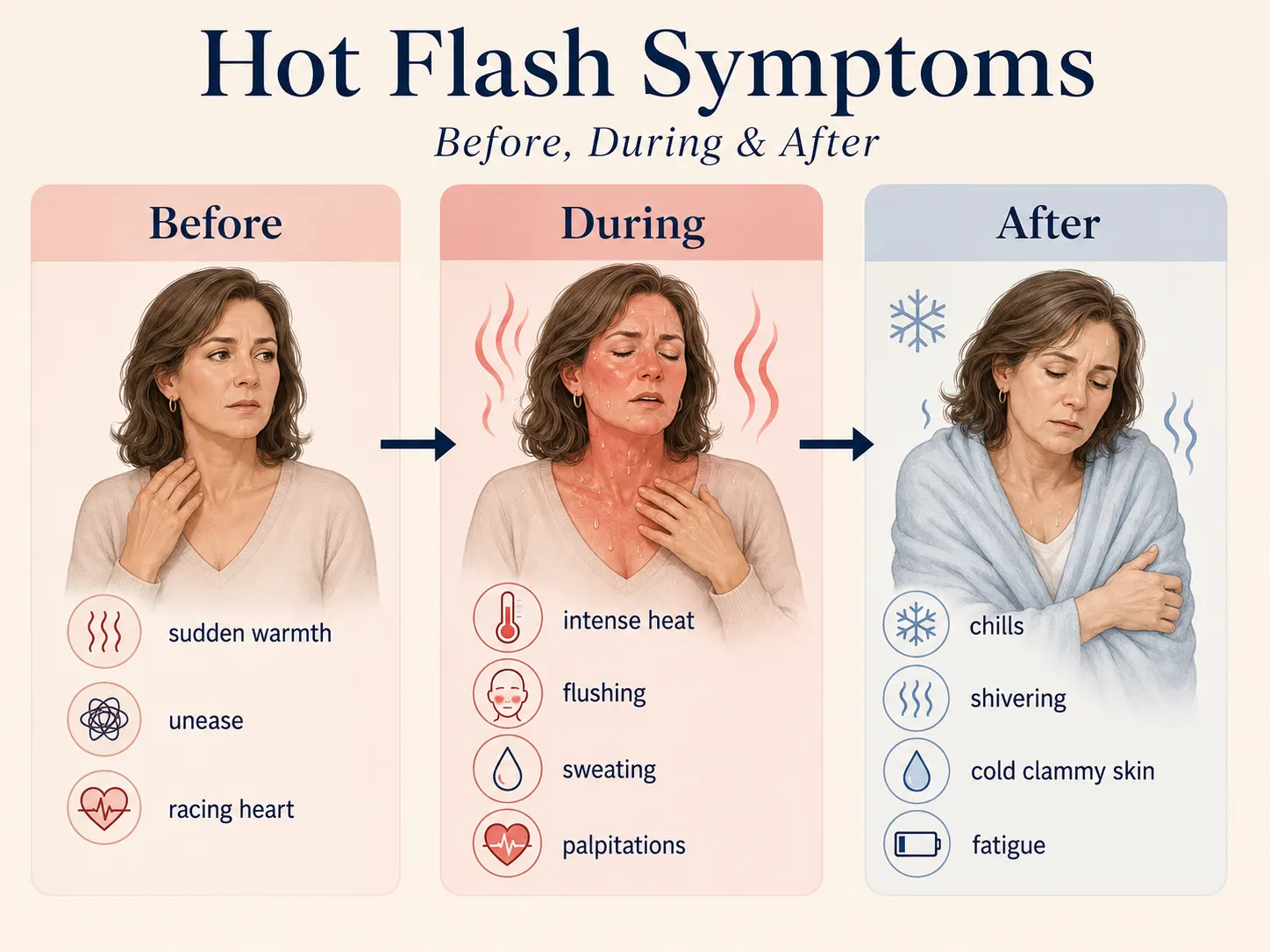
During a Hot Flash
A hot flash typically brings a sudden, intense wave of heat that often starts in the chest and rises to the neck and face. It's usually accompanied by visible flushing, sweating that can range from mild dampness to drenching, and sometimes a rapid or irregular heartbeat. Many women also feel a wave of anxiety or unease during the episode itself, along with tingling in the hands or fingers.
After a Hot Flash
Once the heat passes, chills or shivering often follow as the body's cooling response overshoots, sometimes leaving the skin cold and clammy. Intense episodes, especially night sweats, can also leave you feeling genuinely exhausted afterward.
How Women Describe Them
Every patient describes her own hot flash a little differently, because the experience really does vary. Some of the most common descriptions: "Like someone turned the heat up in my body from the inside." "A wave that starts in my chest and rolls up to my face before I can do anything about it." "I'm completely fine, and then thirty seconds later I'm soaked." "At night I wake up with the sheets wet before I even know what's happened." And often: "Mine come with a racing heart, and sometimes I think I'm having a panic attack."
That last one matters, because hot flashes with palpitations are common and usually benign in the context of menopause. But new, severe, or isolated palpitations always deserve a proper cardiac evaluation rather than an assumption.
Hot Flash vs. Night Sweat vs. Hot Flush
|
Term
|
What It Is
|
When It Happens
|
|
Hot flash
|
The internal sensation of heat, sweating, and flushing
|
Anytime, day or night
|
|
Night sweat
|
A hot flash that occurs during sleep
|
During sleep, often disrupting it completely
|
|
Hot flush
|
A hot flash with visible skin redness
|
Anytime; used interchangeably with "hot flash" in the UK
|
How Long Do Hot Flashes Last? The Real Statistics
The answer most women get from their doctor is "a few years." The research tells a different story, and how long they last depends significantly on who you are.
The landmark SWAN study, short for the Study of Women's Health Across the Nation, has tracked thousands of women through menopause for over 25 years. It found that the median total duration of frequent hot flashes is approximately seven to eight years. Women who started having hot flashes earlier in perimenopause, while they were still getting periods, experienced them for a median of 11.8 years. Women who only noticed them after their final period had a shorter run, at about 3.4 years on average.
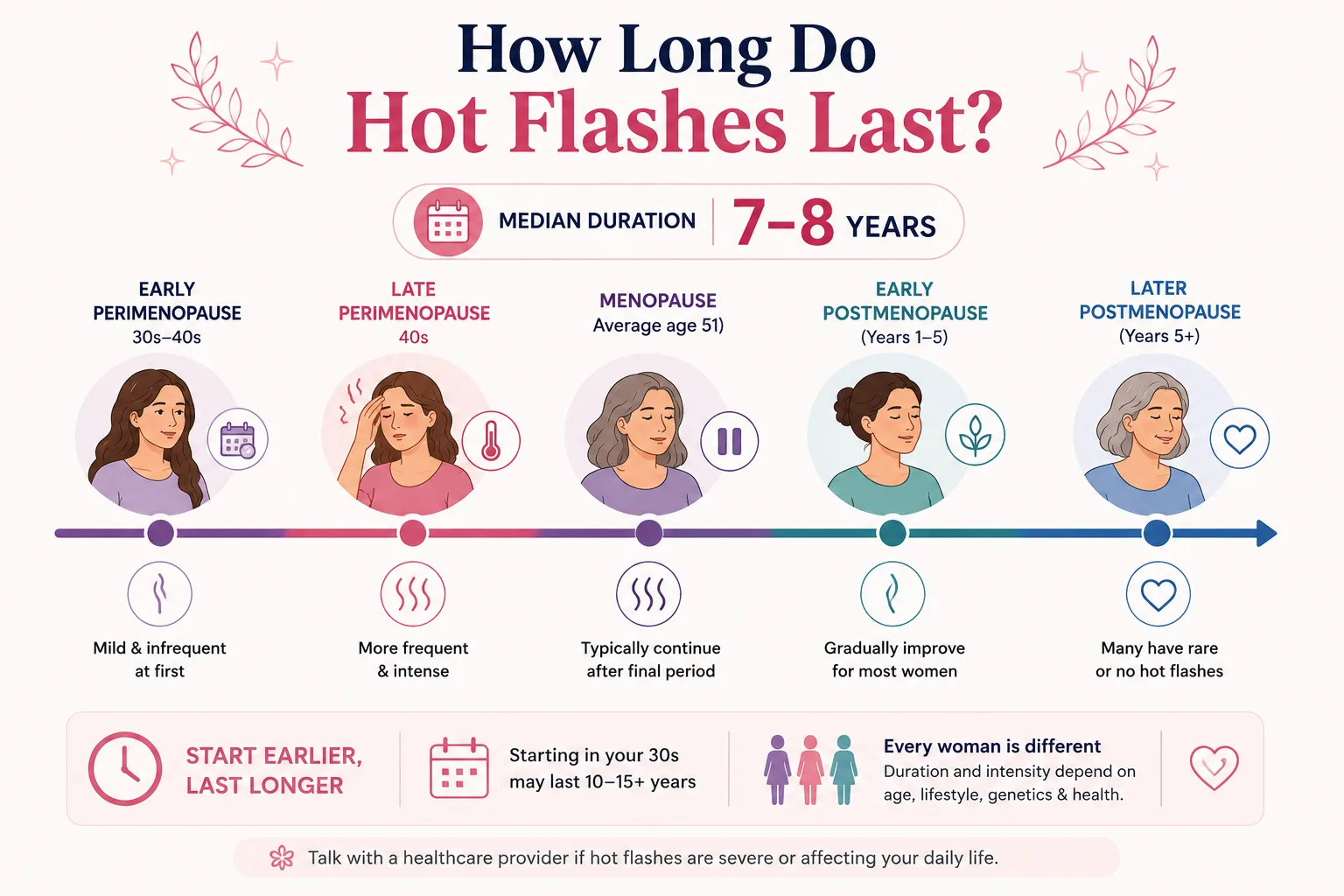
One especially important finding: African American women experienced hot flashes for a median of 10.1 years, significantly longer than white women (6.5 years) or Asian women (4.8 years). This disparity is real and well documented. Multiple biological, environmental, socioeconomic, and healthcare factors likely contribute to these observed differences.
A newer Mayo Clinic study of nearly 5,000 women confirmed that hot flashes don't simply stop at 60. A meaningful minority of women experience them well into their 70s and 80s.
|
DR. KASHYAP'S INSIGHT
"Some people have symptoms for five years. Some will have them for 10, 15 years. Some will have them for a long, long time. And some might not have them at all. What symptoms somebody has, and for how long, that varies from person to person." — Dr. Deepali Kashyap
|
What Triggers Hot Flashes? (And What You Can Actually Control)
Understanding your own triggers is one of the most practical things you can do. Avoiding a trigger won't cure hot flashes outright, but it reduces how often they happen and how severe they are, and that adds up to a real difference in day-to-day quality of life.
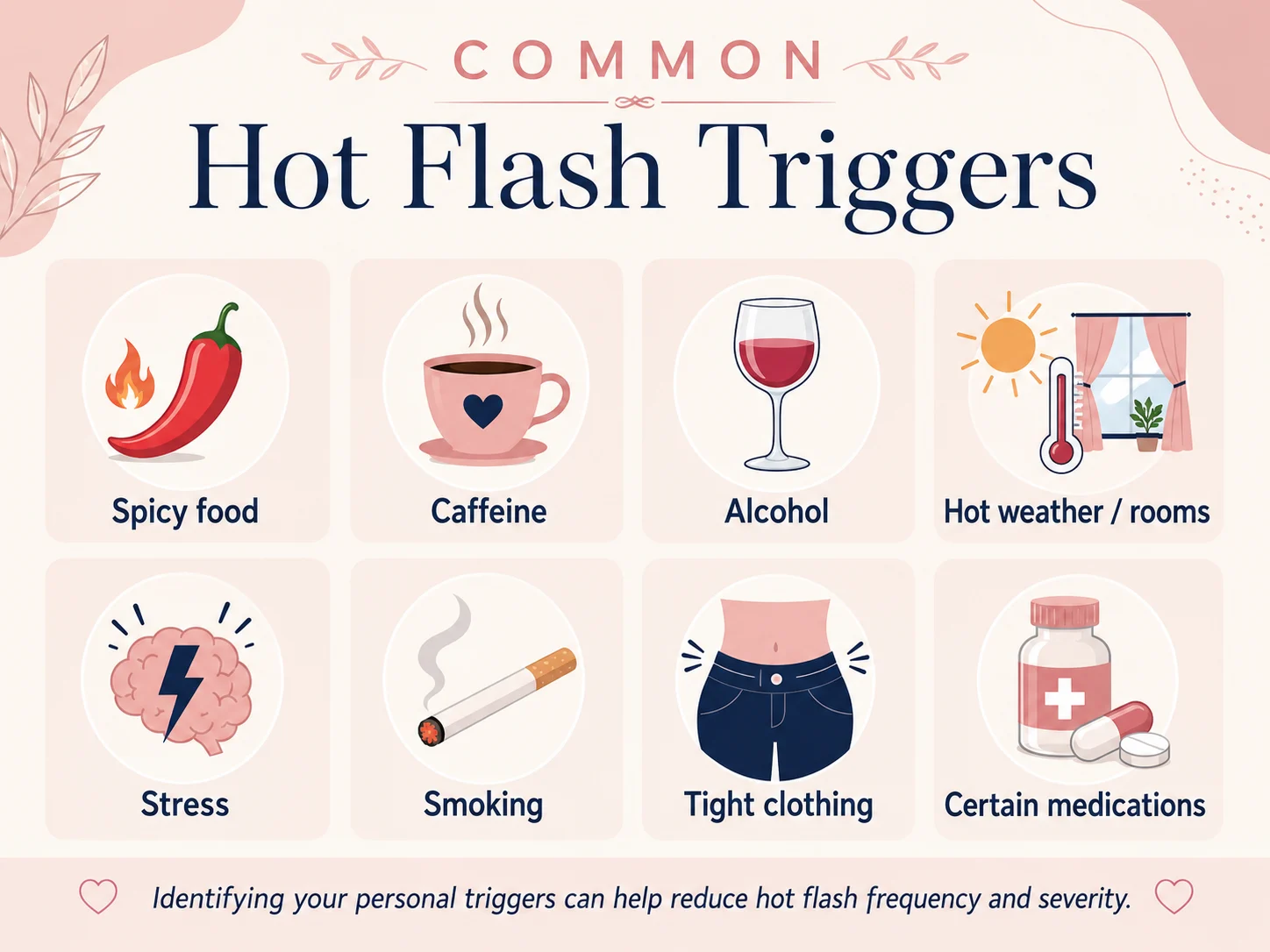
Common Triggers to Know
|
Trigger Category
|
Specific Triggers
|
Why It Happens
|
|
Diet
|
Spicy food, caffeine, alcohol, hot beverages
|
These directly raise your core body temperature or dilate blood vessels
|
|
Environment
|
Hot rooms, hot weather, hot showers or baths
|
They push your core temperature above the narrowed thermoneutral zone
|
|
Lifestyle
|
Smoking, being overweight, tight clothing
|
Smoking increases severity; extra weight raises your baseline body temperature
|
|
Emotional
|
Stress, anxiety, excitement
|
Cortisol and norepinephrine activate the vasomotor pathways
|
|
Timing
|
Eating late, late evenings generally
|
Digestion raises body temperature, and estrogen is at its lowest at night
|
|
Medications
|
Niacin, tamoxifen, some antidepressants
|
These cause pharmacological vasodilation or hormonal suppression
|
|
DR. KASHYAP'S PRACTICAL TIP: THE TRIGGER DIARY
For two weeks, try noting every hot flash: the time of day, what you ate or drank in the hour before, your stress level, and whether it happened during the day or at night. Many women identify two or three personal triggers they weren't even aware of, and eliminating just one of them can make a real difference in daily comfort. Stress, in particular, is the trigger women most consistently underestimate.
|
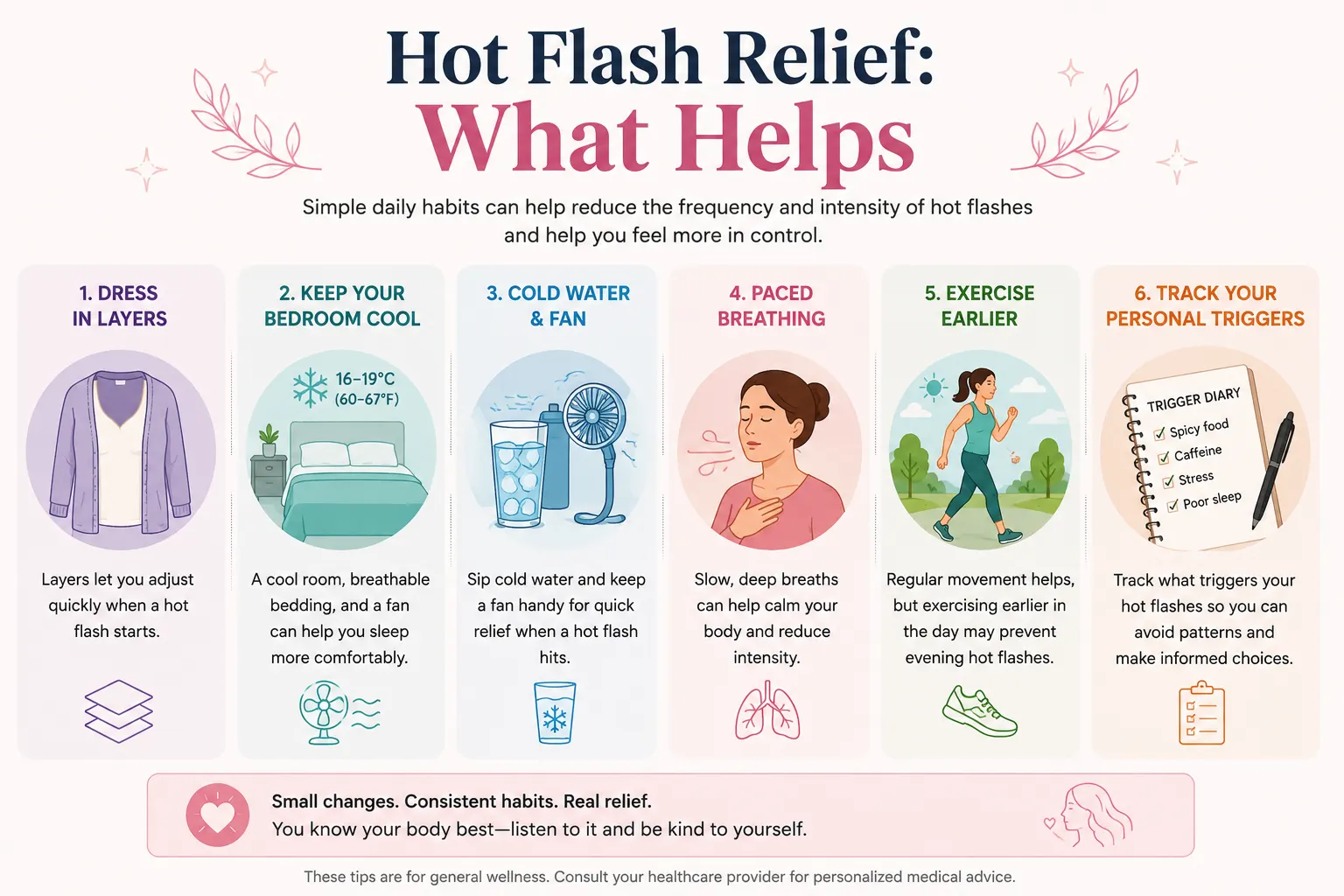
- Beyond identifying your personal triggers, a handful of small, practical habits tend to make the biggest day-to-day difference:
- Dress in layers made of natural, breathable fabrics like cotton or linen, so you can shed a layer the moment you feel heat rising
- Keep a small "cooling kit" by your bed, such as a glass of ice water, a handheld fan, and a cooling gel pillow or damp cloth, so you can reach for it the instant a night sweat starts.
- Where possible, keep your bedroom comfortably cool, and swap heavy cotton or synthetic bedding for moisture-wicking sheets.
- Practice slow, paced breathing preventively rather than only during a flash. Ten minutes of breathing at about six breaths per minute, done twice a day, has been shown to raise your overall hot flash threshold over time.
- If evening workouts seem to trigger night sweats, try moving exercise earlier in the day, since vigorous activity keeps your core temperature elevated for hours afterward.
- Rather than cutting out alcohol and caffeine entirely, try spacing them out. Even shifting your last coffee to before noon can meaningfully reduce your evening "hot flash load."
- If you're prone to daytime flashes at work, carry a small portable fan and a spare layer of clothing. Being prepared reduces the anxiety that can itself act as a trigger.
- If you're still in perimenopause, track your menstrual cycle alongside your triggers. Many women notice their flashes cluster in the days just before a period.
- If you're on hormone therapy or fezolinetant and it feels like it has stopped working, check in with your doctor about dosing timing first. Missed or irregular doses are one of the most common reasons treatment appears to lose effectiveness.
Which Hormone Is Actually Driving Your Hot Flashes?
A good functional approach including functional medicine doesn't just treat the hot flash itself. It tries to understand which hormone story is actually driving it, because the same symptom can have different hormonal roots in different women, and the treatment that works best usually reflects that difference.
|
Hormone Shift
|
How It Drives Hot Flashes
|
Other Signs It's This Hormone
|
|
Low estrogen
|
Narrows the thermoneutral zone and overactivates KNDy neurons
|
Vaginal dryness, dry skin, joint aches, night sweats
|
|
Low progesterone
|
May contribute to sleep disturbance and anxiety during perimenopause, making hot flashes feel more disruptive
|
3 a.m. waking, irritability, brain fog, heavy periods in perimenopause
|
|
Low testosterone
|
May contribute to fatigue, reduced motivation, decreased muscle mass, and lower sexual desire
|
Low desire, muscle loss, fatigue, low motivation
|
|
High cortisol (chronic stress)
|
Narrows the thermoneutral zone and lowers the hot flash threshold
|
Belly fat, a wired-but-tired feeling, sugar cravings, a racing mind at night
|
The cortisol angle is the one most overlooked in standard care. Chronic stress can increase symptom burden and may contribute to more frequent or bothersome hot flashes. Cortisol doesn't cause menopause, but it amplifies nearly every symptom of it.
|
DR. KASHYAP'S INSIGHT
"I often tell my patients that midlife isn't usually about one big event—it's the accumulation of many small physiologic changes over decades. Early on, your body has enough reserve that these changes barely affect how you feel. But over time, as they accumulate, even one additional hormonal shift can push you past your threshold and symptoms suddenly become noticeable. Menopause often reveals changes that have been building quietly for years." — Dr. Deepali Kashyap
|
Hot Flashes With Nausea, Chills, or Anxiety: What Do the Combinations Mean?
Hot Flashes and Nausea
When nausea shows up alongside a hot flash, it usually suggests a particularly strong autonomic nervous system response. Cortisol surges during intense hot flashes can cause nausea on their own, especially if the episode is severe or wakes you from sleep, and anxiety-triggered hot flashes are also frequently accompanied by it. If nausea is prominent or persistent, evaluation for other contributing medical conditions may be appropriate.
Hot Flashes and Chills
Chills after a hot flash are physiologically normal; the body's cooling response simply overshoots, leaving you cold and clammy once the heat wave passes. That said, persistent alternating hot-and-cold episodes can also suggest thyroid dysfunction, so if the pattern seems unusually pronounced, thyroid testing is worth pursuing.
Hot Flashes and Heart Palpitations
Palpitations during hot flashes are extremely common, since the same vasomotor response that causes flushing can briefly accelerate the heart. In the context of known menopause, this is usually benign. However, new palpitations, palpitations that occur without any heat sensation, or any feeling of fainting or chest pain need a proper cardiac evaluation. Don't assume palpitations are "just menopause" without first ruling out an arrhythmia.
Hot Flashes and Anxiety
This relationship runs in both directions. Declining progesterone, often called the calming hormone, raises baseline anxiety during perimenopause, which makes hot flash triggers more frequent. And the hot flash itself, particularly the racing heart and sudden heat, can trigger genuine panic responses, especially in women who've never dealt with anxiety before. Many women end up in urgent care convinced they're having a cardiac event, only to learn afterward that it was a hot flash with palpitations. Treating both the underlying hormonal picture and the anxiety response usually matters.
What Vitamins, Herbs & Foods Are Good for Hot Flashes?
It's worth being honest about the evidence here, because the supplement aisle tends to make promises the research doesn't always back up.
Vitamins With Evidence
|
Vitamin / Nutrient
|
Evidence Level
|
How It Helps
|
Best Food Sources
|
|
Vitamin E
|
Mixed
|
Some studies suggest modest benefit, although results have been inconsistent.
|
Nuts, seeds, avocado, sunflower oil
|
|
Vitamin D
|
Mixed
|
Correcting vitamin D deficiency is important for overall health, but evidence that supplementation alone improves hot flashes is inconsistent.
|
Fatty fish, fortified foods, sunlight
|
|
Vitamin B6
|
Emerging
|
May help quiet the neurons involved in triggering hot flashes
|
Salmon, tuna, chicken, bananas
|
|
Calcium
|
Supportive
|
Works alongside Vitamin D and supports the overall hormonal environment
|
Dairy, leafy greens, fortified foods
|
|
Magnesium
|
Limited
|
May reduce severity and supports better sleep, which lowers the hot flash threshold
|
Dark chocolate, leafy greens, nuts
|
Herbs: An Honest Assessment
Black cohosh is the most studied herb in this space, and the results are genuinely mixed. Some women report real benefit, but there's a rare risk of liver issues, so it shouldn't be used without medical guidance.
Red clover, a source of plant estrogens called phytoestrogens, has shown modest benefit in some studies and is safe for most women who aren't undergoing hormone-sensitive cancer treatment. Dong quai, on the other hand, isn't supported by current evidence for hot flashes and also interacts with blood thinners, so it's best avoided. Sage has shown modest benefit in small studies and is traditionally used specifically for night sweats. Valerian root is primarily a sleep herb, and any benefit for hot flashes is likely indirect, through better sleep quality. Ashwagandha may help improve perceived stress in some individuals.
Foods That May Help (Evidence-Based)
Diet won't cure hot flashes on its own, but it genuinely influences how often they happen and how severe they are. Soy foods like tofu, edamame, tempeh, and miso contain isoflavones, which are plant estrogens with weak estrogen-like effects, and studies show a modest reduction in hot flash frequency, particularly in populations that eat soy regularly. Fatty fish such as salmon, mackerel, and sardines are rich in Vitamin D and B6 and are anti-inflammatory, which helps reduce overall symptom burden. Berries offer anti-inflammatory anthocyanidins, and a plant-based diet heavy in berries is associated with less severe vasomotor symptoms.
Whole grains help maintain stable blood sugar. Avocado provides Vitamin E and potassium, supporting healthy blood vessel regulation. Nuts and seeds, especially flaxseed, sunflower seeds, and almonds, offer both Vitamin E and lignans, another type of plant estrogen. And herbal teas like chamomile, peppermint, and sage bring calming and cooling properties that may reduce nighttime flash severity.
Foods to Limit
A few foods and drinks are worth watching closely: spicy foods are a well-documented trigger, caffeine from coffee, energy drinks, and strong tea raises both core temperature and cortisol, and alcohol acts as both a vasodilator and a sleep disruptor, worsening symptoms during the day and at night. Processed sugar causes blood sugar spikes that raise body temperature, and very hot beverages are an obvious but frequently overlooked trigger.
|
DR. KASHYAP'S FOOD APPROACH
I don't give my patients a rigid diet. I ask them to think of food as either adding to or subtracting from their 'hot flash load' for the day. A morning with black coffee, a spicy lunch, and a stressful afternoon is setting up a bad evening. Small shifts, like switching to herbal tea, cooling down your office, or doing ten minutes of breathwork, can collectively reduce frequency more than most supplements ever do.
|
Treatment Options: From First-Line to Newest
There has never been a more varied menu of treatment options for hot flashes than there is right now. Here's the complete picture, from the gold standard to the newest options, along with how to think about choosing between them.
Hormone Therapy: The Most Effective Option
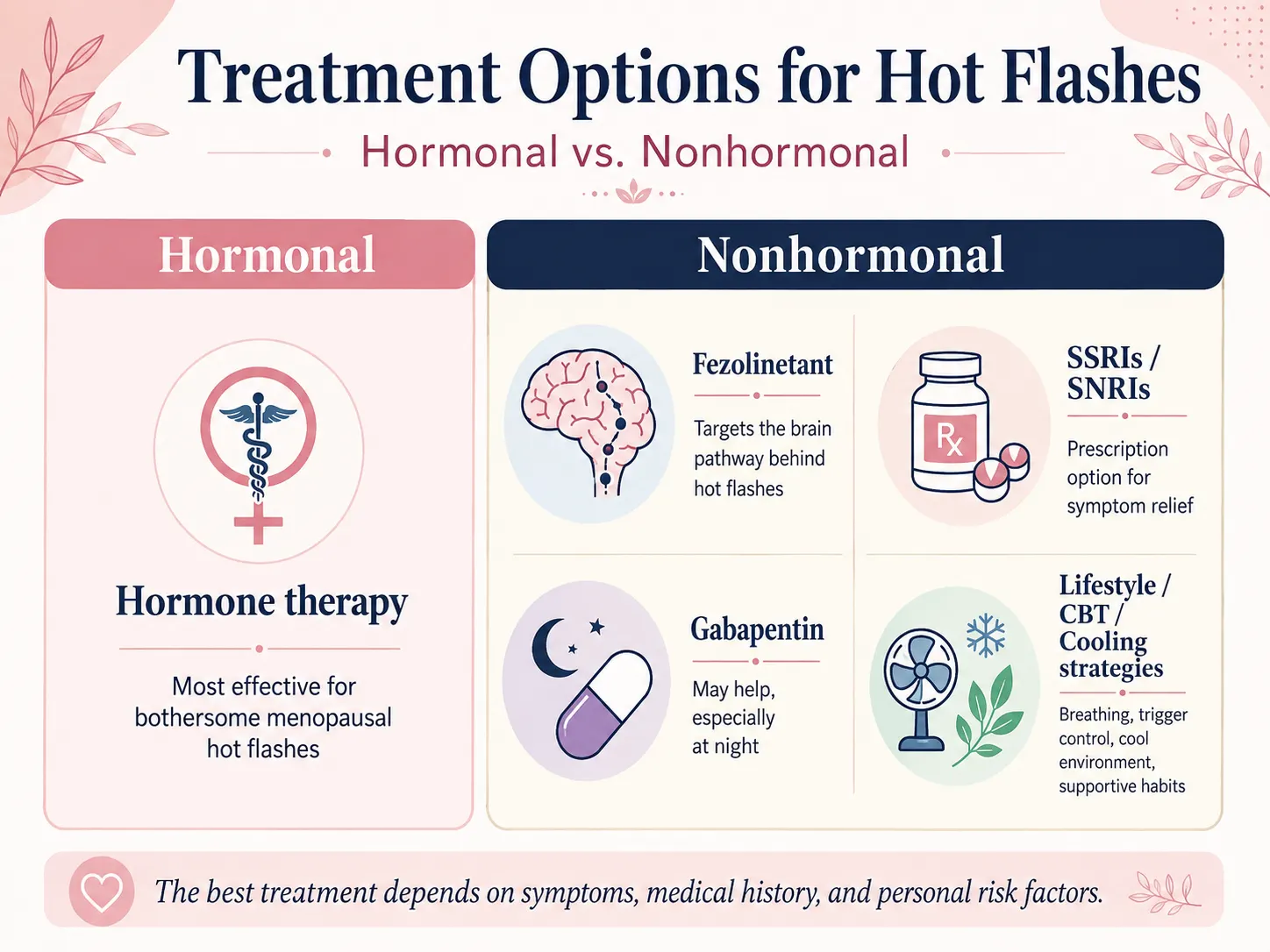
Hormone therapy is FDA-approved as the first-line treatment for moderate-to-severe vasomotor symptoms, and for most healthy women under 60, or within ten years of menopause, the benefits clearly outweigh the risks. It's given either as estrogen alone, for women who have had a hysterectomy, or as estrogen plus progesterone, for women who still have a uterus, and it can be delivered as pills, patches, gels, sprays, or a vaginal ring.
It reduces hot flash frequency by 75 to 90 percent in most women, and it also helps with vaginal dryness, sleep, mood, joint pain, and bone loss at the same time. For women under 60, recent data continues to support its safety when started early in menopause.
|
DR. KASHYAP'S INSIGHT
"Women's bodies begin to transition starting in their early 40s and continue into their 50s. Women begin to lose the female hormones needed to function and start to experience symptoms — low libido, hot flashes, lower energy levels, dry skin and hair, bone loss, night sweats, difficulty with memory. Bioidentical hormone treatment can replace those hormones in a form that's chemically similar to what the body produces." — Dr. Deepali Kashyap
|
Bioidentical Hormone Therapy: Dr. Kashyap's Specialty
Bioidentical hormone replacement therapy, or BHRT, uses hormones that are chemically identical to the ones the human body already produces. Dr. Kashyap's approach is individualized, built around an individualized evaluation that incorporates symptoms, medical history, physical examination, and laboratory testing when clinically appropriate, and a personalized plan that adjusts over time, rather than a one-size-fits-all prescription. It accounts for each woman's unique hormonal profile, health history, and symptom pattern.
Fezolinetant (Veozah): The New Non-Hormonal Option
Fezolinetant, sold under the brand name Veozah, was approved by the FDA in May 2023 as the first non-hormonal drug specifically approved for moderate-to-severe menopausal hot flashes. (FDA press release) It works by blocking NK3 receptors in the hypothalamus, targeting the exact KNDy pathway described earlier in this guide.
In the SKYLIGHT clinical trials, fezolinetant significantly reduced hot flash frequency compared with placebo. It's generally recommended for many women who cannot use hormone therapy, such as some breast cancer survivors, in consultation with their oncology team, and women with other hormone-sensitive conditions.
One important safety update: fezolinetant requires baseline liver function testing and follow-up blood tests through the first nine months of treatment. In December 2024, the FDA added a boxed warning, its strongest safety label, after post-marketing reports of rare but serious liver injury. Anyone taking this medication should keep every scheduled liver test rather than skip them. (Drugs.com approval history)
Non-Hormonal Prescription Medications
A few other prescription options exist outside of hormone therapy and fezolinetant. Paroxetine, sold as Brisdelle, is FDA-approved specifically for hot flashes, while other SSRIs and SNRIs like venlafaxine are used off-label; together they reduce frequency by roughly 40 to 65 percent. Clonidine, an older blood pressure medication, offers modest benefit and is useful in specific cases, and gabapentin, a nerve pain medication, may help particularly with night sweats.
Lifestyle Interventions: What the Evidence Actually Supports
Maintaining a healthy weight matters, since obesity is strongly associated with more frequent and severe hot flashes, and even modest weight loss can reduce them. Regular aerobic exercise has mixed evidence for directly reducing hot flashes, but it powerfully reduces stress, improves sleep, and lowers cortisol, all of which raise the hot flash threshold indirectly. Mind-body practices like cognitive behavioral therapy have the strongest evidence base among non-drug approaches, and mindfulness and hypnotherapy show genuine benefit in well-controlled studies as well.
Paced respiration, meaning slow, diaphragmatic breathing at around six breaths per minute, has been shown to reduce the intensity of a hot flash while it's happening, and it costs nothing to practice. Simple cooling strategies, like keeping the bedroom below 65 degrees Fahrenheit at night, using cooling pillow covers, running a fan by the bed, and wearing loose, moisture-wicking sleepwear, won't prevent a flash but will dramatically reduce its impact. And quitting smoking helps more than almost anything else on this list, since smokers experience significantly more frequent and severe hot flashes.
|
DR. KASHYAP'S TREATMENT PHILOSOPHY
I never hand my patients a prescription and a shrug. My evaluation covers the full picture: a detailed symptom and lifestyle assessment, comprehensive hormone labs, bone density where indicated, and cardiovascular risk assessment. Then we build a plan together, one that reflects your symptom story, your history, your goals, and your values. Hormone therapy is powerful and often the right choice, but so is understanding your cortisol picture, your food triggers, and your sleep environment. The best plan uses every tool available.
|
The Real Impact: What Hot Flashes Do to Your Life
Frequent hot flashes are not a minor inconvenience, even though they're often treated that way. They carry documented physical, mental, and cardiovascular consequences that go well beyond simple discomfort.
Sleep Disruption, and Everything It Cascades Into
Night sweats that fragment sleep night after night build up a sleep debt with serious downstream effects: worsened brain fog, higher cortisol, increased insulin resistance, mood instability, and impaired immune function all tend to follow. It becomes a cycle that feeds itself, and breaking it with effective treatment genuinely changes everything else.
Work, Concentration, and Cognitive Function
Some studies have found an association between frequent vasomotor symptoms and changes in attention, memory, and cognitive performance. This isn't imagined; disrupted sleep and hormonal change on the brain appear to play a role, and it shows up in women's professional lives constantly.
This is the part most women are never told: frequent, severe hot flashes are associated with higher cardiovascular risk. Research links them to stiffer arteries, higher blood pressure, and elevated cardiovascular disease risk, independent of other risk factors. They're also associated with increased risk of insulin resistance, metabolic syndrome, and osteoporosis. Frequent vasomotor symptoms are increasingly recognized as a marker of higher long-term cardiometabolic risk. While treating hot flashes clearly improves quality of life, whether treatment itself reduces future cardiovascular events remains under investigation.
Emotional and Relational Impact
Mood changes, irritability, low libido, disrupted sleep, and the sheer unpredictability of hot flashes all have measurable effects on relationships, intimacy, and quality of life. Women who are drenched in sweat several times a night, or who have to step out of a meeting because of a sudden hot flash, aren't being dramatic. This is a real and significant burden that deserves real treatment, not dismissal.
|
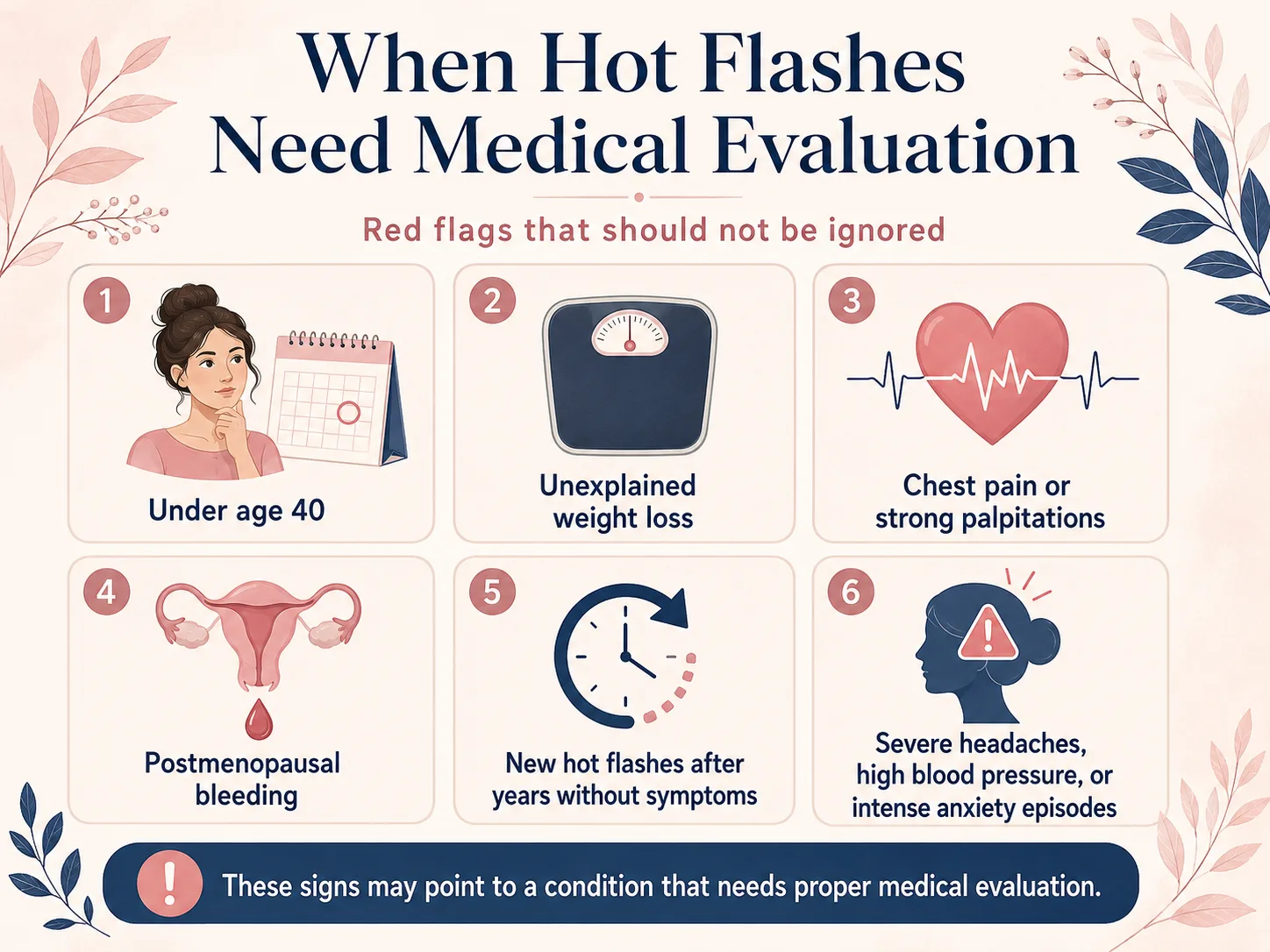
RED FLAGS: When Hot Flashes Need Immediate Medical Evaluation
● Hot flashes in a woman under 40 should prompt evaluation for POI or another underlying cause.
● Hot flashes accompanied by unexplained weight loss, diarrhea, or a rapid resting heart rate need a thyroid or carcinoid workup.
● New palpitations during hot flashes that feel different from previous ones, or palpitations paired with dizziness or chest tightness, need evaluation.
● Hot flashes appearing out of nowhere in a postmenopausal woman who had none for years should be investigated rather than automatically attributed to menopause.
● Any vaginal bleeding alongside hot flashes in a postmenopausal woman should always be evaluated.
● Hot flash-like episodes with severe anxiety, high blood pressure, and headaches may signal pheochromocytoma.
|
When to See a Menopause Specialist
It's worth seeing a menopause specialist, rather than just a general practitioner, if any of the following apply to you: your hot flashes happen more than seven times a day or are consistently severe, night sweats are preventing restorative sleep most nights, or you've already tried lifestyle changes and a first-line treatment without adequate relief. The same is true if you're under 45 and having symptoms, since you may be in perimenopause or have POI that needs proper diagnosis, if you've had a hysterectomy or oophorectomy and are experiencing symptoms, if you have a history of breast cancer and need guidance on non-hormonal options, or if you've been told your labs are normal while you continue to suffer, since blood tests alone don't capture the full hormonal picture during perimenopause.
|
DR. KASHYAP'S INSIGHT
"Menopause is diagnosed by your story and your symptoms, not a single lab number." — Dr. Deepali Kashyap
|
Key Terms Explained
|
Term
|
Plain-English Definition
|
|
Vasomotor symptoms (VMS)
|
The medical term for hot flashes and night sweats, caused by blood vessel dilation in the skin
|
|
Thermoneutral zone
|
The normal range of body temperature within which the brain triggers neither heating nor cooling responses
|
|
KNDy neurons
|
Hypothalamic neurons (kisspeptin, neurokinin B, dynorphin) whose overactivation triggers hot flashes after estrogen declines
|
|
Neurokinin B (NKB)
|
A neuropeptide released by KNDy neurons that activates the hot flash pathway; the target of fezolinetant
|
|
Fezolinetant (Veozah)
|
The first FDA-approved non-hormonal drug for hot flashes; it blocks NKB receptors in the hypothalamus
|
|
BHRT
|
Bioidentical hormone replacement therapy, using hormones chemically identical to those the body produces
|
|
POI
|
Premature ovarian insufficiency, meaning menopause before age 40
|
|
SWAN study
|
The Study of Women's Health Across the Nation, the key US research tracking women through menopause since 1996
|
|
GSM
|
Genitourinary syndrome of menopause: vaginal dryness, painful sex, and urinary symptoms caused by estrogen loss
|
Resources
● The Menopause Society — Hot Flashes Patient Guide
● National Institute on Aging — Hot Flashes: What Can I Do?
● U.S. FDA — Approval Announcement for Fezolinetant (Veozah)
● Office on Women's Health — Menopause Symptoms and Relief
This article is for educational purposes only and does not constitute personalized medical advice. Always consult a qualified healthcare provider regarding your individual situation.


 Meet Your Doctor


 03 Jul, 2026
 10:13 AM



Leave a Comment