Are these symptoms perimenopause, even if you still have periods?
You may still be getting your period every month, yet something feels different. Perhaps you wake at 3 a.m. feeling warm, your usual premenstrual symptoms have become harder to manage, or you lose your train of thought at work. It is understandable to wonder whether these changes have something to do with your hormones, particularly when each symptom seems unrelated to the next.
Perimenopause is the transition before your final menstrual period, when ovulation and hormone patterns become less predictable. Changing cycles are an important clue, but hot flashes, night sweats, sleep difficulties, mood changes and vaginal symptoms can also occur. Not every new symptom in your 40s is caused by perimenopause. My starting point is your own baseline: what changed, when it changed, whether your periods have changed, and how your daily life is being affected.
You do not need to wait until you reach menopause to ask for help. Equally, unexplained bleeding, new neurological symptoms, chest pain or persistent symptoms that do not fit the typical pattern deserve their own evaluation.
What are the first signs of perimenopause?
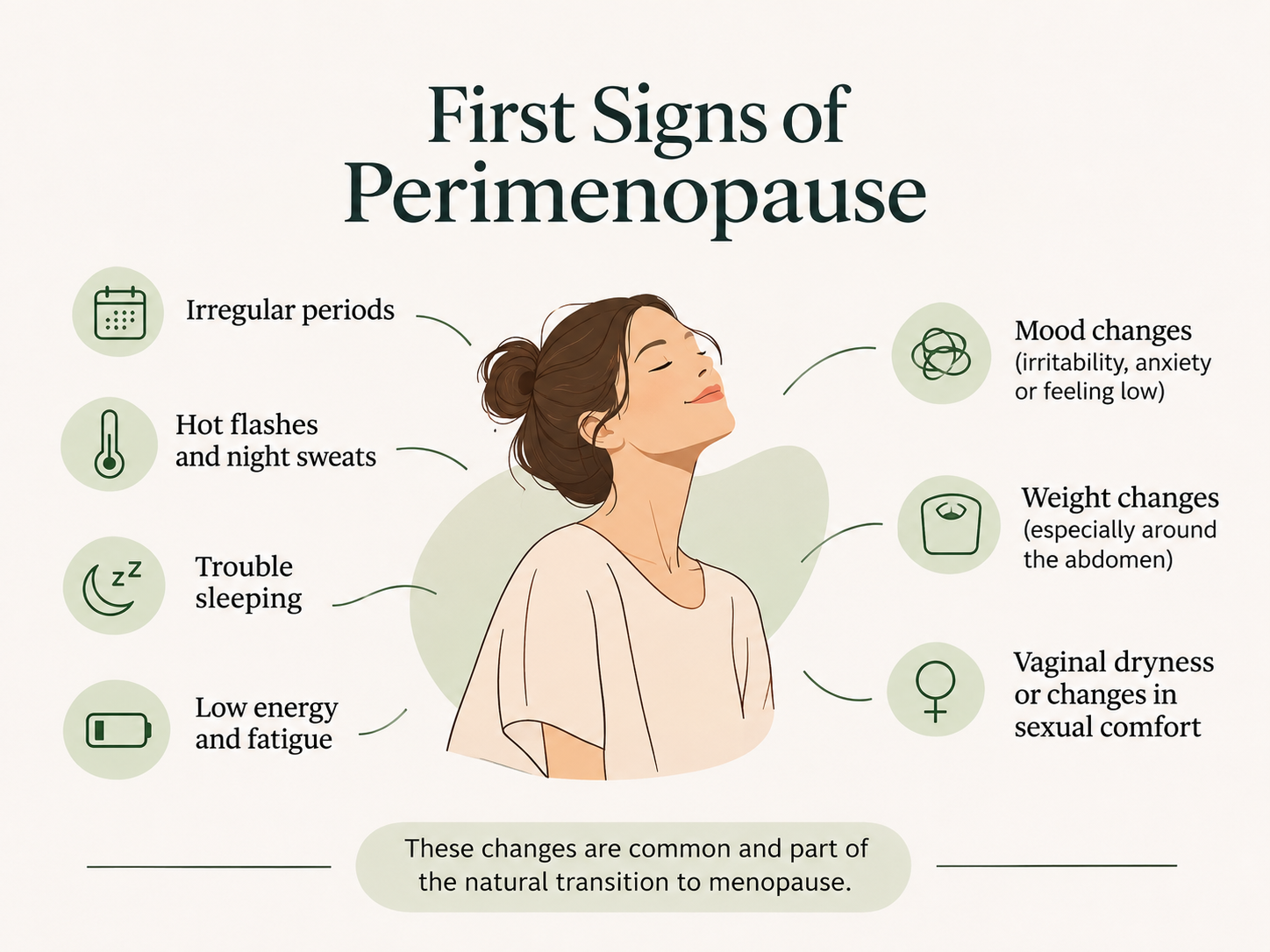
For many women, the earliest measurable change is not a dramatic hot flash. It is a shift in menstrual timing. A cycle that used to arrive every 29 days may now arrive after 24 days, then 33 days, then return to its old pattern. Some women notice stronger premenstrual symptoms, new night waking or heat episodes before their menstrual calendar becomes clearly irregular. These clues are worth recording, but they are not a home diagnosis.
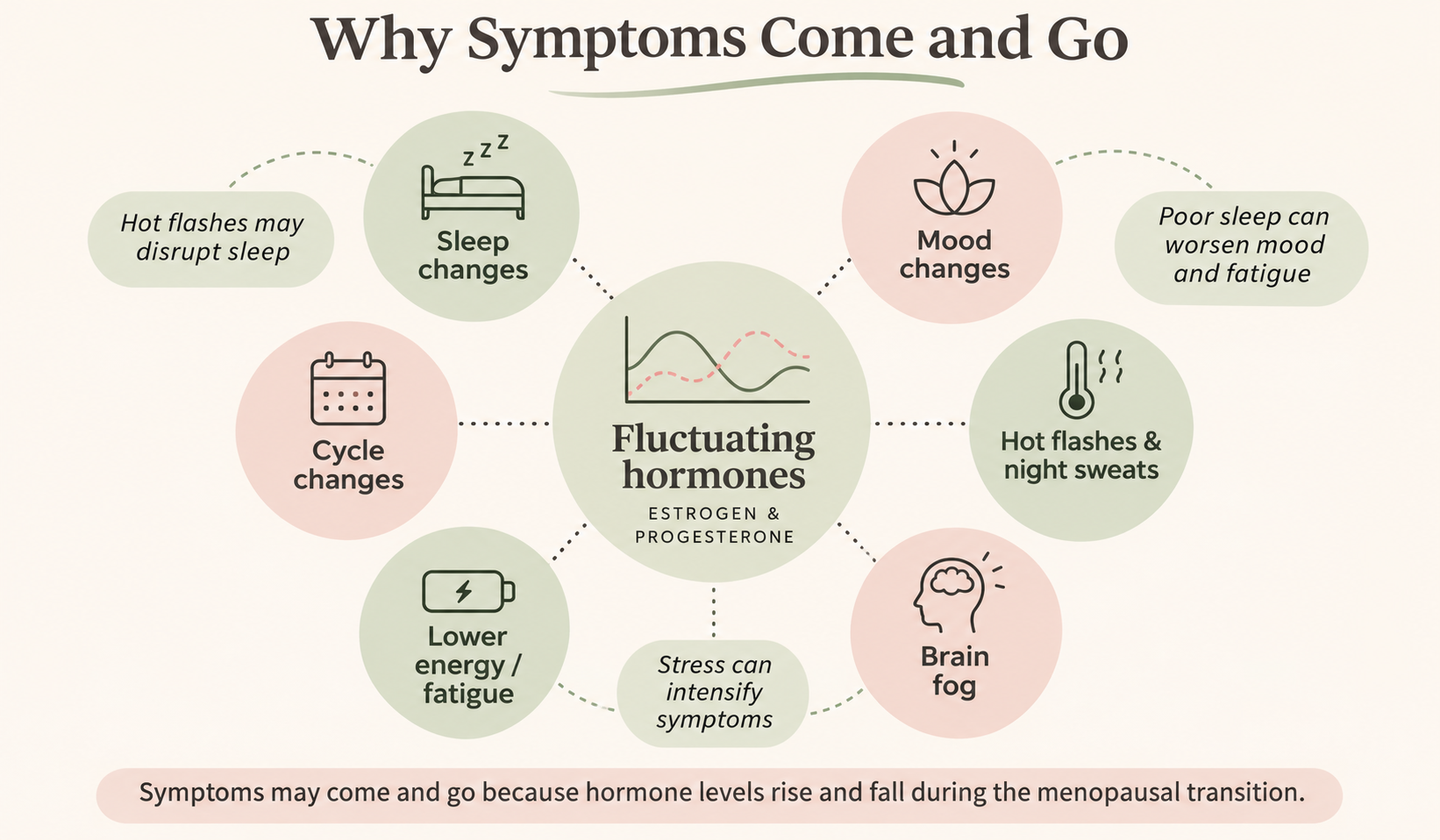
Estrogen levels do not simply fall a little every day. They fluctuate, sometimes substantially, while ovulation becomes less consistent. That helps explain why symptoms may appear for a few weeks, disappear, and return. It also explains why a single normal hormone test may not match what you have been experiencing.
|
WHAT YOU NOTICE
|
WHAT IT MAY SIGNAL
|
WHAT I PAY ATTENTION TO
|
|
Cycles suddenly vary
|
Changing ovulation or another menstrual condition
|
Your previous cycle pattern and any abnormal bleeding
|
|
Waking hot or drenched
|
Possible vasomotor symptoms
|
Frequency, triggers and effect on sleep
|
|
New anxiety or poor focus
|
Potentially multifactorial symptoms
|
Sleep, mood, medications and other causes
|
|
Vaginal dryness or discomfort
|
Possible estrogen-sensitive tissue changes
|
Pain, bleeding, infection symptoms and exam findings
|
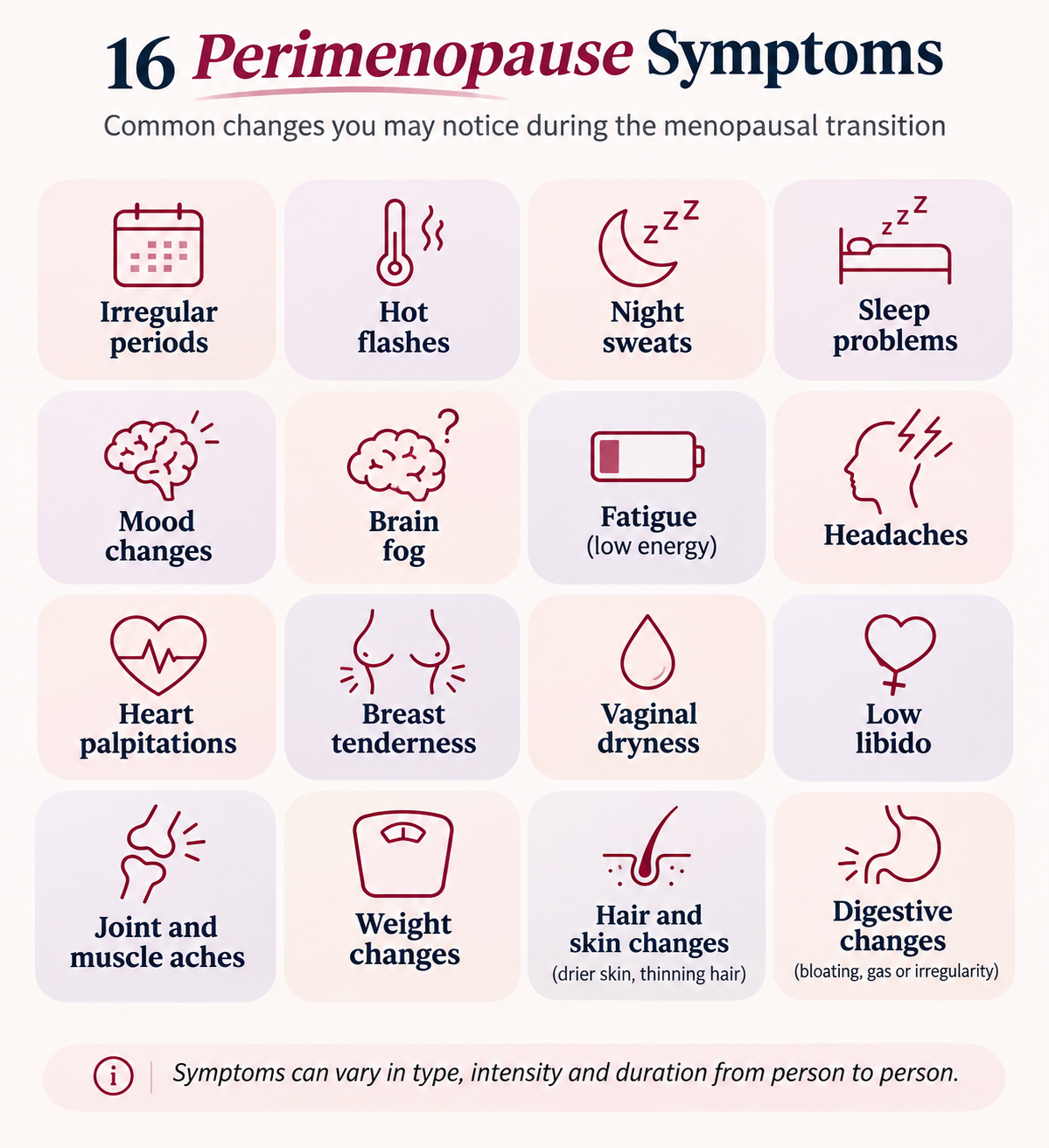
Perimenopause symptoms at a glance
|
SYMPTOM GROUP
|
POSSIBLE CHANGES
|
|
Periods
|
Shorter or longer cycles, skipped periods, changing flow, stronger PMS
|
|
Temperature and sleep
|
Hot flashes, night sweats, insomnia and daytime fatigue
|
|
Mood and thinking
|
Anxiety, irritability, low mood, brain fog and poor concentration
|
|
Physical symptoms
|
Headaches, joint discomfort, changing body composition, palpitations
|
|
Genitourinary and sexual
|
Dryness, painful sex, urinary urgency, changes in sexual desire
|
These are symptoms women may report during midlife; the list is not a diagnostic checklist. Some symptoms have a well-established association with the menopausal transition, while others are nonspecific and require a broader explanation.
The most important perimenopause symptoms
I prefer to look at symptoms in groups. Waking repeatedly at night can contribute to daytime fatigue, low mood and poor concentration. Heavy periods may contribute to iron deficiency. Recognizing those connections is often more useful than putting an isolated hormone label on every complaint.
1. Irregular, shorter or skipped periods
Cycles can come closer together, become more variable or develop long gaps. You may continue to ovulate during some cycles, which means a missed period is not proof that pregnancy is impossible. Hormonal contraception can obscure the natural pattern.
A pattern matters more than one unexpected date. Compare cycles with your own previous baseline: a woman who usually has a 31-day cycle and begins cycling every 23 days has experienced a meaningful change, even if those new cycles sometimes fall within a broad population range. A cycle may also stretch to 45 or 60 days and then be followed by bleeding. Neither short cycles nor skipped months by themselves establish the diagnosis.
2. Heavier, prolonged or unpredictable bleeding
Some cycles do not release an egg, changing progesterone exposure and the pattern of shedding of the uterine lining. But that mechanism does not exclude fibroids, polyps, adenomyosis, pregnancy-related problems or endometrial abnormalities. In many patients 45 and older with abnormal uterine bleeding, endometrial sampling is considered; for younger patients, risk factors and the pattern guide assessment.
What you may notice
- Flow may become heavier, with clots or more frequent changes of menstrual products.
- Bleeding may last longer or arrive unpredictably.
3. Worsening PMS and breast tenderness
Breast fullness, irritability, bloating and headaches that worsen before bleeding can be difficult to separate from changes in sleep, stress, medication or other conditions. The timing relative to menstruation can be useful, but a new severe mood problem deserves evaluation in its own right. Breast pain is often benign, but a new lump, persistent one-sided change or nipple discharge should not be assigned to hormones without an exam.
What you may notice
- Breast sensitivity, bloating and irritability may increase before bleeding.
- Symptoms may settle after a period begins or may have no consistent pattern.
4. Hot flashes
A hot flash can be a sudden wave of heat across the chest, neck or face, sometimes with flushing, perspiration or a racing heartbeat. Some episodes last seconds; others last several minutes. Frequency and intensity differ substantially, and hot flashes can occur while you still menstruate regularly. Heat intolerance from thyroid disease, medication effects or other conditions can resemble them.
5. Night sweats
A night sweat may be a brief feeling of overheating or a drenching episode that requires changing clothes or bedding. Even when the sweat itself is short, the subsequent wakefulness may affect mood, memory and patience the next day. Fever, infection, certain medicines and sleep conditions can also cause night sweating.
6. Insomnia and waking at 3 a.m.
Difficulty falling asleep, awakening with sweats and waking early without feeling hot are not the same problem. Sleep apnea, restless legs, anxiety, alcohol use, caffeine timing and chronic pain can coexist with perimenopause. Snoring, gasping or substantial daytime sleepiness makes a sleep-disorder assessment especially important.
What you may notice
- Difficulty falling asleep, waking repeatedly or waking earlier than intended.
- Some awakenings follow night sweats; others happen without noticeable heat.
7. Fatigue and reduced energy
Fatigue is common in midlife but is not diagnostic of perimenopause. Repeated nighttime waking, heavy bleeding with iron deficiency, thyroid disorders, depression, medication effects and sleep apnea may be contributing. When someone tells me she is exhausted despite spending enough hours in bed, I want to understand whether she is truly getting restorative sleep.
What you may notice
- Reduced energy despite a familiar schedule or enough time in bed.
- Tiredness may occur with dizziness, breathlessness or changes in bleeding.
8. Anxiety, irritability and mood changes
Some women notice new irritability, increased worry or fluctuating mood around cycle changes. Hormone variability may contribute, but life stressors, thyroid disease, depression, medications and chronically poor sleep can also be involved. Severe depression and anxiety deserve care whether or not a menopausal transition is occurring.
What you may notice
- Feeling unusually reactive, tense, worried or sensitive.
- New anxiety or worsening of a pre-existing mood concern.
9. Brain fog, forgetfulness and poor concentration
You may lose your train of thought mid-sentence, search for familiar words or find multitasking unusually difficult. Interrupted sleep, anxiety, low mood, medication effects and anemia can intensify these experiences. Mild cognitive complaints are not equivalent to dementia, but sudden confusion or new neurologic deficits require urgent evaluation.
What you may notice
- Losing words, forgetting appointments or rereading passages.
- Difficulty multitasking or concentrating at work.
10. Headaches and changing migraines
Some women have more migraines as hormone exposure becomes unpredictable; others notice fewer headaches or no relation to their cycle. Migraine with aura is particularly important to mention when discussing estrogen-containing treatment, because it can change contraceptive decisions. Headaches also occur for many reasons unrelated to the menopause transition.
11. Abdominal weight changes and changing body composition
Changes in fat distribution and lean mass may occur across midlife alongside aging, activity and sleep changes. Perimenopause is not a reliable explanation for rapid unexplained weight gain, and no isolated abdominal change establishes the diagnosis. A change in waist size with little scale movement can reflect body-composition changes.
What you may notice
- Clothes may fit differently around the waist even when weight changes little.
- Changes in muscle mass and fat distribution may occur together.
12. Joint stiffness and muscle aches
Joint discomfort is reported during the transition, but activity changes, sleep, osteoarthritis and inflammatory disorders may contribute. Persistent joint swelling, morning stiffness lasting a long time, redness or fever suggest something other than a simple menopausal symptom may be occurring.
What you may notice
- Stiff hands, aching hips or shoulders, or more persistent soreness.
- Discomfort may affect exercise, sleep or ordinary tasks.
13. Palpitations and a racing or fluttering heartbeat
An awareness of your heartbeat may accompany a hot flash or anxiety, but a fast or irregular rhythm can also be caused by arrhythmia, thyroid disease, anemia, dehydration, caffeine or medication. The timing, duration and associated symptoms help distinguish these possibilities.
What you may notice
- Awareness of a racing or fluttering heartbeat, including during a warm flush or at rest.
- Episodes may occur with dizziness or other symptoms.
14. Vaginal dryness, vulvar irritation and painful sex
Changes in genital and urinary tissues can lead to dryness, burning, friction-related discomfort or painful sex. Similar symptoms can also come from yeast or other infections, dermatologic conditions and pelvic-floor problems. They can occur before periods end and may persist afterward without targeted care.
What you may notice
- Dryness, burning, friction or discomfort with penetration.
- Vulvar soreness may occur even without sexual activity.
15. Urinary urgency, frequency and recurrent infections
Genitourinary changes may affect urgency and urinary comfort, but painful urination, fever, flank pain or blood in the urine requires consideration of infection and other urinary conditions. Urgency alone does not prove estrogen deficiency.
What you may notice
- More frequent urination, sudden urgency, burning or leakage.
- Urinary concerns may occur alongside vaginal dryness.
16. Changes in libido and sexual response
Sexual interest can change with sleep loss, relationship context, medications, mood, stress and pain during intercourse. Hormones may be one piece, but reduced desire is not a diagnosis of testosterone deficiency. I separate low desire from lack of arousal and pain because their treatments differ.
What you may notice
- Reduced sexual interest, difficulty with arousal or discomfort during intimacy.
- Desire and satisfaction may change independently of each other.
My tips and advice for managing perimenopause symptoms
I recommend using this table to identify practical next steps for the symptoms that concern you most. Focus on two or three symptoms, and do not delay medical evaluation for warning signs.
|
Symptom
|
My advice and clinical precautions
|
|
Irregular, shorter or skipped periods
|
Record the first day of each period, days of bleeding, flow and any spotting for at least 3 months, if safe to do so. If pregnancy is possible, consider a test after a missed period. Contact me for persistent changes, and seek assessment sooner for bleeding between periods, after sex or unusually heavy flow. A hormonal IUD, contraceptive pill or endometrial ablation can change the bleeding clues we normally use.
|
|
Heavier, prolonged or unpredictable bleeding
|
Note how often you change pads or tampons, bleeding days, nighttime changes, clots and any dizziness. I may recommend a pregnancy test, blood count, iron evaluation, imaging or assessment of the uterine lining. Do not wait for tracking data if bleeding is excessive or you feel faint, short of breath or have chest pain. Seek urgent care.
|
|
Worsening PMS and breast tenderness
|
Use a diary for at least 3 months to note symptoms in the week before bleeding and whether they settle afterward. Tell me if changes interfere with relationships or work. I can assess whether the picture resembles PMS, premenstrual dysphoric disorder or another condition, and help choose treatment appropriate to your history.
|
|
Hot flashes
|
Track episodes per day or week, sleep interruption, triggers and the effect on work. Layers, a cool sleeping environment and limiting your own identifiable triggers may improve comfort, but you do not need to rely on lifestyle changes alone if symptoms are disruptive. I can review menopausal hormone therapy or evidence-based nonhormonal prescriptions if appropriate after assessing your risks.
|
|
Night sweats
|
Track the time of the episode, whether you wake hot and sweating, room temperature, new medicines and next-day fatigue. Persistent drenching sweats with fever, unexplained weight loss or other systemic symptoms deserve medical assessment rather than a perimenopause label. When vasomotor symptoms are the driver, treating them can also improve sleep.
|
|
Insomnia and waking at 3 a.m.
|
Keep a regular wake time, reduce late caffeine, make the room comfortable and keep a one- to two-week sleep diary. For persistent insomnia, cognitive behavioral therapy for insomnia (CBT-I) is an evidence-based treatment. I would treat disruptive night sweats directly when present and investigate other sleep disorders rather than simply suggesting you sleep more.
|
|
Fatigue and reduced energy
|
Keep a brief record of sleep, energy and bleeding. Persistent or disabling fatigue deserves an assessment; treatment is guided by the underlying cause rather than a generic hormone panel.
|
|
Anxiety, irritability and mood changes
|
Track mood alongside sleep and bleeding for several weeks. Tell me if symptoms affect work, relationships or everyday functioning; we can assess mood and sleep conditions and discuss psychological treatments, medication or menopause-focused symptom management when appropriate. If you feel at risk of harming yourself, seek immediate emergency help.
|
|
Brain fog, forgetfulness and poor concentration
|
I would ask when the changes began and whether they track with insomnia or vasomotor symptoms. Start by protecting sleep and simplifying competing tasks when possible, but come in if problems worsen, interfere significantly with daily function or are accompanied by new neurologic symptoms.
|
|
Headaches and changing migraines
|
Record headache days, aura, bleeding dates, medication use and sleep. New sudden severe headache, weakness, speech changes or other neurologic symptoms need emergency evaluation. If headaches become frequent, we can review migraine-specific treatment and whether medication overuse is contributing.
|
|
Abdominal weight changes and changing body composition
|
I focus on sustainable strength training, adequate protein and fiber, sleep and cardiometabolic risk, not chasing a single hormone value or crash dieting. Blood pressure, glucose, lipid history and medicines may be worth reviewing. Sudden swelling or rapid weight change deserves assessment for causes beyond menopause.
|
|
Joint stiffness and muscle aches
|
Tell me whether discomfort is generalized or isolated to one joint and whether there is swelling. Gradual strength and mobility work can be helpful, while persistent inflammatory features merit a targeted assessment. New severe joint pain should not be brushed off as hormones.
|
|
Palpitations and a racing or fluttering heartbeat
|
Record whether episodes occur at rest or with exertion and whether they coincide with heat, dizziness or shortness of breath. I may recommend an examination or electrocardiogram depending on the details. Chest pain, fainting or major breathlessness with palpitations warrants urgent medical attention.
|
|
Vaginal dryness, vulvar irritation and painful sex
|
I ask where the discomfort occurs, whether there is itching, discharge or bleeding, and whether the pain is superficial or deeper. Lubricants and moisturizers may help; suitable patients may benefit from low-dose vaginal estrogen or other prescription treatments. Bleeding after sex and persistent vulvar changes should be examined.
|
|
Urinary urgency, frequency and recurrent infections
|
Tell me about frequency, leakage, burning, infections confirmed by testing and how these symptoms affect daily life. We can check for a urinary infection when indicated and discuss pelvic-floor strategies, bladder care or local vaginal treatments based on the findings.
|
|
Changes in libido and sexual response
|
If the change concerns you, tell me whether sex has become uncomfortable, whether desire changes with fatigue, and whether any medication was started recently. Addressing pain and sleep often helps. We can review options without assuming that any woman needs or wants the same level of sexual desire.
|
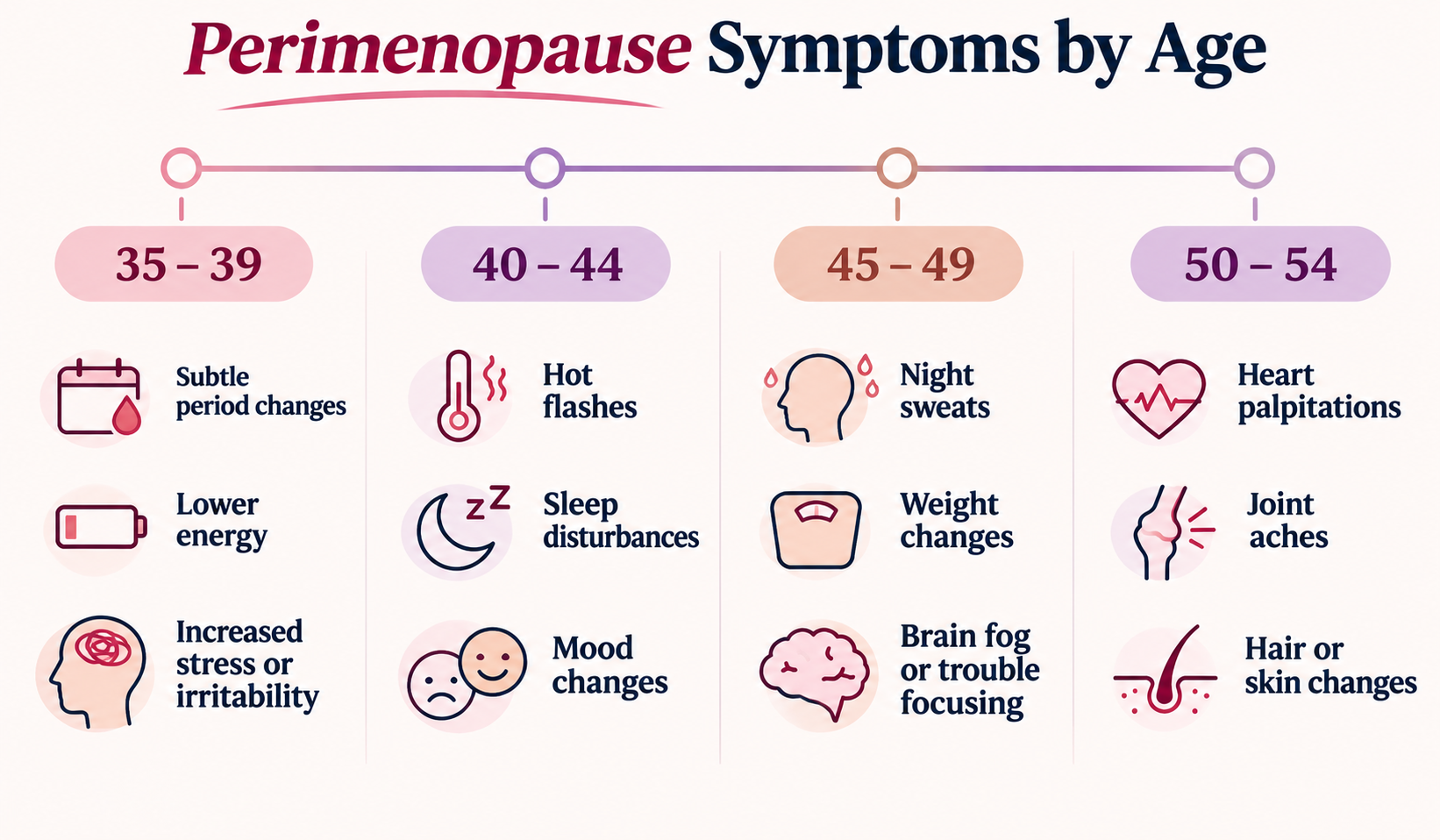
Perimenopause symptoms by age: late 30s to early 50s
Age helps me decide what needs investigating, but it cannot predict a personal symptom sequence. Two women of the same age may have entirely different experiences. These ranges are guideposts, not a timetable.
Ages 35–39: do not assume routine perimenopause
What women may notice
New missed periods, unexplained heat episodes, vaginal dryness, interrupted sleep or cycle changes sometimes prompt women in their late 30s to wonder about perimenopause. Reproductive aging can begin before the 40s, but pronounced menopausal symptoms or absent periods at this age require a careful differential diagnosis rather than a routine age-related label.
What I would investigate
First I ask about pregnancy possibility, previous cycle regularity, medication or contraceptive changes, intense exercise, weight loss, stress and thyroid symptoms.
- Depending on the history, I may assess prolactin or possible primary ovarian insufficiency (POI).
- POI is not merely “menopause a little early”: diagnosis and management have consequences for fertility, bone health and cardiovascular risk.
My advice at 35–39
If periods stop, do not spend months assuming this is natural perimenopause. Take a pregnancy test if relevant and arrange an evaluation for persistent absence or new major cycle disturbances. Hot flashes with regular periods also deserve an individualized review when disruptive. Treatment and fertility plans differ significantly when ovarian insufficiency is suspected before 40.
Ages 40–44: subtle changes may come first
Early clues worth writing down
For some women, the first noticeable difference is a cycle shifting from 30 days to 25 days or becoming uneven from month to month. Others still have predictable periods but begin waking hot, develop new menstrual migraines, experience stronger premenstrual irritability or notice breast tenderness. These are possibilities, not a checklist that must appear at 40.
What I would distinguish
I compare the new pattern to what has been usual for you, not just the textbook 28-day cycle. Sleep apnea, thyroid problems, pregnancy, mood conditions and medication effects may cause overlapping symptoms. When reproductive changes appear at 40–44, I also consider whether investigation for early menopause is warranted, especially with prolonged missed periods.
My advice at 40–44
Track for at least 3 months if it is safe to do so, including flow, symptoms and the effects on your work or sleep.
- You do not need to wait until symptoms are severe to seek relief.
- If your bleeding becomes heavy, lasts longer than usual or occurs between periods, seek assessment instead of treating it as an inevitable part of turning 40.
Ages 45–49: cycle variability often becomes easier to recognize
Patterns I look for
This is a common age window for obvious cycle variability, but the range is wide.
- One month may bring a shorter cycle and breast tenderness; another may be delayed with stronger hot flashes or night sweats.
- A woman may have sleep disturbance and brain fog without significant heat symptoms, while another has changing periods but feels otherwise well.
How symptoms can interact
A night sweat interrupts sleep. Several nights of poor sleep can affect concentration, appetite, mood and tolerance of stress. Heavy bleeding can contribute to iron deficiency and fatigue. Recognizing these chains helps us treat a specific driver instead of assigning every downstream symptom to low estrogen.
My advice at 45–49
Bring a record of cycle dates and the two or three symptoms most affecting your quality of life.
- For a typical history after 45, routine one-off FSH or estradiol testing is usually less useful than a clinical review; specific tests may still be necessary for anemia, thyroid disease or abnormal bleeding.
- I do not want a normal hormone result to prevent appropriate symptom care.
Ages 50–54: long gaps do not mean the transition is finished
What may happen near the final period
Some women develop gaps of 60 or more days, then experience another period.
- Others remain fairly regular in their early 50s.
- Hot flashes may persist, start or ease, while vaginal dryness or urinary discomfort may become more noticeable.
- None of these symptoms can reliably predict the exact date of the final menstrual period.
Why the bleeding history matters
Menopause is identified retrospectively after 12 consecutive months without natural bleeding if no other cause explains the absence. Hormonal contraception, a hormonal IUD, ablation or hysterectomy can make this rule difficult to apply. A single episode of bleeding after menopause is established must be assessed, even if it is only spotting.
My advice at 50–54
Do not stop contraception just because you have skipped several periods; ovulation can still occur.
- Ask for guidance tailored to your age and method.
- If night sweats, insomnia or sexual discomfort interfere with life, we can discuss treatment now.
- Significant new bleeding should be evaluated regardless of whether you believe menopause is approaching.
Age-based summary: patterns to notice and decisions that matter
|
AGE
|
POSSIBLE PRESENTATION
|
MY CLINICAL PRIORITY
|
|
35–39
|
Missed periods, heat symptoms, disrupted sleep
|
Investigate other causes and consider POI; assess pregnancy possibility
|
|
40–44
|
Subtle cycle changes, PMS, headaches, early sleep changes
|
Compare baseline, evaluate persistent symptoms and early menopause concerns
|
|
45–49
|
Variable cycles, night sweats, sleep or mood disruption
|
Manage symptoms and assess abnormal bleeding independently
|
|
50–54
|
Long gaps, persistent heat symptoms, vaginal or urinary concerns
|
Clarify menopausal status, contraception and any bleeding red flags
|
Can you have perimenopause symptoms with regular periods?
Yes. Ovarian aging and some symptoms can begin before cycles become visibly irregular. However, new anxiety, fatigue or interrupted sleep with regular periods is not enough, by itself, to confirm perimenopause. I want to know whether symptoms are patterned around the cycle, whether there are hot flashes or vaginal symptoms, and whether thyroid problems, anemia, medications or sleep conditions are more likely.
If you use a combined pill, patch, ring or hormonal IUD, bleeding patterns can be altered or hidden. A withdrawal bleed is not always a window into your natural ovulation pattern, and absence of bleeding with a hormonal IUD does not itself mean menopause.
Two situations that can look similar
At 43, one woman has regular cycles and new night sweats; another has regular cycles and exhaustion from untreated sleep apnea. The symptom lists overlap, but the assessments differ. I look for temperature-related episodes, medication changes, mood and sleep clues, and whether the period pattern later evolves. It is possible to have symptoms before irregular cycles, but it is not possible to diagnose every symptom from age alone.
What you can do
Note when symptoms occur relative to menstrual dates and whether contraception masks bleeding.
- Bring the information to a visit if the changes are persistent or disruptive.
- Avoid depending on a home FSH test for a yes-or-no answer: levels fluctuate, and the result often will not explain your symptoms.
Why symptoms come and go and why they can arrive together
Perimenopause is not a straight downward slide in estrogen. Ovarian activity varies, and cycles with and without ovulation may occur. That means a difficult month can be followed by one that feels familiar. Sleep, workload, illness and medicines also affect symptoms; good days do not disprove the transition, and bad days do not prove a hormone disorder.
|
SYMPTOM COMBINATION
|
HOW I CONNECT THE DOTS
|
|
Night sweats + early waking + fatigue
|
Check whether temperature episodes fragment sleep, while screening for independent sleep disorders.
|
|
Heavy periods + dizziness + brain fog
|
Assess blood loss and possible iron deficiency instead of assuming the symptoms are purely hormonal.
|
|
Palpitations + hot flashes + anxiety
|
Ask about timing and associated features, and consider heart or thyroid assessment when indicated.
|
|
Dryness + painful sex + urgency
|
Evaluate genitourinary tissue changes while excluding infection and other causes.
|
The sleep–fatigue–brain fog connection
An overnight hot flash may cause a brief awakening, but repeated disruption can leave you feeling cognitively slower and more irritable the following day. The night sweats may be hormone-related; the fatigue and difficulty concentrating may be amplified by the loss of restorative sleep. That distinction can help us choose treatment that actually addresses the driver.
The bleeding–iron–energy connection
A new pattern of prolonged, heavy bleeding can contribute to low iron stores or anemia. If you feel dizzy, winded with ordinary activity or unusually exhausted, blood loss becomes an important part of the assessment. Calling all of these symptoms “perimenopause fatigue” would miss a potentially treatable condition.
The headache–sleep–cycle connection
Someone with a history of migraine may find headaches cluster around changing cycles or follow a sleepless night. Tracking headache days alongside bleeding and sleep can clarify patterns. But sudden severe headaches or neurologic symptoms have a different urgency, and I would not explain those away as hormone fluctuations.
Less-recognized symptoms: what may be linked and what needs caution
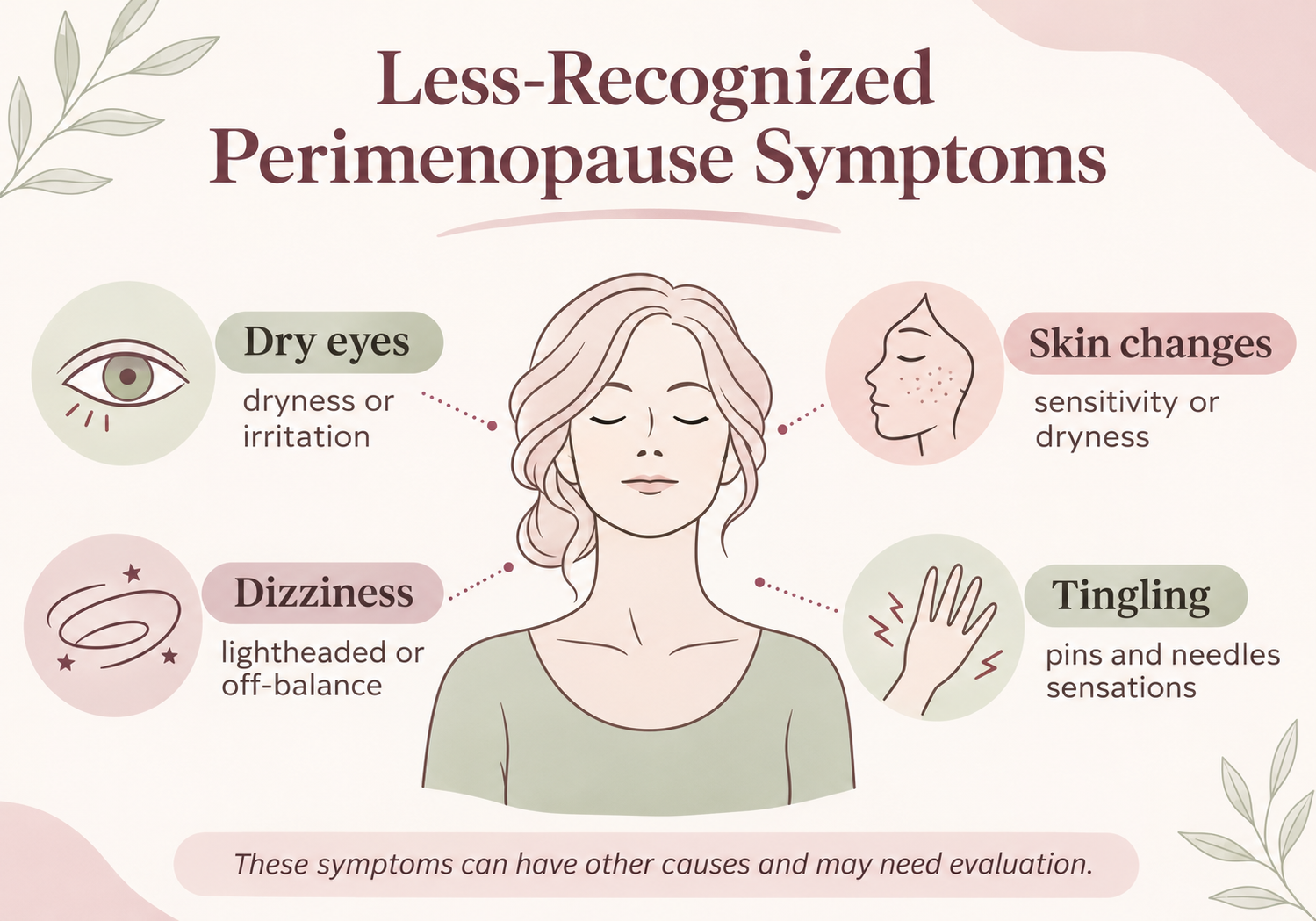
Online lists often include dry eyes, skin itching, tingling, dizziness, altered taste, digestive changes and many more. Some of these complaints are reported during the menopausal transition, but their hormonal connection is not equally established. A symptom being commonly discussed online does not prove that estrogen is its cause.
I would pay particular attention to persistent dizziness, numbness, one-sided weakness, newly severe gastrointestinal symptoms and unexplained weight loss. Those deserve an evaluation based on their own clinical features. For skin or eye dryness, we can also consider medications, allergies, dermatologic and eye conditions rather than assuming a hormone explanation.
Dry eyes, skin and hair
Some women notice ocular dryness, increased skin sensitivity or hair changes around midlife.
- These experiences can have several explanations, including age-related changes, allergies, dermatologic disease, medication effects and thyroid problems.
- Persistent eye pain or vision change needs eye care; a spreading rash, scalp inflammation or rapid hair loss deserves a targeted assessment.
Tingling, dizziness and digestive symptoms
These symptoms are widely discussed online but are nonspecific. Tingling may reflect nerve compression, B12 deficiency, diabetes or neurologic disease; dizziness may relate to dehydration, anemia, blood pressure or vestibular problems; digestive changes have many causes. A new focal weakness, fainting, severe abdominal pain or persistent gastrointestinal bleeding should never be attributed to hormones.
My practical filter
I ask three questions:
- Did this begin around a cycle change?
- Does it cluster with other characteristic symptoms?
- And is there a separate medical explanation that would change treatment?
Sometimes the honest answer is that perimenopause may be contributing, but we need to investigate before deciding.
Is it perimenopause or something else?
Good care means considering more than one explanation at a time. Perimenopause and thyroid disease can coexist. Sleep disturbance can worsen a pre-existing anxiety disorder. A woman with changing cycles can also develop fibroids or become iron deficient. It is possible to treat the transition and still miss the most important problem if we do not look broadly.
|
PRESENTING CONCERN
|
OTHER EXPLANATIONS I CONSIDER
|
|
Missed periods
|
Pregnancy, PCOS, medications, thyroid/prolactin conditions, POI under 40
|
|
Heavy bleeding
|
Fibroids, polyps, adenomyosis, pregnancy-related causes, endometrial disease
|
|
Fatigue and brain fog
|
Iron deficiency, sleep apnea, thyroid disease, depression, medication effects
|
|
Night sweats
|
Medications, infection, sleep disorders and other systemic conditions
|
|
Palpitations
|
Arrhythmia, thyroid disease, anemia, stimulants or medication effects
|
|
Urinary burning
|
UTI, vaginal conditions and other urinary disease
|
When testing is useful
The goal of evaluation is not to order the largest possible hormone panel. A missed period with pregnancy possibility calls for a pregnancy test. Heavy bleeding with fatigue may warrant a complete blood count and iron studies. Thyroid testing, imaging, sleep assessment or a heart rhythm evaluation may be useful when symptoms and history support them. In women 45 or older with a typical transition, routine FSH testing often adds little.
Precautions before you self-treat
Do not begin iron supplements solely because you feel tired, high-dose hormone products because of a single test, or repeated antibiotics for urinary symptoms without appropriate evaluation. Supplements labeled “hormone balancing” do not prove either safety or effectiveness. If a symptom is new, severe, persistent or different from your usual pattern, ask what else could be going on.
What actually helps relieve perimenopause symptoms?
|
MAIN CONCERN
|
AT-HOME SUPPORT
|
WHEN MEDICAL CARE ADDS VALUE
|
|
Hot flashes / night sweats
|
Temperature comfort strategies; identify personal triggers
|
Disruptive episodes: discuss systemic hormone therapy or evidence-based nonhormonal options
|
|
Insomnia / daytime exhaustion
|
Regular wake time, sleep diary, activity
|
Persistent insomnia: CBT-I; investigate apnea, anemia or mood conditions when indicated
|
|
Vaginal dryness / painful sex
|
Vaginal moisturizer and lubricant
|
Persistent symptoms: consider local treatment and assess infection, bleeding or pain
|
|
Heavy / irregular bleeding
|
Track dates, flow and fatigue
|
Assess pregnancy possibility, anemia and uterine causes; treatment depends on findings
|
|
Mood / migraines
|
Track cycles, sleep and symptom impact
|
Targeted mood or migraine treatment; review hormone and contraceptive risks
|
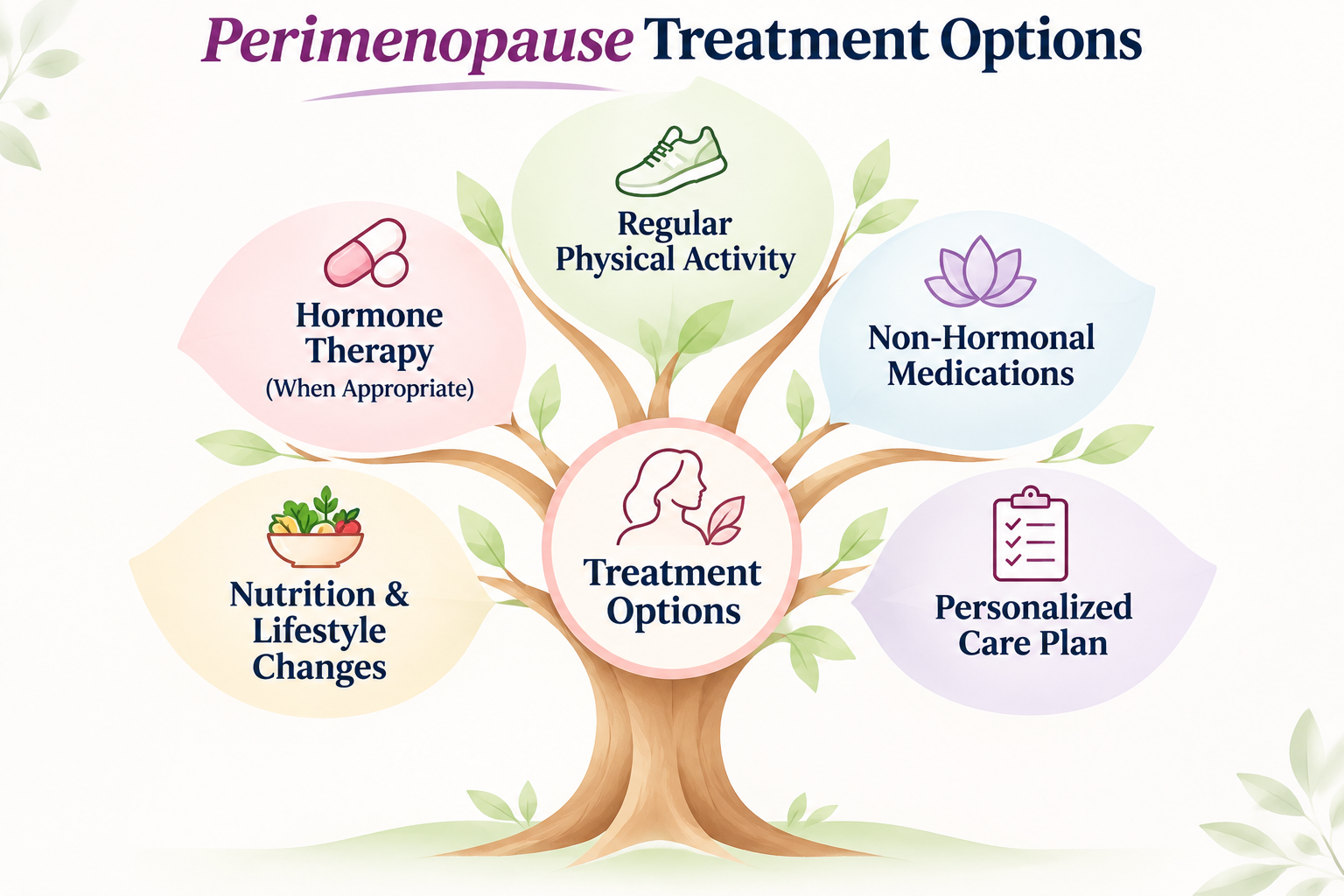
The best treatment depends on what is bothering you. If your principal concern is heavy bleeding, we investigate and treat bleeding. If hot flashes are destroying your sleep, we consider proven symptom therapies. If sex is painful, the answer may be local vaginal care rather than a whole-body hormone treatment. I do not prescribe to make hormone numbers resemble those from a younger age.
Hot flashes and night sweats
- What may help: use light layers, keep the bedroom comfortably cool, and note whether particular triggers matter for you.
- Medical options: systemic menopausal hormone therapy is effective for eligible patients; evidence-based nonhormonal prescriptions are alternatives.
- Precautions: treatment choice depends on medical history, risks, uterus status and contraception needs.
For appropriate candidates, systemic menopausal hormone therapy is an effective option. Nonhormonal prescription therapies and menopause-focused cognitive behavioral therapy may also help. Treatment selection depends on risks, contraindications, age and individual preference. Certain medicines, including fezolinetant, have specific monitoring and safety requirements, so prescription decisions need individualized review.
Sleep, mood and headaches
- What may help: keep a consistent sleep/wake routine, move regularly and reduce avoidable sleep disruption.
- Medical options: CBT-I is a first-line insomnia treatment; persistent mood disorders and migraine may need targeted care.
- Precautions: significant anxiety, depressed mood, severe headaches or suspected sleep apnea require separate assessment.
Sleep-focused approaches, such as cognitive behavioral therapy for insomnia, may help when insomnia has become a problem in its own right. Mood disorders and migraines may require their own evidence-based treatments. Improving night sweats may help sleep, but it will not automatically solve every anxiety or headache complaint.
Dryness, urinary symptoms and painful sex
- What may help: use unscented lubricants for intercourse and vaginal moisturizers regularly if needed.
- Medical options: local vaginal therapies may help appropriate patients; pain and urinary symptoms sometimes need additional evaluation.
- Precautions: do not treat recurrent urinary burning repeatedly as menopause without considering infection or other causes.
Regular vaginal moisturizers and lubricants may help mild dryness. Prescription local vaginal treatments can be appropriate in selected cases. I evaluate unexplained bleeding, infection symptoms or persistent pain before treating everything as simple estrogen-related dryness.
Irregular periods and contraception
- What may help: keep a bleeding calendar and discuss whether pregnancy prevention is still needed.
- Medical options: selected hormonal contraceptives or other therapies may help bleeding patterns after assessment.
- Precautions: menopausal hormone therapy is not contraception; abnormal bleeding should be investigated before assuming benign hormonal change.
Hormonal contraceptive options can sometimes help manage bleeding and vasomotor symptoms while providing pregnancy prevention when appropriate. Menopausal hormone therapy itself is not contraception. Because ovulation can still occur, fertility and pregnancy-prevention plans remain part of the conversation.
Long-term health and daily habits
- What may help: progressive resistance exercise, weight-bearing movement, adequate nutrition and sleep support muscle and bone health.
- Preventive care: review blood pressure, lipids, glucose, smoking, screening and individual bone-health risks as appropriate.
- Precautions: healthy habits complement, but do not replace, effective treatment for troublesome symptoms or serious conditions.
Strength and weight-bearing exercise, adequate nutrition, sleep care, tobacco avoidance and appropriate cardiovascular risk screening matter regardless of whether symptoms are severe. They support overall health but are not substitutes for appropriate medical treatment of distressing symptoms or serious bleeding problems.
How I choose among treatment options
I start with your priority and relevant medical risks. Systemic menopausal hormone therapy is effective for many bothersome hot flashes, but it is not contraception, and women with a uterus generally need endometrial protection when taking systemic estrogen. Some women may benefit from hormonal contraceptive methods during the transition; others have contraindications. Nonhormonal prescriptions are available for hot flashes, and local vaginal treatments address genital symptoms.
What lifestyle measures can and cannot do
A consistent sleep schedule, physical activity, resistance training, nutrition and smoking cessation support overall health. Comfort measures can help some women with temperature symptoms. However, these steps should not be used to delay evaluation of heavy bleeding or substitute for effective care when symptoms seriously impair sleep and daily functioning.
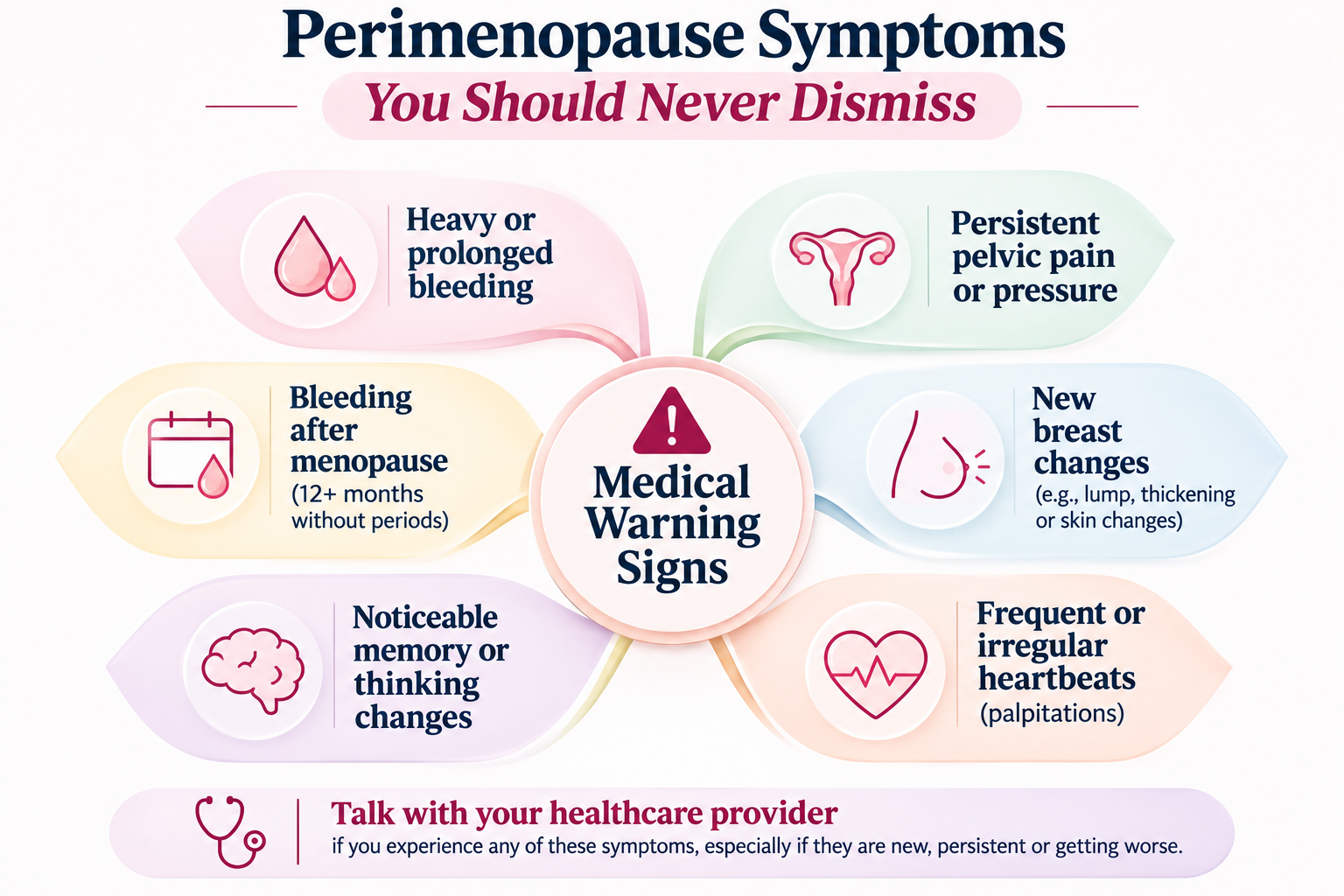
Which symptoms should never be dismissed?
|
SYMPTOM
|
ACTION
|
|
Very heavy bleeding with fainting, chest pain or severe breathlessness
|
Seek urgent medical attention.
|
|
Any bleeding after 12 months without natural menstrual bleeding
|
Arrange prompt medical evaluation, including a small amount of spotting.
|
|
Bleeding between periods or after sex; new unusually heavy bleeding
|
Book a gynecologic assessment.
|
|
Sudden worst headache, new weakness, confusion or speech/vision changes
|
Seek emergency care.
|
|
Palpitations with chest pain, fainting or significant shortness of breath
|
Seek emergency care.
|
|
Severe mood crisis or thoughts of self-harm
|
Seek immediate emergency or crisis support.
|
Bleeding precautions
Bleeding between periods, after sex, or markedly heavier or longer than usual needs assessment.
- After menopause is established, any vaginal bleeding, including light spotting, requires evaluation.
- Very heavy bleeding with fainting, weakness, shortness of breath or chest pain needs urgent attention.
- Severe pelvic pain when pregnancy is possible is also urgent.
Symptoms outside gynecology
New chest pain, fainting with palpitations, sudden one-sided weakness, difficulty speaking or a sudden “worst headache” require emergency care.
- Persistent fever with drenching night sweats, unexplained weight loss, serious depression or worsening neurologic complaints need appropriate medical review.
- Perimenopause can coexist with other illnesses; it is not a protective explanation.
|
A note from Dr. Deepali Kashyap
|
|
If your bleeding pattern has changed or pelvic discomfort is affecting your life, I recommend a gynecological assessment to understand the cause.
Explore gynecology services
|
How I approach your symptoms at an appointment
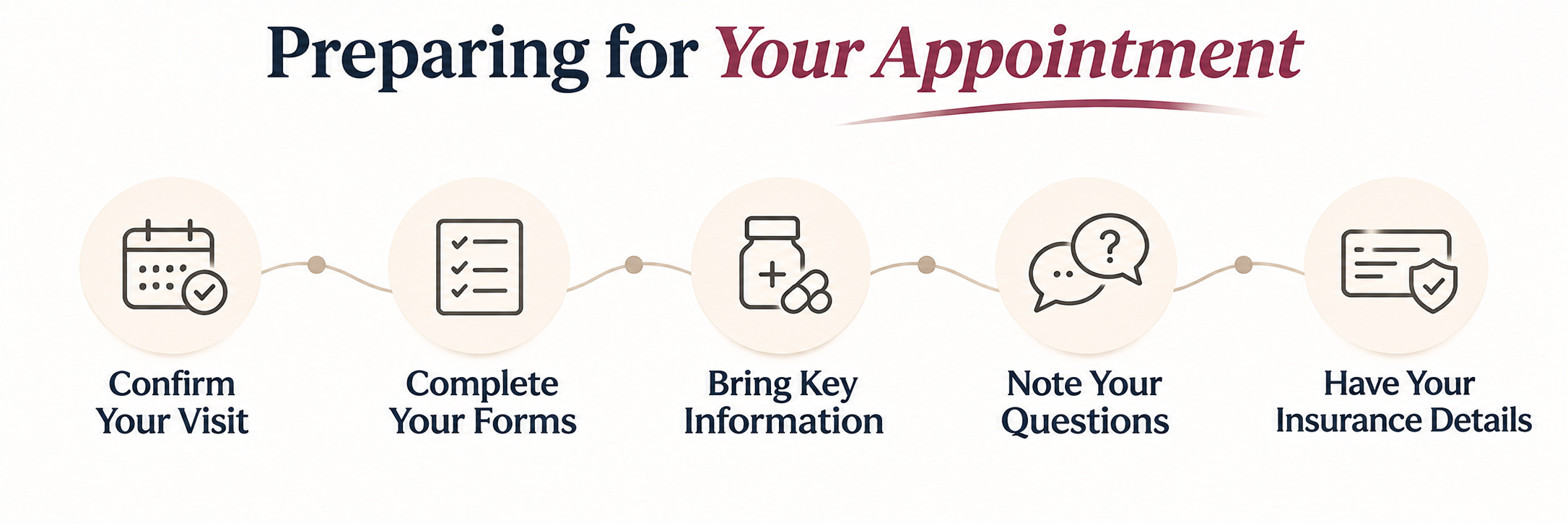
I begin with your story: your usual menstrual pattern, when the first change appeared, which symptoms interfere most with life, and whether pregnancy or contraception matters. I review relevant medicines, medical conditions, family history, sleep and bleeding patterns. When needed, examination or targeted tests help answer specific questions. A typical transition after age 45 often does not require an extensive reproductive hormone panel simply to establish that symptoms are real. Bring a record covering at least 3 months if available, but do not delay assessment for concerning symptoms.
I also ask you to prioritize what you would like to improve first. Some women need relief from night sweats; others need evaluation for heavy bleeding or help with vaginal discomfort. We can build a plan around the most important issue without pretending that every symptom has one simple cause.
|
BRING TO YOUR VISIT
|
WHY IT HELPS
|
|
Period dates and changes in flow for at least 3 months
|
Shows whether your pattern is changing and identifies abnormal bleeding.
|
|
Two or three symptoms and their effect on sleep, work or intimacy
|
Makes treatment priorities clear.
|
|
Medicines, supplements, contraception and surgical history
|
Helps interpret symptoms, bleeding and test results.
|
|
Pregnancy plans or contraception questions
|
Guides choices while ovulation remains possible.
|
|
Brief symptom diary and your personal care goals
|
Helps identify patterns and guide a focused plan. Do not delay care to complete a diary.
|
Perimenopause symptom questions: practical answers for real-life situations
These questions focus on the combinations and timing of symptoms that often cause uncertainty. A symptom can fit perimenopause and still deserve assessment for another condition. I look at what has changed for you, what is affecting daily life and what would alter your care.
Small adjustments that can make everyday life easier
- At work: if poor sleep affects concentration, schedule demanding tasks when your energy is best and use notes or reminders, while addressing the underlying sleep problem.
- With exercise: shift the goal toward consistency, strength and recovery; treat persistent pain or excessive fatigue as information, not a lack of discipline.
- In relationships: explain when sleep, mood or vaginal discomfort is affecting closeness, and ask for help rather than tolerating persistent pain.
- With symptom tracking: record patterns briefly; you do not need an exhaustive diary before seeking care.
Symptoms while periods continue
Can perimenopause make me wake up at 3 a.m. without a hot flash?
Yes, disrupted sleep can occur during the transition even when you do not notice sweating. But early waking can also reflect stress, insomnia, alcohol, medication effects or sleep apnea. I would review your bedtime, waking pattern, snoring, daytime sleepiness and mood before recommending treatment. Repeated poor sleep deserves attention even when your cycle looks normal.
Why do I feel more anxious or irritable before a period that now arrives unpredictably?
Changes in the timing of ovulation can make familiar premenstrual patterns less predictable. Sleep disruption, life stress and an underlying anxiety or mood disorder can amplify the experience. I recommend noting symptoms alongside bleeding dates for at least 3 months and telling me if anxiety affects your functioning. Persistent or severe mood symptoms need their own assessment, not only hormone advice.
Changes that warrant closer attention
Why are my periods closer together and sometimes much heavier at 44?
Cycles may shorten as reproductive aging changes follicle development, and irregular ovulation can contribute to changes in flow. However, new heavy bleeding may also reflect fibroids, polyps, pregnancy-related causes or changes in the uterine lining. I would ask how many days you bleed, whether you soak through protection, pass large clots or feel dizzy, and whether an examination, blood count, imaging or uterine-lining assessment is appropriate.
If I skipped two months and then bled again, does that mean menopause has started?
Not necessarily. Longer gaps can occur in later perimenopause, and ovulation may still happen. Natural menopause is generally established retrospectively after 12 consecutive months without a period when another cause is not responsible. If pregnancy is possible, test for it; if the returning bleeding is unusually heavy or occurs between periods, arrange an evaluation rather than treating it as an expected reset.
Are heart palpitations and dizziness just perimenopause?
Some women report increased awareness of their heartbeat during midlife, but palpitations and dizziness are not safe to attribute to hormone changes without considering other causes. I would review the pattern, medications, caffeine, thyroid concerns, anemia and heart history. Chest pain, fainting, severe breathlessness or persistent significant palpitations need urgent assessment.
Symptoms affecting comfort and everyday life
Can vaginal dryness or painful sex start before my final period?
Yes. Vaginal and vulvar discomfort may appear while cycles continue, and treatment can be discussed before menopause is confirmed. I would ask about dryness, burning, pain location, bleeding and urinary symptoms, then assess for infection, skin conditions and other causes where indicated. Depending on the findings, moisturizers, lubricants or prescription therapies may help.
Why do I get urinary urgency when I do not have a urinary infection?
Urinary urgency has several possible explanations, including changes in genitourinary tissues, bladder conditions and pelvic-floor dysfunction. A negative infection test does not automatically mean the cause is hormonal. I would review burning, frequency, leakage, pain and recurrent episodes so we can decide whether further testing, bladder or pelvic-floor care, or local treatment is appropriate.
What if migraines worsen during perimenopause, especially if I have aura?
Hormonal variability can affect migraine patterns, but treatment decisions depend on the headache type, aura history and cardiovascular risk factors. I recommend tracking menstrual dates, headache days, neurological symptoms and medication use. New aura, a significant change in your established pattern or a sudden severe headache should be medically assessed; a thunderclap headache or new neurological deficit is an emergency.
Deciding what to do next
At 39, should I assume hot flashes and missed periods are early perimenopause?
No. Before age 40, missed periods and hot-flash-like symptoms deserve a focused evaluation for pregnancy, thyroid or pituitary conditions, medication effects and possible primary ovarian insufficiency. I would not use an age-based symptom checklist as a diagnosis. Finding the cause can matter for fertility planning, bone health and appropriate treatment.
When should I book a visit rather than continue tracking at home?
You do not need to wait until symptoms become severe or until menstruation stops. I recommend an appointment when sleep, mood, bleeding, urinary or sexual symptoms disrupt your life, or when you are unsure whether another condition is involved. Do not delay care for bleeding after sex, bleeding between periods, very heavy flow or other warning signs; urgent symptoms require immediate evaluation.
My final advice
A difficult night of sleep, a changed cycle or a new headache may seem too small to bring up on its own. Taken together, those changes can tell us something important, whether that is perimenopause, a separate treatable condition, or a combination of both. You deserve an assessment that takes your symptoms seriously and uses your medical history to guide the next step. There is no requirement to wait until your last period to begin improving your quality of life.
For individualized assessment in Henderson, Nevada, explore gynecology care at Galleria Women’s Health and arrange an appointment if symptoms are affecting your daily life.
Key Terms Explained
-
Perimenopause: The transitional phase before menopause, during which ovarian activity, hormone levels and menstrual patterns become less predictable.
-
Menopause: The point identified retrospectively after 12 consecutive months without a menstrual period, when no other cause explains the absence.
-
Estrogen: A hormone involved in menstrual regulation, reproductive health, bone health and vaginal tissue function.
-
Progesterone: A hormone that helps regulate the menstrual cycle and prepares the uterine lining for pregnancy.
-
Follicle-Stimulating Hormone (FSH): A hormone that stimulates ovarian follicle development. Its levels can fluctuate during perimenopause.
-
Ovulation: The release of an egg from an ovary, which may become less predictable during perimenopause.
-
Vasomotor Symptoms (VMS): The medical term for hot flashes and night sweats associated with changes in body temperature regulation.
-
Premenstrual Syndrome (PMS): Physical and emotional symptoms that occur before menstruation, such as bloating, breast tenderness and irritability.
-
Brain Fog: A nonmedical term describing difficulties with concentration, memory, mental clarity or word retrieval.
-
Genitourinary Syndrome of Menopause (GSM): Changes in vaginal, vulvar and urinary tissues associated with declining estrogen levels, which may cause dryness, painful intercourse and urinary symptoms.
-
Primary Ovarian Insufficiency (POI): A condition in which ovarian function becomes impaired before the age of 40.
-
Abnormal Uterine Bleeding (AUB): Bleeding that differs from expected menstrual patterns in frequency, regularity, duration or volume.
-
Menopausal Hormone Therapy (MHT): A prescribed treatment using hormones to manage certain menopausal symptoms in medically suitable patients. It is also commonly called hormone replacement therapy (HRT).
-
Cognitive Behavioral Therapy for Insomnia (CBT-I): A structured, evidence-based psychological treatment that addresses thoughts and behaviors contributing to persistent insomnia.
-
Endometrial Sampling: A medical procedure that collects a small sample of the uterine lining to investigate abnormal bleeding or possible endometrial abnormalities.
Medical sources
- The Menopause Society: Symptoms: https://menopause.org/patient-education/menopause-topics/symptoms
- ACOG: The Menopause Years: https://www.acog.org/womens-health/faqs/the-menopause-years
- ACOG: Perimenopausal Bleeding and Bleeding After Menopause: https://www.acog.org/womens-health/faqs/perimenopausal-bleeding-and-bleeding-after-menopause
- NICE NG23: Menopause: Identification and Management: https://www.nice.org.uk/guidance/ng23/chapter/recommendations
- FDA: Fezolinetant liver safety communication: Read the FDA safety communication
- ACOG Clinical Practice Update: Updated Guidance Regarding the Role of Transvaginal Ultrasonography in Evaluating the Endometrium of Individuals with Postmenopausal Bleeding: https://doi.org/10.1097/AOG.0000000000006275
Medical disclaimer: Educational information only, not a substitute for personal diagnosis or medical care.


 Meet Your Doctor


 03 Jul, 2026
 10:13 AM

Leave a Comment